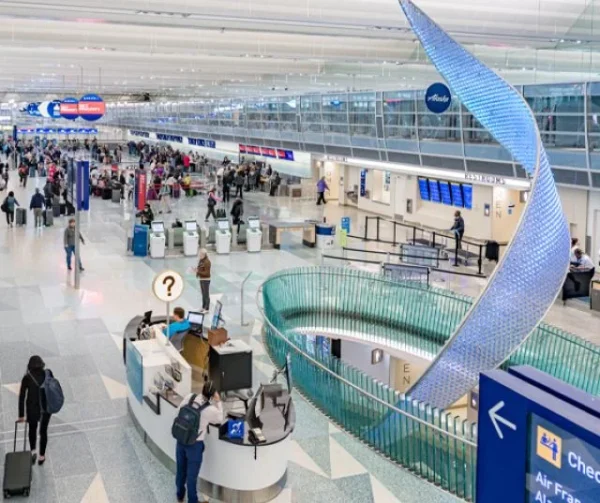
Minneapolis-Saint Paul, Tampa and Charleston international airports lead their respective categories in the 2026 North America Airport Satisfaction Study. Their results show how easier navigation, improved terminals and thoughtful amenities can shape a passenger’s experience.
Minneapolis-Saint Paul International Airport ranked first among mega airports for the third consecutive year, scoring 684 out of 1,000. Tampa International Airport led large airports with 715 points. Charleston International Airport topped the medium-airport category with 712.
The findings arrive as airports manage high passenger volumes and complete major improvement projects. Satisfaction rose across all three airport categories compared with 2025, suggesting those investments are starting to register with travellers.
For tourism destinations, the results matter beyond the terminal. Airports provide visitors with their first arrival experience and often their final impression before departure.
Minneapolis Leads the Busiest Airport Category
Minneapolis-Saint Paul retained its lead among airports handling at least 33 million passengers annually. Detroit Metropolitan Wayne County Airport followed with 663 points, while Phoenix Sky Harbor International Airport placed third with 642.
Mega airports must move large numbers of passengers through complex facilities. Clear directions and convenient connections can therefore make a substantial difference to travellers facing tight schedules or unfamiliar terminals.
MSP’s third consecutive first-place finish shows that a busy hub can maintain strong passenger approval over several years. Its lead also puts attention on the full journey through the airport, from reaching a terminal to finding a gate.
The ranking does not mean every traveller will have the same experience. Flight schedules, weather and individual journeys still vary. However, the survey captures how passengers assessed airports after recent travel.
Tampa and Charleston Show the Value of Convenience
Tampa International Airport took first place among large airports, which handle between 10 million and 32.9 million passengers a year. Portland International Airport ranked second with 708 points, followed by Dallas Love Field with 698.
Tampa’s 715-point result places a major Florida gateway at the top of a competitive category. For leisure travellers, an airport that feels easy to use can make arrivals and departures less demanding.
Charleston International Airport led the medium category, covering airports with 4.5 million to 9.9 million annual passengers. Ontario International Airport placed second with 705 points, and Indianapolis International Airport followed with 695.
Charleston’s result underlines the role of regional gateways in the visitor journey. A medium-sized airport can offer straightforward movement while connecting travellers to a destination’s wider tourism economy.
Together, the category leaders show that passenger satisfaction does not depend on airport size alone. Travellers assess how well a facility serves them at each stage of a trip.
Airport Upgrades Lift Passenger Satisfaction
The study found that satisfaction increased by 14 points for mega airports, 13 points for large airports and 16 points for medium airports year on year. Those gains came despite passenger volumes remaining high.
Completed or nearly completed capital projects contributed to the improvement. Terminal design, passenger flow and food and beverage options all influence how travellers spend their time before a flight.
Practical details remain central. Clear signs help passengers locate gates, while layouts that reflect a city’s identity can make an airport more memorable. Local dining also gives visitors a taste of a destination during their journey.
The study found an eight-point improvement in satisfaction with food, beverage and retail across the airport categories. It also identified a connection between passengers’ overall experience and their spending inside terminals.
Passengers who described their airport experience as perfect spent an average of $47.60 in the terminal. That was $20.22 more than passengers who considered their experience merely acceptable. Only 12% of airport journeys received a perfect rating.
These findings give airport operators a commercial reason to improve comfort and convenience alongside capacity. They also show why dining and retail choices have become part of the broader travel experience.
What the Rankings Measure
The 2026 study drew on 24,710 completed surveys from residents of the United States and Canada. Respondents had travelled through a U.S. or Canadian airport within the previous 30 days. The research covered departure, arrival and connecting experiences and ran from July 2025 through July 2026.
Passengers rated seven parts of their airport experience. Ease of travel carried the greatest importance, followed by trust, terminal facilities, staff and the departure journey. Food, beverage and retail, along with the arrival journey, completed the assessment.
The rankings offer airports a clear signal about passenger priorities in 2026. Travellers want to move through terminals confidently, find useful services and feel comfortable while they wait. For destinations competing for visitors, a smoother airport journey can help make the entire trip more appealing.
For more travel news like this, keep reading Global Travel Wire