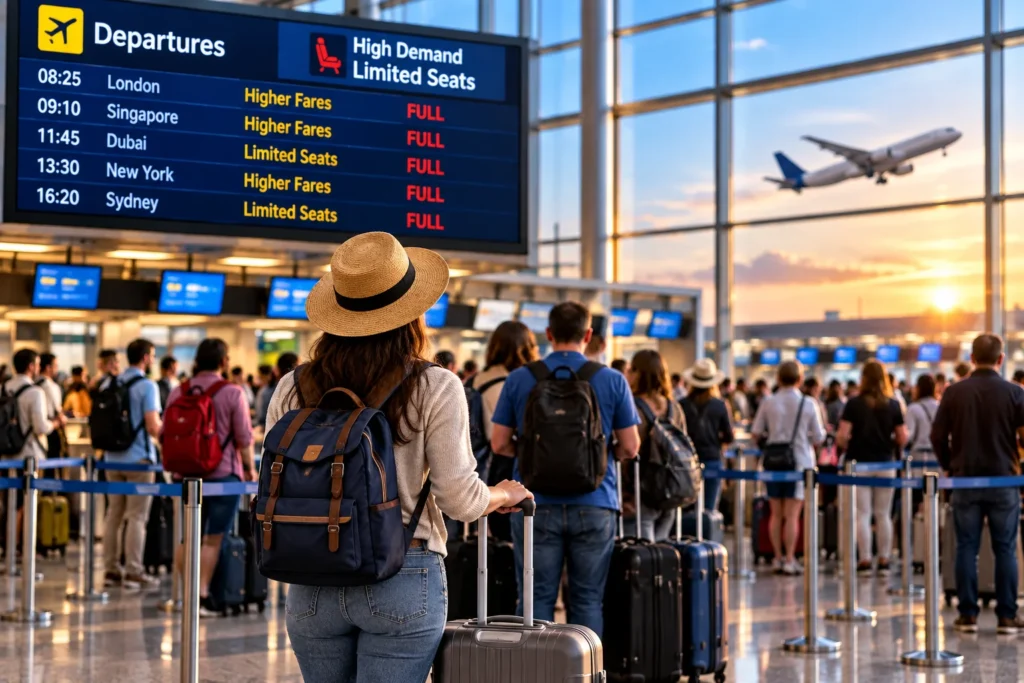
Official domestic aviation metrics indicate that passenger airfares for major seasonal periods are reaching elevated levels across primary flight routes. A combination of sustained jet fuel expenditure, high passenger volume, and adjustments in regional fleet capacity has shifted booking behaviors significantly. Travelers are securing reservations earlier than in previous years to mitigate upward fare pressures, as the typical booking window offering reduced prices continues to shorten ahead of peak departure dates.
Analysis of national transport performance reveals that round-trip domestic airfares for major holiday periods have increased substantially compared to prior annual cycles. Similar upward adjustments affect seasonal accommodations, where nationwide hotel room rates demonstrate modest to significant increases across popular municipal centers. Consequently, federal transport advisories recommend that domestic passengers finalize itineraries well before peak departure windows to access optimal seating and cabin availability.
Changing Airline Capacity Dynamics
The landscape of domestic aviation infrastructure has undergone notable realignments that directly affect overall pricing dynamics. Reductions in low-cost carrier seat inventory across regional markets have removed key pricing pressure on primary routes. In prior seasonal cycles, ultra-low-cost operators provided foundational price points that encouraged competitive adjustments from larger network airlines. The reduced presence of budget options in key regional hubs leaves travelers navigating a market characterized by tighter seat supply and elevated base fares.
Despite tighter domestic capacity, international transit presents a varied landscape depending on the global region. Transatlantic routes and long-haul connections to neighboring North American destinations exhibit elevated airfares, driven by robust cross-border travel demand. Conversely, international routes toward Asia, Oceania, and select Middle Eastern transit corridors maintain fare levels comparable to, or slightly lower than, previous annual baselines, offering strategic alternatives for long-distance leisure travel.
Strategic Booking Guidance for Domestic Passengers
To navigate elevated transportation costs, aviation safety boards and consumer transit bureaus advise travelers to adopt structured planning strategies. Establishing automated fare alerts and maintaining schedule flexibility remain the most effective methods to secure reasonable transportation rates during high-demand periods.
Adjusting departure or return dates by twenty-four to forty-eight hours can result in notable price reductions. For instance, scheduling departures on the holiday itself or choosing off-peak weekday flights often provides lower ticket prices and reduced terminal congestion. Furthermore, utilizing secondary regional airports within adjacent metropolitan areas can offer additional scheduling options and bypass primary corridor bottlenecks.
Ground transportation planning at major aviation hubs is equally critical during peak travel weeks. Civil aviation authorities recommend that passengers flying domestically arrive at terminal facilities at least two hours prior to departure, while international travelers should allow a minimum of three hours. Increased passenger volume through security checkpoints, paired with high demand for terminal parking, necessitates extra buffer time to ensure seamless transit.
Lodging and Contingency Planning Advice
Accommodations across major domestic markets continue to experience elevated demand, pushing seasonal hotel room rates upward. Tourism bureaus recommend booking lodging simultaneously with flight arrangements to lock in published rates before inventory contracts. Choosing flexible reservation policies that allow penalty-free cancellations or modifications provides valuable protection in the event of schedule changes.
Travelers are also encouraged to review official passenger protections outlined by the Department of Transportation. Understanding airline policies regarding flight delays, cancellations, and rebooking entitlements helps ensure that passengers can navigate unforeseen service disruptions effectively. As seasonal demand reaches peak volume, comprehensive planning and early reservation execution remain the primary tools for a seamless holiday travel experience.
For more travel news like this, keep reading Global Travel Wire