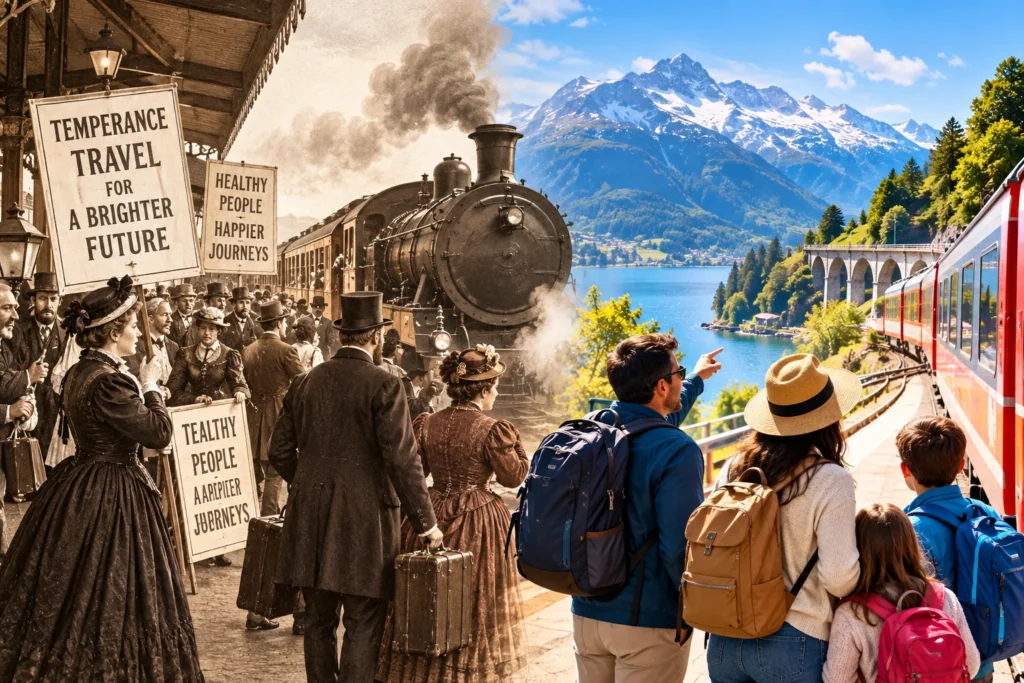
The global travel sector generates trillions of dollars annually, yet the foundations of organized group travel trace back to a modest socio-religious campaign in nineteenth-century England. On July 5, 1841, a chartered locomotive departed Campbell Street Railway Station in Leicester carrying nearly 500 passengers toward Loughborough, eleven miles away. Organised by Thomas Cook, an itinerant Baptist preacher and cabinet-maker, the journey was conceived not as a profit-making enterprise, but as an initiative to encourage sobriety among industrial workers.
During the Industrial Revolution, urban factory workers endured hazardous working conditions and limited leisure opportunities. Concerned by the social impact of alcohol misuse, Cook envisioned steam locomotion as a tool for public welfare. By negotiating a bulk rate of one shilling per passenger with the Midland Counties Railway Company, Cook secured return rail transit, light refreshments, and admission to a regional rally accompanied by brass band entertainment. This inaugural venture established the structural template for coordinated, all-inclusive passenger travel.
Institutionalization of the Pre-Arranged Travel Package
The success of the 1841 excursion demonstrated that affordable pricing, pre-arranged logistics, and curated itineraries could make leisure travel accessible to the general public. Following initial temperance outings, Cook expanded operations across Great Britain, organizing trips to regional centers, coastal towns, and cultural expositions. The business model relied on negotiated volume discounts with transportation providers and accommodation networks, establishing the precursor to the modern package holiday.
During the Great Exhibition of 1851 in London, Cook arranged transport and lodging for over 150,000 visitors, proving that large-scale consumer mobility could be managed efficiently. As infrastructure expanded across Europe and North America, Cook introduced international itineraries, standardized booking vouchers, traveler support services, and multi-lingual guide networks. These early administrative innovations reduced logistical barriers for international travel, laying the groundwork for standardized international tourism operations observed today.
World Tourism Day and the Global Economic Evolution
In recognition of tourism’s socio-economic significance, the United Nations World Tourism Organization established September 27 as World Tourism Day. Official statistics from international tourism bodies highlight that travel has grown from localized day excursions into a driver of global trade, job creation, and cultural exchange. Modern tourism management draws directly from early organizational principles, balancing infrastructure deployment, destination accessibility, and consumer safety.
Municipal heritage registries and national archives preserve early passenger manifests and rail records as official documentation of this socio-economic milestone. A commemorative statue outside Leicester Railway Station marks the departure site of the 1841 charter, acknowledging the city as the birthplace of organized leisure travel. Today, national tourism boards leverage these historic principles to promote sustainable heritage travel, low-impact transit, and inclusive regional development.
Sustainable Mobility and the Legacy of Heritage Rail
As contemporary tourism policy shifts toward sustainability, national travel authorities are reinvesting in passenger rail networks to reduce carbon emissions across popular corridors. Modern high-speed rail systems and heritage transit lines build upon the foundational efficiency of mid-nineteenth-century passenger rail, offering modern travelers eco-friendly transit alternatives.
The legacy of the 1841 Leicester outing extends beyond commercial travel logistics; it highlights the role of transport innovation in fostering social cohesion and civic enrichment. World Tourism Day celebrations across member nations continue to emphasize accessibility, cultural heritage protection, and economic sustainability, ensuring that the foundational principles of public travel remain central to global policy.
For more travel news like this, keep reading Global Travel Wire