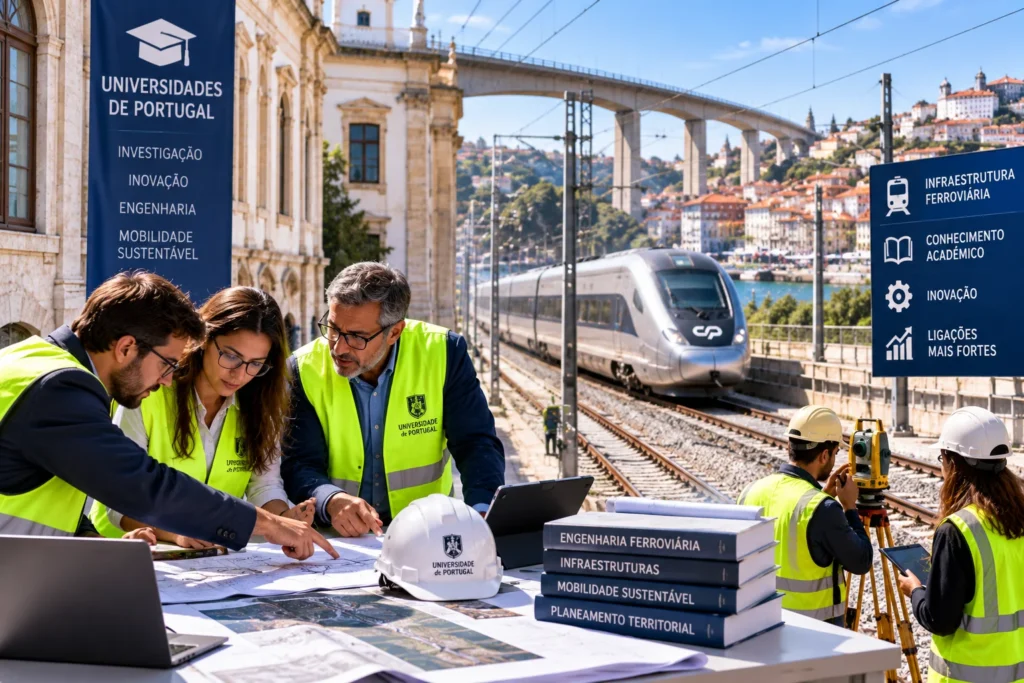
Following years of targeted strategic investment across the national transport network, Portuguese higher education institutions are expanding research initiatives focused on modernizing domestic rail infrastructure and transit manufacturing. Leading academic centers in Lisboa and Porto are shifting away from purely theoretical instruction toward hands-on engineering programs. These initiatives aim to upgrade primary passenger lines, improve rolling stock performance, and support sustainable transit development across the country.
Collaborative projects involving university researchers, municipal transit authorities, and national passenger operator Comboios de Portugal are generating practical solutions to enhance network efficiency. By combining academic engineering with industrial manufacturing, public transit programs are advancing technological innovation to support rising passenger volumes across major regional corridors and popular tourism destinations.
International Competition Highlights Engineering Excellence
A major milestone in national academic rail development involves student engineering teams competing in international mechanical engineering challenges. In Lisboa, Instituto Superior Técnico established the specialized ISTrain program, bringing together multidisciplinary engineering talent across mechanical, electrotechnical, aerospace, and industrial management fields. The student initiative focuses on designing lightweight, energy-efficient locomotives engineered to exact technical specifications.
During recent international engineering trials, the Portuguese team achieved outstanding results in virtual architecture, digital modeling, and commercial strategy evaluation. Participating alongside international competitors, the Lisboa team secured top awards for computer-aided design and business case viability. Technical reviews praised the design for its structural precision, aerodynamic efficiency, and practical application toward real-world commercial rail operations.
To ensure industrial relevance, student development teams conduct research and prototyping inside specialized manufacturing facilities while consulting with technical teams at major railway maintenance workshops in Entroncamento and Guifões. These collaborative efforts help validate digital designs, ensuring that new structural and electrical concepts translate effectively into operational passenger transit environments.
Regional Competence Centers Drive System Integration
In northern Portugal, the Faculty of Engineering at the University of Porto has consolidated its academic research into a dedicated Railway Centre of Competence. Established to unify academic study with industrial application, the center partners with international research initiatives, including the Europe’s Rail Joint Undertaking, to advance modern transport solutions across Europe.
The administrative structure of the competence center emphasizes a holistic system approach, integrating track infrastructure, rolling stock engineering, and digital communications networks. Specialized academic coursework addresses critical operational challenges, including:
Dynamic Track Interactions: Analyzing vehicle-track forces to extend rail lifespan and enhance passenger ride comfort along high-density routes.
Vibration and Noise Mitigation: Developing sound-dampening technologies to reduce noise pollution near urban residential areas and scenic travel corridors.
Condition Monitoring Systems: Implementing real-time digital sensors across rolling stock and wayside facilities to prevent mechanical failures and reduce maintenance downtime.
Energy Storage Solutions: Designing advanced traction systems and onboard battery storage units to minimize carbon emissions across non-electrified regional networks.
By combining public transport policy with advanced engineering education, Portugal is establishing a resilient foundation for its national rail system. These academic advancements directly support broader government objectives to improve passenger connectivity, reduce transport emissions, and provide efficient, high-capacity transit choices for both residents and international visitors exploring the region.
For more travel news like this, keep reading Global Travel Wire