Official statements issued by the Amiri Diwan and Qatar News Agency confirmed the passing of former Emir Sheikh Hamad bin Khalifa Al Thani at the age of 74. Serving as ruler from 1995 until his peaceful abdication in 2013, Sheikh Hamad directed a historic national transformation that repositioned the Gulf state into a prominent global destination for international business, leisure travel, cultural diplomacy, and sports tourism.
The foundation of modern tourism infrastructure across the peninsula relies heavily on economic policies initiated during his eighteen-year tenure. By prioritizing the strategic commercial development of the country’s natural gas reserves, national planning authorities channeled substantial revenue directly into public transit, hospitality networks, cultural institutions, and civil aviation assets. These public investments laid the essential framework required to support high-volume international passenger movements and position the nation as a major crossroads for cross-continental travel.
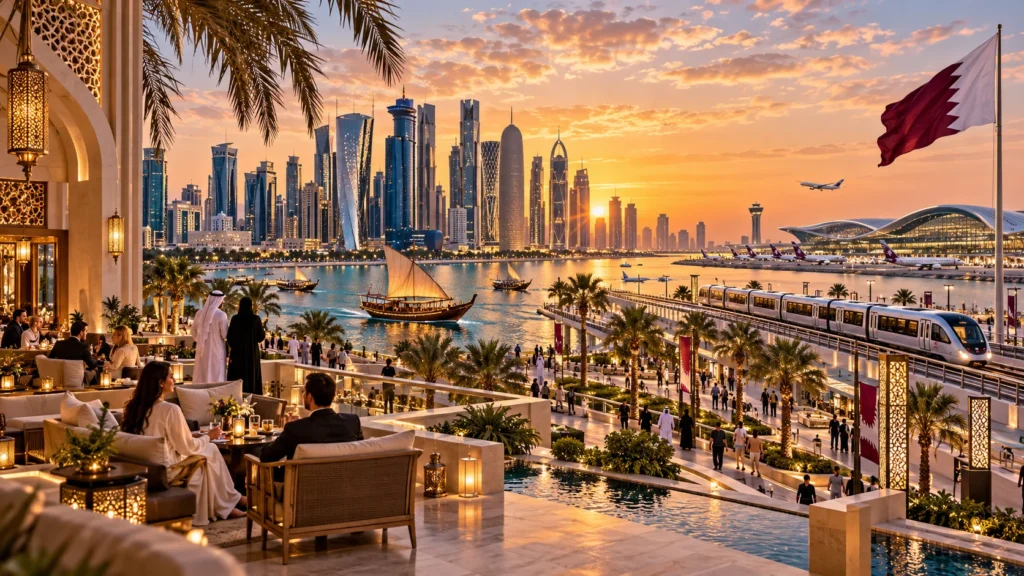
A primary pillar of this national tourism strategy involved the creation and rapid expansion of Qatar Airways into a premier global carrier. Under state development initiatives, the airline scaled its network to connect major international capitals directly with Doha, providing seamless long-haul transit and bringing millions of visitors through the country annually. Complementing the airline’s expansion, civil aviation authorities executed multi-billion-dollar construction programs to deliver state-of-the-art hub facilities, culminating in Hamad International Airport, which serves as a central gateway for global travelers.
Beyond transport logistics, national planning prioritized massive infrastructure expansion within the capital city and surrounding coastal zones. The establishment of flagship cultural destinations, such as the Museum of Islamic Art and Katara Cultural Village, reflected an official policy to integrate historical heritage with modern leisure spaces. Simultaneously, major real estate and hospitality projects transformed the coastline into a hub for luxury resorts, conference centers, and international hotel brands, significantly increasing regional room capacity and event capabilities.
Sports tourism emerged as a cornerstone of the national identity under government development strategies. The country actively pursued international hosting rights for major athletic championships, establishing dedicated entities to build world-class sports venues, training complexes, and spectator services. These long-term public investments culminated in securing and successfully delivering the 2022 FIFA World Cup, marking the first time the global tournament was hosted in the Middle East and bringing unprecedented international visibility to the nation’s tourism sector.
In parallel with physical infrastructure, state authorities expanded global investment initiatives to raise international brand recognition. Public investment funds acquired iconic international hospitality and retail assets, securing long-term stakes in luxury real estate, heritage hotels, and premier commercial properties across major world capitals. This outward-facing economic policy reinforced national standing while driving international interest back toward the Gulf region.
Government administration during this transformative era also emphasized smooth political succession and long-term planning stability. In June 2013, Sheikh Hamad voluntarily transferred authority to his son, His Highness Sheikh Tamim bin Hamad Al Thani, marking a peaceful transition designed to ensure continuity across state institutions and economic development programs.
Official statements from state agencies highlighted that the nation’s tourism framework, aviation connectivity, and modern hospitality infrastructure remain directly rooted in the long-term master plans enacted during his reign. The comprehensive development model established over the past three decades continues to guide national growth, ensuring the destination maintains its role as an international transit hub, cultural sanctuary, and premier event host.
For more travel news like this, keep reading Global Travel Wire