Global railway infrastructure is undergoing a significant transformation driven by strategic international partnerships, public-private investments, and modernization initiatives. Official announcements from national railway authorities, multilateral development organizations, and transport technology leaders demonstrate a unified push toward building integrated regional transport networks. By enhancing technical standards, expanding cross-border passenger corridors, and upgrading aging fleets, these initiatives support long-term regional connectivity and sustainable travel infrastructure across Europe, the Middle East, and Asia.
Expanding Cross-Border Rail Transit and Passenger Services
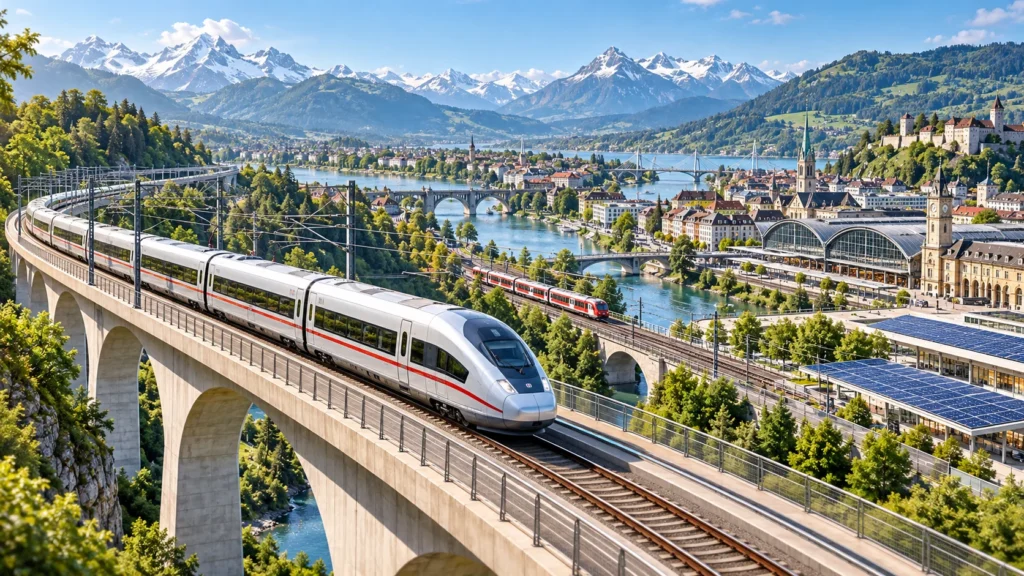
A primary focus of current international rail developments is the strengthening of cross-border passenger connections to facilitate seamless regional travel. In Central Europe, public infrastructure managers Port Polska and Czech infrastructure authority SŽ established a formal framework of cooperation during the InnoTrans industry assembly. The bilateral initiative prioritizes the preparation and development of the Katowice to Ostrava high-speed passenger rail link, designed to bridge the national networks of Poland and the Czech Republic.
The cross-border initiative plans to leverage financial mechanisms such as the European Union’s Connecting Europe Facility to accelerate construction and line integration. Beyond physical track alignment, the joint framework establishes protocols for technical interoperability, European Rail Traffic Management System implementation, unified safety regulations, and coordinated traffic modeling. Official statements emphasize that linking these high-speed networks creates expanded transit routes for travelers while positioning high-speed rail as a competitive alternative to regional air travel across Central Europe.
In Southeastern Europe, public passenger operators are directing funds toward modernizing overnight travel services. The European Bank for Reconstruction and Development is evaluating a sovereign-guaranteed loan of up to 30 million euros for Montenegro’s national passenger train operator, ZPCG. The proposed funding aims to acquire up to 10 modern sleeping cars to replace legacy rolling stock. This fleet overhaul will significantly enhance service quality, passenger safety, and operational capacity on international overnight passenger routes connecting Western Balkan urban centers.
Strategic Investments in Regional Transport Networks
Investment firms and state-backed entities continue to expand their positions within key transport corridors, recognizing the resilient demand for passenger and freight rail services. Infrastructure fund manager InfraRed Capital Partners acquired Scandinavian operator Hector Rail, reflecting strong institutional confidence in Nordic rail logistics and passenger mobility networks.
Concurrently, international credit agencies reaffirm the operational stability of key rail financing bodies. Rating agency Moody’s reaffirmed Eurofima’s long-term issuer rating at Aa2 with a stable outlook. As a major multilateral financial institution supporting passenger railway development across its shareholder states, Eurofima maintains a robust capital adequacy framework and pristine asset performance record. This rating stability ensures continuous access to liquid capital for European state railways seeking to upgrade long-distance passenger fleets and electrical power supply systems.
In the Middle East, national transport authorities are expanding technical partnerships to support urban transit networks and regional growth. Qatar Railways Company established a flexible, long-term strategic partnership with specialized engineering firm DB E&C. Under the agreement, technical advisors will provide specialized expertise covering railway systems design, operational safety, network power supplies, and digital system integration. These consulting resources directly support feasibility assessments for expanding municipal metro networks and developing new regional passenger services.
To support broader transit infrastructure across the Gulf Cooperation Council region, manufacturer Vossloh Switch Systems entered into a strategic memorandum of understanding with Estenad Industries Factory. Facilitated by the Saudi Railway Company and the Public Investment Fund, the collaboration aims to localize the industrial manufacturing of railway switches and crossing systems within Saudi Arabia, streamlining regional supply chains for upcoming high-speed passenger lines.
Digital Innovation and Next-Generation Communication Technology
The transition toward intelligent passenger management and operational safety relies heavily on digital software, artificial intelligence, and advanced communication networks. Software enterprise FPT signed a collaborative agreement with railway software specialist Zedas to integrate advanced software engineering, data analytics, and Internet of Things architectures into rail asset management systems. The joint platform utilizes artificial intelligence to enable predictive maintenance models, reducing unexpected service interruptions and improving overall passenger timetable reliability.
Simultaneously, telecommunications leaders Eviden and AllWayTon Technology unveiled a joint technology partnership to support the global transition from GSM-R legacy systems to the Future Railway Mobile Communication System, utilizing 5G wireless protocols. By introducing triple-mode communication hardware, railway operators can seamlessly manage critical communications across both legacy and next-generation networks during complex infrastructure upgrades.
In Israel, engineering firms Quattron and Nafat Engineering initiated a joint venture focused on comprehensive rail consultancy and project management. The combined team will deliver operational strategy, civil engineering, and technical project execution across mainline rail corridors, urban metro lines, and light rail transit systems.
Through coordinated investments in passenger fleet modernization, advanced traffic management, and cross-border rail transit, public and private transportation entities are building a resilient foundation for global travel, ensuring long-term connectivity across international borders.
For more travel news like this, keep reading Global Travel Wire