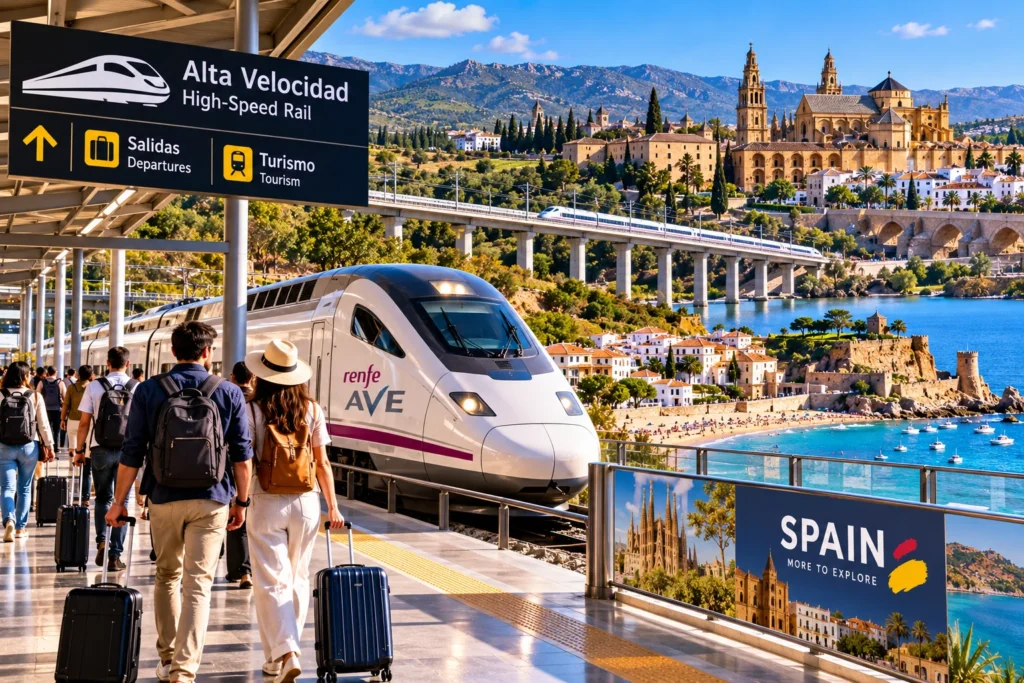
International tourism to Spain reached an all-time high during the first eight months of the year, cementing the nation’s position as one of the world’s premier holiday destinations. Official data released by Spain’s National Statistics Institute confirms that 70.4 million international visitors arrived in the country between January and August, representing a 5.4 percent increase compared to the same period in the previous year.
Along with rising visitor volumes, total economic yield from international travelers achieved historical records. Foreign visitor expenditure grew by 8 percent year-over-year, reaching €99.8 billion. The official statistical report highlights that strong forward bookings across hotel networks, tour operators, and travel agencies indicate sustained demand through the final quarter of the year.
If current growth trajectories hold, official projections suggest Spain could surpass 100 million annual foreign arrivals for the first time in its history, with total annual visitors estimated to reach up to 102 million. This follows a record-breaking performance in the previous year when the nation welcomed 97 million international travelers.
European Source Markets Lead Historic Influx
Traditional European markets continue to provide the foundation for Spain’s tourism growth. Official country-of-origin data identifies the United Kingdom, France, and Germany as the primary source markets driving foreign arrivals.
Sustained demand from these neighboring European nations has been reinforced by expanded flight capacities, increased high-speed rail connections across borders, and year-round destination marketing campaigns launched by Turespaña, the national tourism board. Regional destinations across the Mediterranean coast, the Balearic and Canary Islands, and cultural urban centers like Madrid and Barcelona recorded peak occupancy levels throughout the summer season.
World-Class Infrastructure and Regional Connectivity
Spain’s sustained growth as an international travel hub is underpinned by extensive long-term public investments in transport and urban infrastructure. The nation operates the world’s second-largest high-speed rail network, providing low-emission, high-efficiency connections between major metropolitan areas, cultural heritage sites, and coastal regions.
Additionally, ongoing modernization programs across state-managed airports have streamlined passenger processing, increased terminal capacity, and expanded direct long-haul international air routes. The seamless integration of rail and aviation transport networks allows international visitors to easily combine multi-city cultural itineraries, regional gastronomy tours, and coastal vacations within a single trip.
Stability and Safety Drive Global Traveler Preference
Official statements from tourism authorities emphasize that Spain’s reputation as a secure, stable, and welcoming destination remains a critical factor in driving international travel choices. Amid geopolitical shifts and travel disruptions in alternative regional markets, global travelers are increasingly prioritizing destinations that offer high safety standards, well-regulated hospitality environments, and reliable public services.
The diversity of Spain’s tourism offerings has also successfully broadened its appeal beyond traditional seasonal beach tourism. Official tourism campaigns promoting cultural heritage, eco-tourism trails, national parks, world-class culinary experiences, and business travel (MICE) have effectively distributed visitor traffic across all twelve months of the year, reducing seasonal concentration and supporting local economies nationwide.
Economic Outlook for Spain’s Tourism Industry
The continuous surge in visitor numbers and foreign expenditure plays a crucial role in supporting national employment, service sector expansion, and broader economic stability. With foreign tourism expenditure nearing the €100 billion mark in just eight months, the sector remains a fundamental pillar of Spain’s gross domestic product.
State tourism representatives and industry leaders remain focused on managing this growth sustainably. Strategic priorities outlined by public tourism bodies emphasize balancing high visitor volumes with local community needs, promoting off-peak travel, encouraging long-stay tourism, and investing in sustainable hospitality infrastructure to ensure Spain maintains its global tourism leadership for years to come.
For more travel news like this, keep reading Global Travel Wire