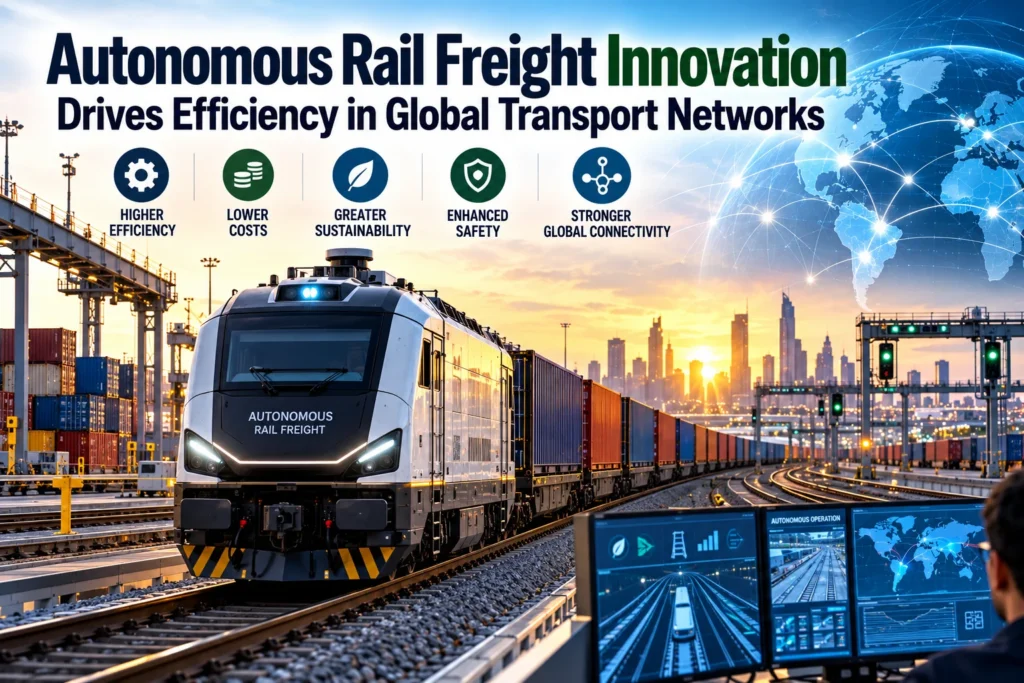
Global freight rail operations are entering a vital era of technological integration. For decades, long-distance logistics relied strictly on heavy locomotives, manual dispatching, fixed track timetables, and centralized mechanical signaling to transport cargo. Today, rising operating expenditures, shifting labor dynamics, and increasing demand for rapid supply chain operations are prompting transport authorities and logistics leaders to modernize physical and digital infrastructure.
According to official transport sector analysis by the International Energy Agency (IEA), rail transport represents one of the most energy-efficient modes of land movement globally. IEA energy statistics indicate that rail carries approximately seven percent of global freight movement while drawing only about two percent of total transport sector energy demand. Expanding network capacity through automation offers a sustainable pathway to lower logistics emissions and streamline cargo movements nationwide.
Autonomous freight rail systems combine artificial intelligence, environmental sensors, automated braking mechanisms, digital signaling architectures, and wireless communications platforms. By minimizing manual intervention along high-density corridors, automated transport networks enhance operational safety, expand overall track capacity, and establish predictable schedules that directly support commercial supply chains and tourism-related freight logistics.
Expanding Short-Haul Logistics and Sustainable Supply Chain Connections
Traditional rail logistics models excel at moving high-volume cargo across vast distances. However, standard operations face flexibility challenges when managing smaller cargo volumes or short-haul routes where rapid, frequent deliveries are required. In major economies, long-distance trucking historically dominated short-haul transit due to lower initial deployment times, despite generating higher carbon emissions.
Automated rail technologies bridge this efficiency gap by enabling self-propelled, battery-electric rail vehicles to operate safely on existing tracks. Official public filings from federal transport regulators, such as the United States Federal Railroad Administration (FRA), highlight growing research into automated train operations, advanced braking protocols, and sensor-based hazard detection systems. FRA network simulations demonstrated that implementing advanced automated train control systems across representative rail networks reduced operational delays by up to four percent while boosting overall track throughput.
Modernizing rail transport directly benefits sustainable tourism development. Major tourist destinations, eco-resorts, and remote hospitality sectors depend on smooth, low-emission supply chains to deliver food, beverages, equipment, and consumer goods. Transitioning freight movements from highway networks to autonomous electric rail systems reduces highway congestion, lowers localized carbon footprints, and enhances environmental preservation across scenic travel corridors.
Global Infrastructure Investment and Technology Integration in Freight Networks
Commercial adoption of autonomous rail technology is accelerating through significant infrastructure funding and public-private capital initiatives. Industry development data confirms that advanced transport mobility companies are scaling manufacturing capabilities, expanding regulatory commercial pilot programs, and deploying autonomous battery-electric rail fleets across regional ports and intermodal distribution centers.
Digital transformation across railway systems extends well beyond individual locomotives. International infrastructure standards, such as Europe’s European Rail Traffic Management System (ERTMS), incorporate Automatic Train Operation (ATO) alongside next-generation 5G mobile communications and digital signaling. These technological upgrades allow moving-block signaling models to safely decrease distances between operating vehicles, significantly multiplying network capacity without requiring costly new track construction.
By optimizing route scheduling, improving energy efficiency, and automating high-risk yard switching tasks, autonomous freight rail enhances overall transport safety and operational resilience. As civil transport agencies and global logistics providers expand digital rail operations, the unified transport system strengthens global economic resilience, supports sustainable tourism infrastructure, and advances global carbon reduction goals.
For more travel news like this, keep reading Global Travel Wire