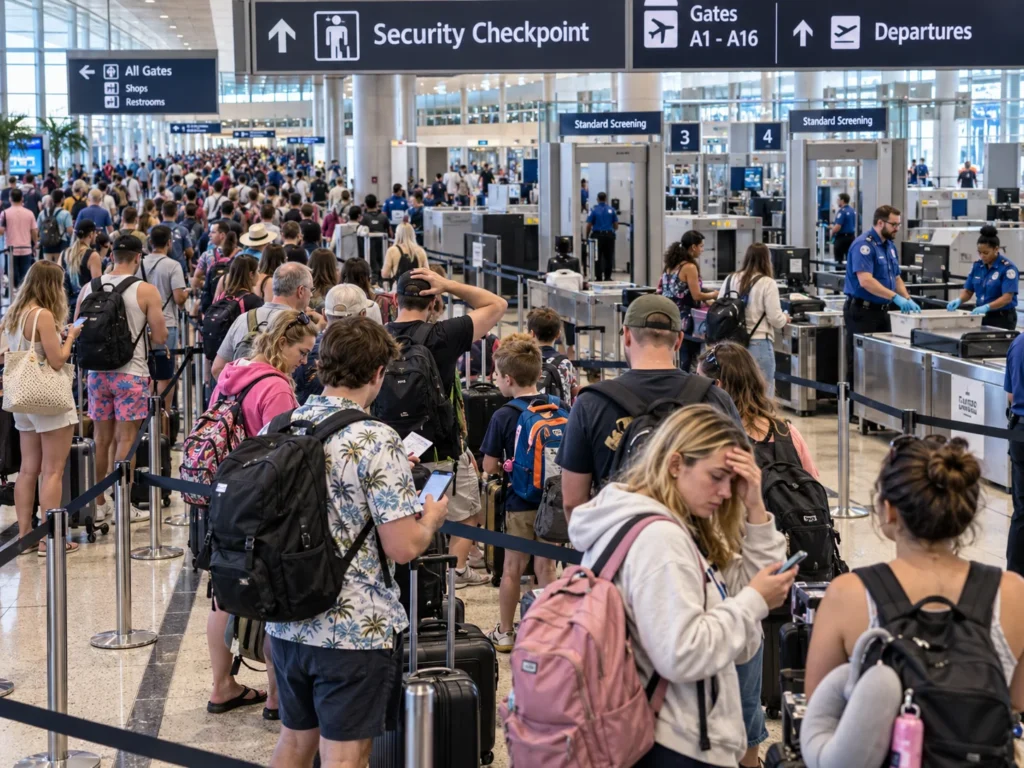
Travelers navigating major airports across the United States are encountering significant security line delays as the peak Spring Break travel season intersects with critical Transportation Security Administration (TSA) staffing shortages. Federal officials from the Department of Homeland Security (DHS) have confirmed that security checkpoints at several high-volume hubs are experiencing extended queues, with wait times reaching up to three hours during peak operational hours.
The operational strain arrives during one of the busiest transit periods of the calendar year. According to seasonal projections released by national aviation trade organizations, commercial airlines are scheduled to transport approximately 171 million passengers between March 1 and April 30. This volume represents a 4 percent increase over previous annual statistics, averaging nearly three million air travelers passing through domestic security checkpoints each day.
To prevent missed flights and reduce terminal overcrowding, airport authorities and government representatives are advising all departing passengers to arrive at airport facilities three to four hours before scheduled departure times.
Affected Metropolitan Airport Hubs

• Houston, Texas: George Bush Intercontinental Airport & William P. Hobby Airport
• Atlanta, Georgia: Hartsfield-Jackson Atlanta International Airport
• New Orleans, Louisiana: Louis Armstrong New Orleans International Airport
• Charlotte, North Carolina: Charlotte Douglas International Airport
Regional Security Checkpoint Disruptions and Reduced Lane Capacity
Extended wait times and limited throughput have been recorded across several primary air transit hubs in the Southern and Southeastern corridors. Facilities facing severe checkpoint congestion include William P. Hobby Airport and George Bush Intercontinental Airport in Houston, Texas; Hartsfield-Jackson Atlanta International Airport in Georgia; Louis Armstrong New Orleans International Airport in Louisiana; and Charlotte Douglas International Airport in North Carolina.
At William P. Hobby Airport, official airport management confirmed that security operations were forced to transition to limited capacity after closing dedicated TSA PreCheck lanes. The reduction in operational screening lanes was necessitated by duty attendance shortages among federal screening personnel, resulting in combined passenger processing lines for standard and expedited travelers.
While federal guidelines state that TSA PreCheck services remain generally operational nationwide, individual airport authorities maintain the administrative flexibility to evaluate screening operations on a case-by-case basis and adjust designated lanes according to real-time staffing availability. Additionally, administrative processing for the Global Entry trusted traveler program remains fully suspended due to federal funding constraints.
Aviation Industry Calls for Immediate Resolution
Representatives from national aviation trade groups, airport operations executives, and airline leadership have issued joint statements calling for immediate administrative action to stabilize the federal transportation security workforce. Industry organizations emphasize that while commercial air carriers expanded flight capacity and ground operations in anticipation of seasonal demand, staffing shortfalls at federal checkpoints create localized bottlenecks that disrupt flight schedules nationwide.
Airport executive associations noted that prolonged workforce strain risks increasing absenteeism and high turnover rates among certified screening officers. Although municipal airport departments and local business partners have initiated temporary support measures—such as providing basic meals and transit subsidies to essential security personnel—industry leaders stress that permanent workforce stability requires consistent federal funding.
Federal agency spokespersons affirmed that despite screening throughput delays and reduced lane capacity, security screening protocols will not be compromised or shortened. Airport operations teams urge all Spring Break travelers to verify live flight status updates with their respective air carriers, pack essential items in compliance with baggage rules to accelerate inspection times, and build substantial extra time into their ground transit schedules.
For more travel news like this, keep reading Global Travel Wire