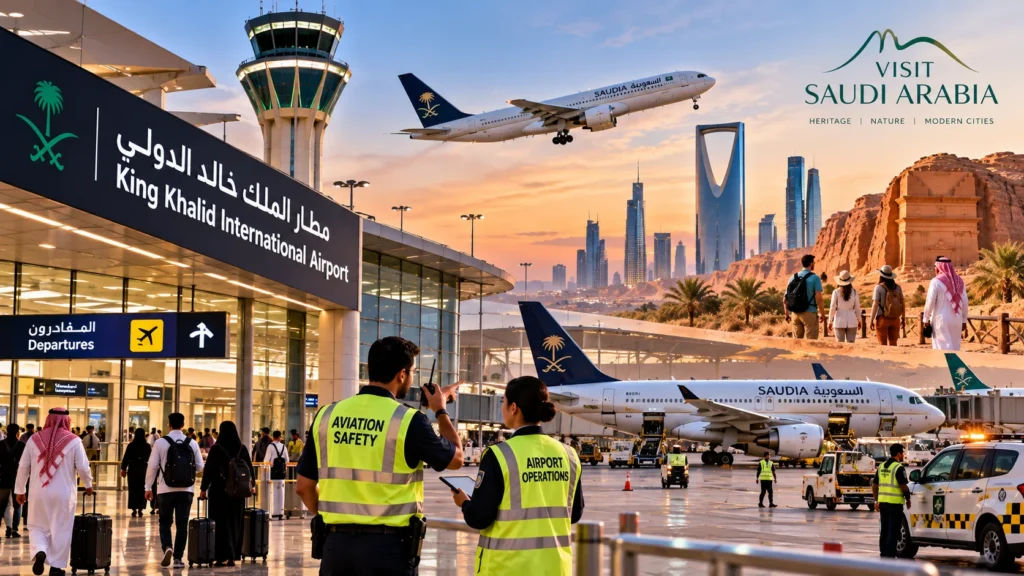
Saudi Arabia’s multi-billion-dollar tourism development targets face a critical turning point following recent security incidents at King Khalid International Airport in Riyadh. Official announcements from civil aviation authorities confirm that strikes targeting primary airport facilities led to casualties, passenger injuries, and physical damage to terminal infrastructure. The disruptions forced the temporary suspension of commercial flights, causing widespread air traffic rerouting across the capital’s central transit hub.
For the Kingdom’s expanding tourism sector, these security developments present immediate operational and strategic challenges. Under national economic transformation plans, multi-billion-dollar capital investments have been allocated toward building world-class hospitality properties, launching new national air carriers such as Riyadh Air, and expanding airport processing capacity. Maintaining long-term investor and traveler confidence depends heavily on ensuring the absolute security of civilian transport infrastructure.
Recent Security Incidents Impact Aviation Operations in Riyadh
Official statements from Saudi Arabia’s General Authority of Civil Aviation confirm that recent attacks on King Khalid International Airport resulted in severe operational friction. Security teams and emergency services were deployed across affected passenger concourses to oversee emergency response procedures, assess structural conditions, and ensure site safety.
The physical damage and subsequent operational freezes led to widespread schedule modifications:
Flight Groundings and Diversions: Commercial flight monitoring data showed that over 300 international and domestic arrival and departure flights were canceled or redirected to alternate airfields during peak operational periods.
Terminal Safety Measures: Sections of departure gates and passenger halls were temporarily closed to facilitate safety sweeps and structural evaluations.
Diplomatic Travel Alerts: International diplomatic missions, including embassies representing the United States, the United Kingdom, and Canada, issued security advisories recommending that foreign nationals avoid the airport perimeter until security conditions stabilize.
Civil aviation authorities continue working alongside national defense departments and international carriers to clear air traffic backlogs, implement augmented security protocols, and restore normal commercial flight schedules.
Protecting Long-Term Investments in the Hospitality Ecosystem
The disruption arrives at a pivotal juncture in Saudi Arabia’s national development timeline. Over the past five years, the Kingdom has established itself as one of the fastest-growing leisure and business travel destinations globally. Capital deployment across mega-projects—including heritage restorations in AlUla, luxury coastal developments along the Red Sea, and urban entertainment districts in Riyadh—has relied on uninterrupted international air connectivity.
The capital city serves as the central focal point for international business travel, hosting global investment forums, trade exhibitions, and diplomatic summits. Ongoing airport security concerns create operational uncertainty for international conference organizers, hotel operators, and corporate investors evaluating long-term commitments in the region.
Industry observers note that while physical assets such as hotels and resort infrastructure remain intact, maintaining high occupancy rates requires consistent international visitor inflows. Extended transit disruptions could lead to temporary reductions in leisure travel bookings and higher operating costs for regional transport providers.
Regional Air Travel Protocols and Strategic Resilience
In response to heightened security requirements across regional airspace, Saudi civil aviation officials have activated secondary transit management protocols. Authorities are coordinating closely with international aviation bodies to monitor flight corridors, enhance perimeter defense systems around transportation hubs, and provide real-time updates to operating airlines.
While security protocols are applied across national transit points, government ministries maintain that scheduled economic development initiatives and international business assemblies will continue under reinforced safety measures. The resilience of the Kingdom’s tourism strategy relies on its capacity to protect vital transport channels, reassure international trade partners, and demonstrate robust crisis management across its civil aviation network.
Travelers holding upcoming reservations to or through King Khalid International Airport are urged to monitor official flight announcements from civil aviation bodies, maintain direct communication with booking agents, and adhere to security guidelines published by national diplomatic authorities.
For more travel news like this, keep reading Global Travel Wire