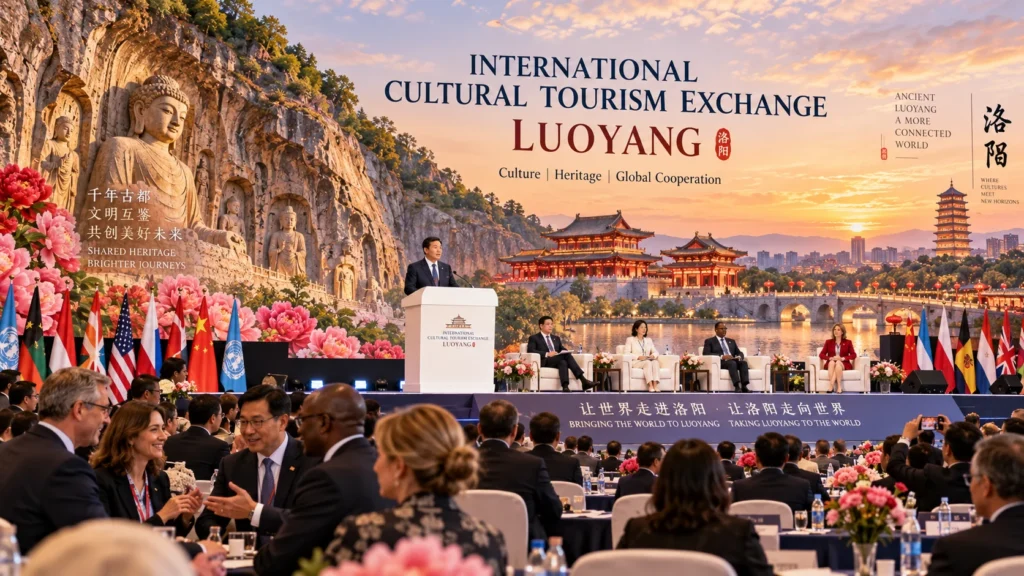
The ancient capital of Luoyang, situated in central China’s Henan Province, hosted municipal delegation leaders, urban policy planners, and international diplomatic representatives for the 2026 Global Mayors Dialogue. Organised under official state guidance alongside the 7th International Ancient Capitals Forum, the summit provided an international platform to highlight how historical preservation, sustainable tourism development, and public-private municipal governance intersect in modern urban ecosystems.
Centred around the theme of connecting cities through heritage and shared industrial innovation, the gathering convened international mayors and municipal delegations to examine Luoyang’s long-standing model of cultural asset management. As the historic capital of 13 ancient dynasties and a major convergence point along the historical Silk Road, Luoyang serves as an active living lab for integrating physical heritage sites with modern travel infrastructure and economic development programs.
Global Delegations Explore Heritage Preservation at Longmen Grottoes
A major focal point of the official program involved an onsite study visit to the Longmen Grottoes, a recognized UNESCO World Heritage Site located along the Yi River banks. Constructed over four centuries beginning in 493 AD during the Northern Wei Dynasty, the expansive archaeological complex contains over 2,345 cave niches, nearly 110,000 Buddhist stone statues, 80 pagodas, and over 2,800 inscribed steles.
During the guided tour, municipal representatives from nations including Cambodia and Uganda examined the site’s advanced conservation framework. Local heritage authorities presented their comprehensive protection model, which incorporates digital structural monitoring, scientific stone restoration techniques, water runoff governance, and environmental impact controls to safeguard ancient stone carvings while accommodating high-capacity international visitor numbers.
Visiting municipal officials emphasized the necessity of technical cooperation and global knowledge sharing to maintain fragile historical monuments. Representatives noted that sustainable heritage management requires balancing structural protection with controlled public access, allowing global travelers to engage directly with historical artifacts without compromising environmental or structural integrity.
Harnessing Nighttime Cultural Tourism and Urban Revitalization
Beyond static heritage conservation, official dialogue sessions focused on how urban centers can revitalize historical districts into dynamic economic hubs. Delegations conducted evening visits to Luoyi Ancient City, an urban preservation district that showcases traditional architecture, intangible cultural heritage performances, and interactive cultural experiences.
Municipal releases demonstrate how Luoyang’s targeted investment in the night-time economy has stimulated local commercial growth. Key elements of the urban tourism strategy include:
Interactive Cultural Engagement: Encouraging domestic and international visitors to rent traditional regional attire, participate in traditional crafts, and explore historical calligraphy workshops.
Sustainable Commercial Integration: Balancing heritage district zoning with local culinary vendors, boutique homestays, and artisan shops that generate direct municipal revenue.
Targeted Lighting Infrastructure: Deploying energy-efficient architectural illumination across ancient towers, canals, and pedestrian streets to extend operating hours and increase visitor dwell time.
International delegates observed that converting passive historical zones into immersive, living cultural quarters offers a replicable model for municipalities seeking to diversify urban tourism economies while preserving local identity.
Driving Economic Value Through Cross-Border Municipal Partnerships
The 2026 Global Mayors Dialogue underscored the economic benefits that stem from structured cross-border municipal partnerships. Tourism ministry releases indicate that cross-city cultural exchanges generate measurable returns by expanding international flight connectivity, establishing joint promotional campaigns, and creating bilateral travel incentives.
During round-table discussions, representatives from participating cities stressed that cultural tourism serves as a crucial bridge for broader bilateral cooperation, opening avenues for international investment, trade delegations, and educational student exchanges. Official economic data reveals that sustained investments in heritage preservation and modern visitor management systems directly support local employment across hospitality, transportation, retail, and event management sectors.
By combining rigorous scientific conservation with interactive urban experiences and international city diplomacy, Luoyang continues to position its ancient landmarks as sustainable economic engines, offering valuable insights for urban leaders worldwide.
For more travel news like this, keep reading Global Travel Wire