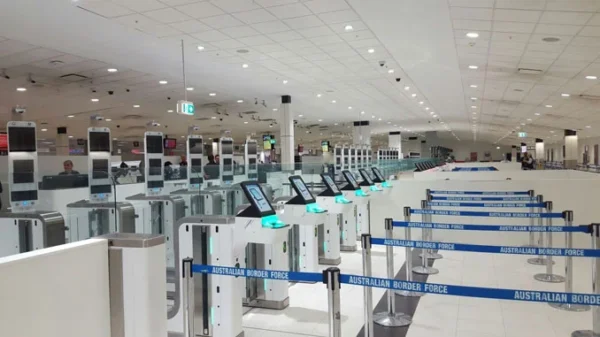
Australia, New Zealand and several Pacific nations are expanding digital border systems, introducing more automated checks and electronic arrival procedures.
The developments could simplify international journeys by reducing paperwork and collecting passenger information before arrival. However, travellers must still carry valid physical passports.
Australia’s expanding digital declarations, New Zealand’s biometric gates and Fiji’s electronic passport compatibility illustrate different approaches to modernisation.
Papua New Guinea, Solomon Islands and Palau are also developing electronic border services. Together, these initiatives could improve access procedures across tourism-dependent destinations.
Nevertheless, Oceania has no single passport-free travel arrangement. Each country retains responsibility for its immigration requirements and technology.
Australia Expands Digital Passenger Processing
Australia announced A$56.1 million over four years in July 2026 to modernise international traveller processing.
The programme includes digital arrival declarations and improvements to border management technology.
Its declaration trial began in October 2024 on selected Qantas international services. By July 2026, more than 450,000 passengers had participated.
The trial involved arrivals into Brisbane, Sydney and Melbourne. Australia intends to introduce digital passenger declarations across international airports and seaports before 2027 ends.
Meanwhile, established SmartGates allow eligible passengers to complete parts of immigration processing through automated identity verification.
These measures could reduce repetitive administrative steps. However, eligibility and entry conditions still apply, including requirements for appropriate travel documents.
New Zealand Combines Biometrics and Declarations
New Zealand operates automated immigration gates at Auckland, Wellington, Christchurch and Queenstown international airports.
The gates use facial recognition to compare passengers with identity information stored in their electronic passports.
Eligible travellers aged 10 and older can use them, subject to nationality, passport compatibility and immigration requirements.
Separately, the New Zealand Traveller Declaration collects immigration, customs and biosecurity information electronically.
Providing those details before arrival can reduce reliance on paper forms and help authorities prepare for passenger processing.
However, completing a declaration does not replace a passport or establish permission to enter. Travellers must satisfy all applicable immigration conditions.
Fiji Improves Electronic Passport Compatibility
Fiji confirmed in July 2025 that its biometric ePassports had become compatible with Australia’s SmartGate facilities.
The development enables eligible Fijian passport holders to use automated processing when entering Australia, provided they meet the relevant conditions.
This improves a travel corridor supporting holidays, employment, education and family visits.
Fiji has also advanced passenger-data modernisation through Advance Passenger Information and Passenger Name Record systems.
Those systems help authorities receive and assess relevant airline passenger information before arrival.
However, electronic passport compatibility differs from passport-free travel. Fiji’s progress centres on secure documentation and border administration, with physical passports remaining necessary.
Pacific Destinations Reduce Arrival Paperwork
Papua New Guinea introduced its Digital Arrival Card on October 1, 2025, and reinforced the mandatory requirement in August 2026.
The system collects arrival details electronically as part of broader efforts to integrate immigration, customs and quarantine processes.
For visitors entering through Port Moresby’s Jacksons International Airport, the declaration represents an additional pre-arrival task requiring attention.
Palau introduced an online entry declaration in February 2024. Passengers receive a QR code after submitting the required information.
The approach reduces dependence on paper forms while allowing authorities to receive arrival information electronically.
In both countries, digital declarations support administration. They do not replace identity documents, visas or other applicable entry permissions.
Solomon Islands Develops Electronic Border Services
Solomon Islands installed its Border Management System in July 2024, followed by an electronic visa system in October 2025.
An electronic payment gateway followed in August 2026, supporting further digital immigration transactions.
The supplied government information identifies approximately A$18 million in Australian funding for the border management system.
These developments could improve administrative coordination and make relevant applications more convenient.
However, they do not establish general passport-free airport clearance. Visitors must continue meeting passport-based entry requirements.
Tourism Benefits Depend on Reliable Operations
For tourism businesses, smoother arrival procedures could improve the beginning of a visitor’s holiday.
Electronic declarations and automated checks may reduce repeated paperwork, helping passengers navigate airport formalities more efficiently.
Nevertheless, technology alone does not guarantee shorter queues. Staffing, passenger volumes and system performance influence the actual experience.
Different national systems also create challenges for travellers visiting several destinations. A declaration completed for one country does not satisfy another country’s requirements.
Physical Passports Remain Essential
No confirmed date establishes when travellers could cross borders throughout Oceania without carrying physical passports.
Such arrangements would require compatible identity systems, secure information exchange and legal recognition between participating governments.
For now, passengers should complete destination-specific declarations and check their eligibility for automated processing before departure.
They should also carry valid passports and meet applicable visa requirements. Digital border services change how authorities process journeys, while entry obligations remain in force.
For more travel news like this, keep reading Global Travel Wire