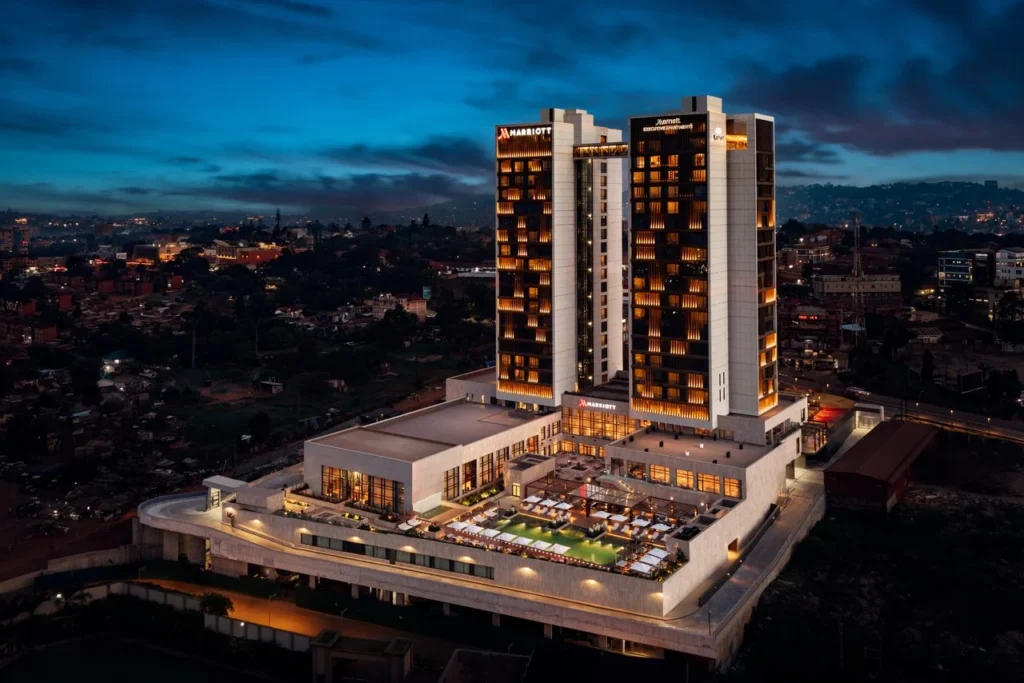
Uganda’s business tourism offering has expanded with the opening of Kampala Marriott Hotel and Marriott Executive Apartments Kampala. The properties began welcoming guests on 27 August 2026, adding accommodation and meeting facilities to the capital.
The hotel offers 181 rooms and suites, while the executive apartments provide 96 fully serviced units. Together, they serve conference delegates, corporate visitors and professionals requiring longer stays.
The opening gives Kampala additional options as African destinations compete for meetings, conferences and exhibitions. However, attracting events also requires convenient flights, reliable transfers and coordinated services beyond the hotel.
For Uganda, the opportunity extends to restaurants, transport providers, guides and other businesses serving visiting delegates.
Kampala Caters to Different Business Stays
The combined hotel and apartment development addresses different travel patterns within the corporate market. Conference participants may require accommodation for several nights, while consultants and project teams can need longer arrangements.
Serviced apartments broaden the choices available to executives, diplomats and other extended-stay visitors. Meeting venues and restaurants add facilities relevant to both individual travellers and organised groups.
This combination creates opportunities to connect accommodation with business events and ongoing professional assignments.
Nevertheless, the opening alone does not demonstrate increased visitor demand or higher hotel occupancy. Those outcomes require subsequent booking, visitor and accommodation data.
The immediate change is additional operating capacity that businesses and event planners can consider when organising Kampala stays.
African Competition Extends Beyond Venue Size
Across Africa, destinations are developing different combinations of accommodation, conference space and visitor experiences.
Mombasa illustrates the importance of connecting event facilities with transport access. Its Tembo International Convention Centre lists capacity for up to 1,500 people in its largest theatre-style hall.
The venue also provides 2,590 square metres of exhibition space. Its coastal setting creates opportunities to combine meetings with a leisure stay.
However, stakeholders at the Africa MICE Summit in October highlighted air connectivity, fares and infrastructure as priorities.
For Kampala, the wider lesson concerns the complete delegate journey. Organisers assess arrival options, transfer arrangements and available rooms alongside the meeting venue.
Rwanda Demonstrates the Value of Measured Results
Rwanda’s business-events figures provide a regional example of activity measured beyond investment announcements.
The country reported US$94.7 million in meetings, incentives, conferences and exhibitions earnings during 2025. That compares with US$84.8 million in 2024.
Its 2025 figures also recorded 165 international and regional events attracting more than 61,000 delegates.
These are national results for 2025, rather than Kigali-only totals or a measure of 2026 performance.
They nevertheless illustrate the types of indicators that help destinations assess business tourism. Event numbers, delegate arrivals and reported earnings provide a clearer picture than venue capacity alone.
Uganda’s new accommodation investment will likewise need operating results to establish its longer-term contribution.
Local Suppliers Can Share Event Spending
Business tourism creates demand for services extending beyond accommodation and conference halls. Delegates require meals, transport and, where time permits, activities outside their meetings.
Cape Town’s Made in the Cape programme offers one example of events supporting wider commercial connections.
In March 2026, it brought together 34 international buyers from 17 countries and more than 230 Western Cape exporters.
The programme included over 400 structured business-to-business meetings at the Cape Town International Convention Centre.
Meanwhile, Gauteng officials have highlighted event-related revenue reaching small enterprises and township tourism.
These examples point towards opportunities for Kampala businesses when organisers incorporate local suppliers into event arrangements. Participation depends on practical access to procurement and service opportunities.
Planned Hotels Remain Separate From Operating Capacity
The continental investment picture also includes properties that have not yet opened. Their potential contribution must remain distinct from accommodation already welcoming guests.
Accra and the Lungi airport area serving Freetown feature future hotel additions in the supplied development overview.
Lusaka’s proposed Hilton Lusaka Pyramid is scheduled for 2027, with 211 rooms and suites. Plans also include more than 4,000 square metres of meeting and event space.
These projects indicate future ambitions rather than rooms available for current conferences.
Kampala’s August opening therefore represents a different stage: completed accommodation entering the market and seeking business.
Uganda’s Next Test Is Converting Capacity Into Visits
The new Marriott properties strengthen Kampala’s accommodation choices for short visits, conferences and extended professional stays.
Their tourism significance will depend on how effectively hotels, organisers, transport providers and local businesses coordinate the visitor experience.
Convenient travel arrangements can help delegates use their time efficiently and explore beyond the meeting room.
For Uganda business tourism, the next indicators to watch include event bookings, occupancy, longer stays and local supplier participation.
Those outcomes will show how additional hotel capacity translates into sustained activity across the capital’s visitor economy.
For more travel news like this, keep reading Global Travel Wire