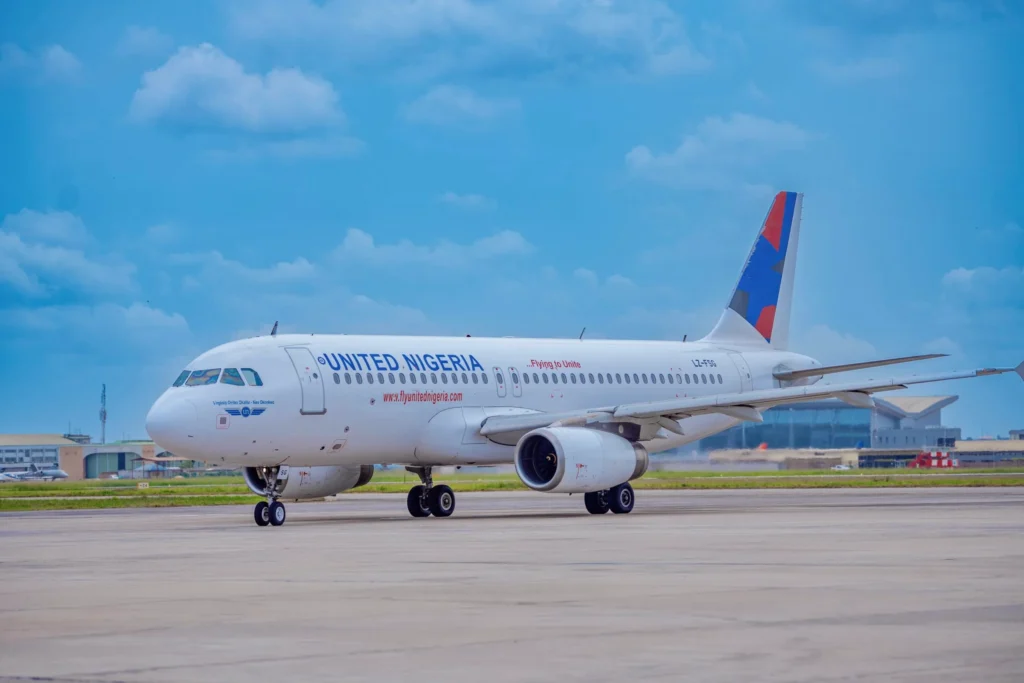
United Nigeria Airlines is reportedly seeking ₦20 billion through short-term borrowing to support expansion. However, the supplied information does not establish that fundraising has closed or that the airline has received the money.
The proposed transaction falls under a ₦100 billion programme, with repayment periods of 270 and 364 days. For passengers, its significance depends on whether financing translates into dependable flights and confirmed additional capacity.
As of October 17, 2026, the available account provided no independently confirmed funding completion date. It also established no linked launch timetable, fare reductions or increase in tourism activity.
Financing Target Remains Separate From Proceeds
The proposed ₦20 billion borrowing represents one-fifth of the stated programme value. However, a programme establishes a financing framework rather than proof that investors have supplied the full amount.
Similarly, proposed repayment periods describe the borrowing structure. They do not establish aircraft deliveries, additional departures or the commercial performance of future services.
Nigeria’s published commercial-paper framework allows maturities ranging from 30 to 364 days. Processing requirements introduced on July 1, 2025, include prior regulatory review and approval.
The framework also requires investment-grade credit ratings and financial records. These financial requirements remain separate from aviation safety certification and operational permissions.
Consequently, any completed transaction would require its own confirmation before becoming the basis for claims about funded expansion.
Operational Capacity Shapes Passenger Benefits
The airline’s growth ambitions sit alongside operational instructions issued in September. Following a September 9 meeting, a September 10 notice required improvements in service standards and passenger protection.
The instructions called for operations to match available aircraft capacity. They also required fewer active routes when aircraft became unavailable, linking the published timetable to usable resources.
For travellers, this requirement matters because additional destinations offer limited value when schedules exceed an operator’s capacity. Reliable departures and realistic connections remain central to the passenger experience.
The notice also identified shortcomings involving disruption information, assistance and refunds. It recorded a commitment to resolve outstanding refunds within 14 days.
However, that commitment does not establish that every refund subsequently reached the passenger. The instructions also did not constitute a nationwide suspension.
Tourism Gains Depend on Delivered Services
More dependable domestic flights could support business trips, family visits and access to destinations across Nigeria. Hotels, attractions and transport providers benefit when visitors can plan arrivals with confidence.
Nevertheless, the financing proposal alone provides no evidence of additional bookings or higher visitor spending. Those outcomes require operating services and measurable demand.
A national aviation assessment estimated that Nigeria’s wider aviation economy supported US$2.5 billion in economic output during 2023. It also supported approximately 216,700 jobs.
Within that total, aviation-supported tourism accounted for US$454.1 million and 66,600 jobs. Adding those tourism estimates again would overstate the overall contribution.
These historical figures explain aviation’s economic importance. They cannot demonstrate the results of a borrowing proposal reported in 2026.
Domestic Connectivity Remains Important
Domestic journeys represented 77% of origin–destination passenger departures in the assessment, compared with 23% for international journeys. This distribution highlights the importance of internal air access.
However, passenger departures do not measure unique tourists, hotel nights or holiday bookings. They also do not establish a current tourism growth rate.
For United Nigeria Airlines, any expansion would therefore need assessment through confirmed schedules and delivered capacity. Announced ambitions alone cannot show whether passengers have gained better connections.
Travel businesses would also need dependable timings before building packages around additional flights. Clear booking availability would provide stronger planning information than a financing target.
Regional Policy Work Follows a Separate Track
Nigeria inaugurated an oversight committee on October 14 to advance implementation of West African aviation obligations. Its responsibilities include a roadmap, compliance reviews and identifying policy gaps.
The work covers charges, taxes and fees, alongside objectives involving transparency, competition and lower travel costs.
However, creating the committee does not establish an immediate ticket discount. Nor does the available information show that this policy process caused the airline’s borrowing proposal.
Implementation measures and commercial financing require separate assessment. Neither should automatically become evidence of cheaper flights or stronger passenger demand.
Confirmed Journeys Offer the Clearest Guide
Passengers should assess services actually available for booking, including dates, airports, baggage conditions and change rules. Connecting travellers should establish whether one ticket covers every sector.
They should also confirm responsibility for missed connections and retain written booking and disruption records.
The next developments to watch are confirmation of completed funding, available aircraft and published operating schedules. Until then, United Nigeria Airlines’ reported ₦20 billion target remains an expansion proposal with passenger benefits still to demonstrate.
For more travel news like this, keep reading Global Travel Wire