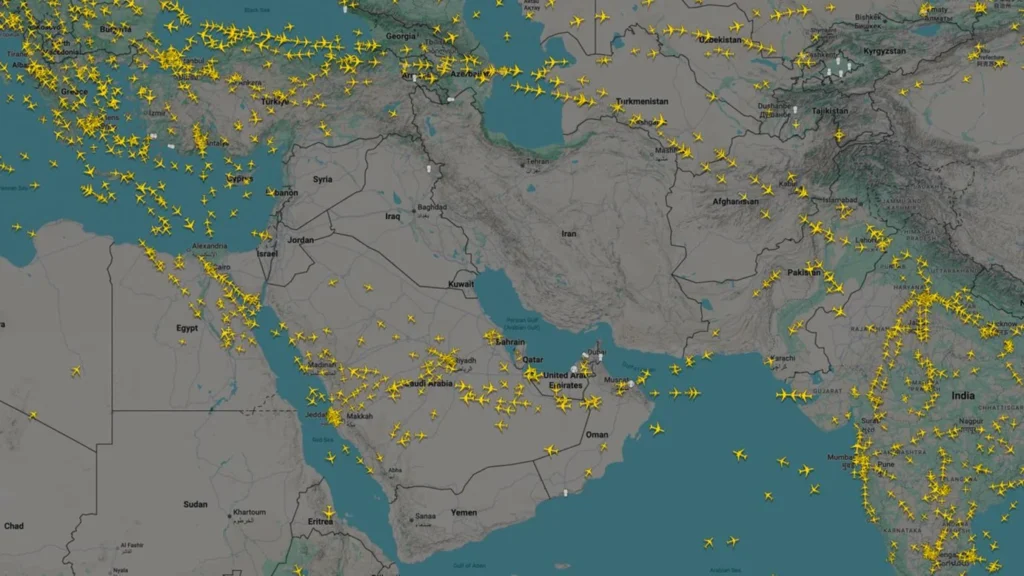
Travellers using major Middle Eastern airports face disrupted journeys after a supplied operational snapshot recorded 1,133 delays and 182 cancellations. The figures cover 12 airports, including Dubai, Abu Dhabi, Riyadh, Jeddah and Istanbul.
The snapshot corresponds to 3:32 am Gulf Standard Time on 21 October 2026. It represents conditions recorded at that point, rather than a final daily total.
Dubai registered the highest disruption figures within the United Arab Emirates, while Riyadh recorded the most cancellations across the airports surveyed. Istanbul reported the largest individual delay count.
For holidaymakers, the interruptions create potential complications for onward flights, airport transfers and accommodation arrangements. However, the figures do not establish passenger numbers or confirm the cause of every affected service.
UAE Airports Record 452 Delays
Dubai International, Zayed International and Sharjah International together accounted for 452 delays and 50 cancellations.
Dubai recorded 234 delays and 24 cancellations. Abu Dhabi followed with 127 delays and 18 cancellations, while Sharjah registered 91 delays and eight cancellations.
These totals place additional attention on connections through the UAE’s international hubs. Passengers changing aircraft may need revised boarding information or assistance when their incoming flight runs late.
Nevertheless, an airport delay count does not establish that every affected traveller missed a connection. Individual outcomes depend on the itinerary, connection time and subsequent airline arrangements.
Visitors with prepaid transfers or scheduled activities should check whether changes to their arrival time require adjustments.
Saudi Airports Account for 90 Cancellations
Four Saudi airports recorded a combined 189 delays and 90 cancellations, accounting for almost half the cancellations in the supplied airport total.
King Khalid International Airport in Riyadh registered 45 cancellations and seven delays. Its cancellation count exceeded that of every other airport surveyed.
Jeddah’s King Abdulaziz International Airport recorded 149 delays and 18 cancellations. This made Jeddah the country’s most affected airport by delay volume.
King Fahd International Airport in Dammam registered 31 delays and 22 cancellations. Abha recorded two delays and five cancellations.
The distribution highlights different operational patterns. Riyadh’s figures centre on cancellations, while Jeddah’s show a substantially larger number of delayed services.
Passengers should therefore assess their specific flight rather than infer its status from the airport’s overall position.
Istanbul Leads the Delay Count
Istanbul Airport recorded 246 delays and 14 cancellations, giving it the highest delay total among the 12 airports.
Cairo International Airport registered 97 delays and 15 cancellations. Ben Gurion Airport in Tel Aviv recorded 113 delays and three cancellations.
Meanwhile, Queen Alia International Airport in Amman reported 15 delays and three cancellations. Bahrain International Airport registered 21 delays and seven cancellations.
Together, these figures show interruptions across several important regional gateways. Their effects could extend to passengers travelling between the Middle East, Europe and other international destinations.
However, the snapshot does not demonstrate that every airport experienced the same underlying operational problem.
Airlines Report Different Disruption Patterns
The supplied airline figures identify flydubai, Etihad Airways, Saudia and Air Arabia among the affected operators.
Flydubai recorded 20 cancellations and 75 delays. Etihad registered 18 cancellations and 92 delays, while Saudia reported 17 cancellations and 66 delays.
Air Arabia recorded seven cancellations and 79 delays. EgyptAir registered 10 cancellations and 42 delays.
Turkish Airlines reported 211 delays and four cancellations, while Pegasus recorded 118 delays and one cancellation. Qatar Airways registered 80 delays and one cancellation.
These airline totals describe a separate breakdown and should not be added to the airport totals. Doing so could count the same disrupted services more than once.
Tourism Impact Depends on Individual Journeys
For tourism businesses, schedule changes can complicate hotel arrivals, excursions and ground transport. Travellers may need to notify accommodation providers when an arrival moves beyond normal check-in arrangements.
Those boarding cruises or joining organised tours should also inform their operator if flight changes threaten a fixed departure.
However, the supplied figures do not quantify lost bookings, additional overnight stays or wider economic damage. They also provide no basis for attributing every delay to regional security developments.
Travellers Should Check Before Departure
Passengers should confirm flight status directly with their airline before leaving for the airport.
Those facing cancellations should request available rebooking options or eligible refunds. Connecting passengers should check onward services and ask how itinerary changes affect their booking.
Keep airline notifications, booking confirmations and receipts for necessary expenses. Assistance and reimbursement depend on applicable rules and individual circumstances.
Because operations continue changing, the timestamped figures should guide awareness while current airline instructions guide travel decisions.
For more travel news like this, keep reading Global Travel Wire