Modernising Domestic Sea Travel for Younger Generations and Families
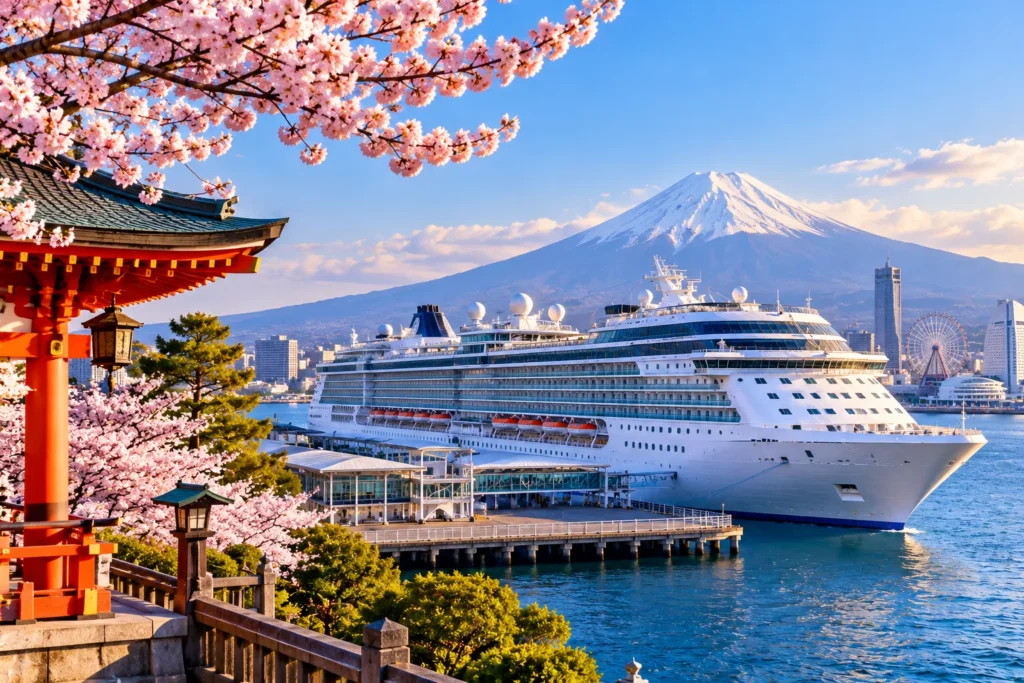
Japan’s maritime leisure sector is undergoing a profound structural transformation as domestic cruise companies actively redesign voyage packages to expand their core passenger base. Historically regarded as high-end floating resort hotels catering almost exclusively to affluent senior citizens, cruise ships across the nation are repositioning their operational models. Operators are introducing relatively short and competitively priced itineraries aimed directly at engaging younger demographics, working professionals, and families with young children.
For decades, the domestic cruise profile in Japan has been defined by retirement-age travellers who possess substantial financial resources and flexible personal schedules. However, domestic fleet operators are diversifying beyond this traditional base to foster sustainable, generational growth across coastal and international maritime routes.
The Ministry’s 2030 Tourism Roadmap and Demographic Imbalance
According to official figures released by the Ministry of Land, Infrastructure, Transport and Tourism, 243,000 Japanese nationals embarked on cruise holidays in 2025. While this demonstrates gradual post-pandemic recovery, the volume remains noticeably below the 357,000 Japanese passengers recorded in 2019. On the international stage, Japanese holidaymakers account for less than 1 percent of the approximately 37 million global cruise travellers recorded annually.
Research presented to the ministry by an advisory panel highlights that cost and time commitments remain substantial obstacles for prospective travellers. In the broader international cruise sector, roughly 80 percent of passengers, comprised predominantly of families and younger generations, opt for mass-market cruises priced at around 100 US dollars per night. Within Japan’s domestic waters, prevailing cruise packages have frequently averaged around 400 US dollars per night. This elevated pricing threshold has sustained the perception that ocean travel is reserved solely for retirees with substantial leisure time.
To address this gap, the Ministry of Land, Infrastructure, Transport and Tourism has established a formal national policy target to expand the volume of Japanese cruise vacationers to 1 million passengers by 2030. Achieving this quadrupling of the market requires an aggressive broadening of consumer demographics, transition strategies away from niche luxury travel, and the development of cost-effective, family-friendly cruise itineraries.
Corporate Investments and Themed Cruise Fleets
Private operators are aligning their capital investments with these emerging national tourism objectives. Oriental Land Cruise Company, a specialised division of the group responsible for operating Tokyo Disney Resort, formally unveiled the identity of its maiden vessel, the Disney Imagination, scheduled for commercial service in spring 2029.
Official corporate statements confirm that the vessel will measure 340 metres in length, accommodating approximately 4,000 guests across multiple cabin tiers. The ocean liner will incorporate themed theatres for live stage musical productions, swimming pool facilities, and immersive experiential venues. Operating round-trip itineraries spanning two to four nights from Tokyo metropolitan cruise terminals, voyages will range in cost between 100,000 yen and 300,000 yen per passenger. Through this venture, the company aims to generate approximately 100 billion yen in annual revenue by serving 400,000 travellers each year, directly capturing family-oriented and multi-generational vacation demand.
Simultaneously, established shipping conglomerates are optimizing their fleets to serve regional coastal destinations. Mitsui O.S.K. Lines group subsidiary MOL Cruises launched the Mitsui Ocean Sakura, a vessel measuring 198 metres in length and 26 metres in width. Its specialized dimensions enable navigation into tighter waterways and regional harbours, including the scenic Seto Inland Sea, where large mega-liners cannot berth.
The ship is designated solely for voyages within Japanese territorial waters, enabling the deployment of streamlined, short-duration schedules. Operational plans focus heavily on two-night getaways starting in the mid-100,000 yen range, allowing vacationers to take sea journeys without taking extensive leaves of absence from work.
Complementing this, NYK Cruises, an operational unit of Nippon Yusen Kabushiki Kaisha, manages the Asuka II alongside the newly commissioned Asuka III, regularly scheduling weekend getaways and holiday-aligned short sailings to accommodate domestic leisure schedules.
Overcoming Cost Barriers for Long-Term Sector Growth
Although these modern offerings signal progress, significant structural hurdles remain. A multi-day cruise priced from 100,000 yen per individual still represents a substantial financial commitment when multiplied across a four-member household.
Industry analysts and maritime planning bodies agree that the long-term viability of the ministry’s 1-million-passenger objective rests on the operational capability of cruise lines to develop scalable, competitively priced short routes. By aligning voyage lengths with standard Japanese public holiday calendars and offering dynamic family ticketing tiers, maritime operators can successfully bridge the price disparity between traditional land-based resort stays and ocean vacations.
As fleet diversification continues and dedicated regional ports upgrade their reception amenities, Japan cruise tourism is poised to evolve from an elite retirement pastime into an accessible, mainstream vacation choice for the broader travelling public.
For more travel news like this, keep reading Global Travel Wire