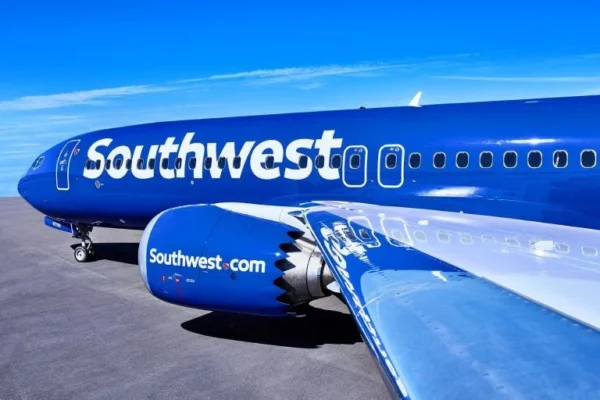
Southwest Airlines reported a 29% rise in managed corporate travel revenue during the third quarter of 2026. The US carrier also recorded approximately 9% growth in managed business passengers compared with the same period last year.
The gains came as Southwest continued to reshape its passenger experience through assigned seating, extra-legroom options and corporate booking tools. The airline aims to attract more business travellers while giving customers a wider choice of fares and services.
Southwest reported total operating revenue of US$8.42 billion for the quarter ending 30 September, up 21.2% year on year. Net income rose to US$270 million from US$54 million.
The airline announced its results on 21 October and discussed corporate demand during its earnings call on 22 October. Its business travel growth contrasts with a decline in total revenue passengers across the airline.
Corporate Demand Outpaces Overall Traffic
Southwest’s managed business segment delivered stronger passenger growth despite essentially flat capacity in that segment. The airline also reported double-digit growth among new and reactivated business travellers.
During the quarter, Southwest recorded 20 of its 50 busiest corporate booking days in company history. Two months also set records for the number of individual managed business travellers carried.
The results suggest that more corporate customers are choosing Southwest as it changes its onboard and booking experience. However, the figures do not establish how much each individual product change contributed to growth.
Across the airline, total revenue passengers fell 3.2% to 33.47 million. Enplanements, which count passengers boarding individual flights, declined 1.1% to 43.31 million.
That difference matters for travel planners and tourism businesses. Growth in managed corporate travel did not translate into growth across Southwest’s entire passenger base.
Assigned Seating Changes the Journey
Southwest’s move to assigned seating represents a major change for customers accustomed to its earlier open-seating model. Travellers can now select a seat as part of the booking process, subject to their fare conditions.
The airline has also introduced extra-legroom options. These choices may appeal to business travellers who value advance planning, particular seat locations or additional space.
For corporate travel managers, assigned seats can make it easier to organise journeys around employee preferences. Travellers should check the conditions and charges attached to their chosen fare before booking.
Southwest has also introduced Business Priority and New Distribution Capability connectivity. These changes aim to improve how corporate customers access and book its products.
The airline’s broader strategy combines changes to fares, seating and booking technology. Its quarterly results show stronger managed business demand, although other factors may also influence booking decisions.
Revenue Rises Despite Fewer Passengers
Southwest generated US$7.75 billion in passenger revenue during the third quarter, up 22.8% from a year earlier. Total operating revenue increased to US$8.42 billion from US$6.95 billion.
The airline achieved the revenue increase while available seat miles, a measure of capacity, fell 0.4%. Revenue per available seat mile rose 21.6% to a company record.
Southwest’s operating margin improved to 4.5%, compared with 0.5% a year earlier. Net income increased fivefold to US$270 million.
Higher fuel costs nevertheless placed pressure on the carrier. Its average fuel cost reached US$3.92 per gallon, compared with US$2.40 a year earlier.
Southwest said its fuel expense increased by US$821 million year on year. Total operating expenses rose 16.3% to approximately US$8.04 billion.
Lounges and Faster Wi-Fi Planned
Southwest expects further passenger experience changes in 2027. The airline plans to complete its fleetwide Starlink connectivity rollout in autumn 2027.
Faster onboard internet could appeal to business travellers who want to work or stay connected during flights. Availability will depend on the aircraft and the progress of the installation programme.
The airline also plans to launch its first airport lounge network under the Southwest Icon Lounge name. Initial locations will include Austin, Baltimore/Washington, Honolulu and Nashville.
The first lounges are expected to begin opening in late 2027. Southwest has announced a premium credit card that will provide lounge access when the card launches.
These facilities could strengthen Southwest’s appeal among frequent flyers and corporate customers. Travellers should check future announcements for access conditions and opening dates.
Capacity Growth Expected in Fourth Quarter
Southwest forecasts fourth-quarter capacity growth of 3% to 4% compared with the same period in 2025. It also expects revenue per available seat mile to rise between 19% and 21%.
The airline’s fourth-quarter fuel estimate stands at US$4.55 per gallon, based on the forward curve on 15 October. Higher fuel costs remain a significant factor in its outlook.
For 2026, Southwest expects approximately 67 aircraft deliveries and around 60 retirements. It also forecasts full-year capacity growth of approximately 1.2%.
The carrier projects adjusted earnings of US$2.60 to US$2.85 per share for the year. These figures remain forecasts and may change as operating conditions develop.
For travellers, Southwest’s strategy points to more choices across seating, connectivity and airport facilities. For destinations that rely on business visitors, the airline’s corporate growth could support future demand, although regional effects remain uncertain.
For more travel news like this, keep reading Global Travel Wire