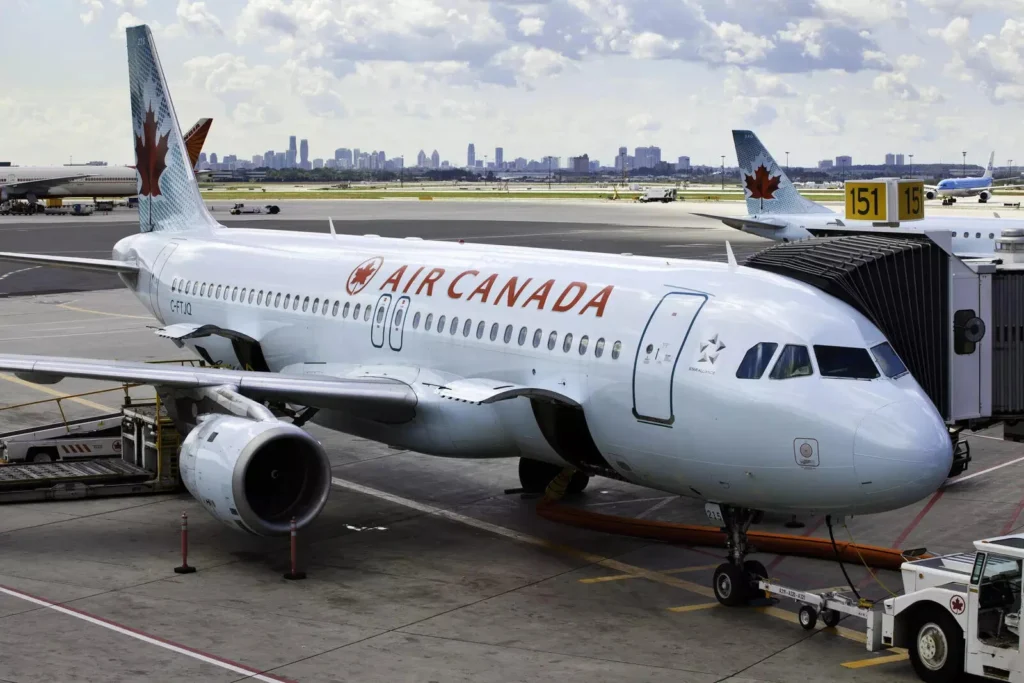
Air Canada recorded a 22% increase in corporate revenue during the third quarter of 2026, demonstrating resilient business travel demand. However, rising fuel expenses are prompting capacity adjustments and putting pressure on the airline’s earnings outlook.
Premium-cabin revenue also increased 19% compared with the corresponding quarter in 2025. These higher-value segments supported record quarterly operating revenue of C$6.984 billion, up 21%.
For travellers, the results point to competing pressures. Demand remains strong, while higher operating costs are influencing pricing and planned seat availability, particularly across the airline’s international network.
Business Demand Extends Beyond Summer
During its 29 October earnings call, Air Canada forecast double-digit corporate revenue growth for the fourth quarter. That expectation suggests business customers will remain important after the summer holiday period.
Corporate journeys support connections between Canadian commercial centres and overseas markets. Premium demand also contributes to routes carrying a mixture of business passengers, holidaymakers and visiting families.
However, revenue growth does not establish an equivalent increase in passenger numbers. Ticket prices, cabin choices and booking patterns can all influence the amount airlines earn.
The stronger results therefore demonstrate increased corporate income rather than a complete measure of business travel volumes.
Fuller Aircraft Support Passenger Performance
Air Canada’s third-quarter load factor reached 89.1%, an increase of 2.6 percentage points compared with a year earlier. This measure describes the proportion of available passenger capacity occupied.
Passenger yield increased 11%, indicating stronger revenue relative to passenger traffic and distance flown. Cargo revenue also rose 33%, adding another source of growth.
Together, these figures show stronger commercial performance across several activities. Nevertheless, higher income did not produce an increase in operating profit.
Third-quarter operating profit reached C$261 million, compared with C$284 million a year earlier. Adjusted earnings before interest, taxes, depreciation and amortisation declined to C$936 million from C$961 million.
Fuel Expenses Outpace Pricing Recovery
Additional fuel expenses reached C$906 million compared with the third quarter of 2025. Air Canada recovered approximately 46% of that increase through pricing measures, below its original 60% expectation.
The timing of the cost increase complicated its response. Approximately half of fourth-quarter bookings had already sold when fuel prices rose sharply in September.
Those earlier sales limited how quickly the airline could reflect additional expenses in fares. Consequently, higher costs reached its operations before revised prices could offset more of the increase.
Air Canada expects fourth-quarter pricing measures to recover approximately 70% of incremental fuel expenses. That remains a forecast dependent on demand and market conditions.
Capacity Growth Plans Become More Restrained
Air Canada has removed more than two percentage points from its planned first-quarter 2027 capacity growth. The adjustment moderates expansion as the airline responds to elevated operating expenses.
This represents a reduction in planned growth, rather than confirmation that total capacity will fall by the same amount. Its effect on individual journeys depends on subsequent scheduling decisions.
For tourism businesses, available airline seats influence how easily visitors can reach destinations. However, a group-wide capacity adjustment does not establish identical changes across every market.
Passengers should assess their own routes rather than assume all services face reductions.
Vancouver–Singapore Suspension Changes Journey Options
Air Canada has also announced the suspension of its nonstop Vancouver–Singapore service from January 2027. The change removes one direct option between western Canada and the Southeast Asian hub.
Travellers using that connection will need to examine alternative itineraries. Relevant considerations include connecting airports, total journey duration, baggage arrangements and ticket flexibility.
Vancouver remains a gateway for visitors exploring British Columbia, while Singapore supports onward journeys across Southeast Asia. Additional transfers could complicate holidays combining these regions.
Accommodation providers and tour operators handling such itineraries may also need to reconsider arrival times and transfer arrangements.
Lower Outlook Highlights Continuing Cost Pressure
Air Canada reduced its full-year 2026 adjusted earnings outlook to C$2.4 billion–C$2.7 billion. Its previous range stood at C$2.9 billion–C$3.2 billion.
The revision underlines the gap between strong sales and the cost of delivering flights. Corporate and premium passengers support revenue, but fuel expenses continue to influence profitability and network decisions.
For consumers, the immediate priority is comparing complete itineraries and current schedules. Total fares, included services and connection conditions will matter as the airline balances demand with higher costs.
The fourth quarter will test whether stronger pricing recovery and sustained corporate demand can improve that balance without weakening travel demand.
For more travel news like this, keep reading Global Travel Wire