The Tourism Secretariat of Quintana Roo (SEDETUR) has officially released the second edition of the Mexican Caribbean Diving Guide, a publication focusing on the state’s vast network of caves, caverns, and flooded underground rivers. Unveiled during an industry event in Playa del Carmen, the comprehensive resource is engineered to enhance the destination’s international market position within the specialized adventure and eco-tourism sectors.
Led by Quintana Roo Secretary of Tourism Bernardo Cueto Riestra, the launch convened regional tourism officials, professional diving instructors, exploration specialists, scientific researchers, and dive center directors. The strategic initiative builds upon the foundational diving guide published the previous year, expanding the state’s global marketing reach by spotlighting unique natural systems situated well beyond traditional coastal beaches and conventional sun-and-sand attractions. State tourism leadership confirmed that international promotions for the guide will launch at major overseas industry forums, accompanied by the establishment of a specialized diving promotion committee to coordinate sustainable sector growth.
Expanding High-Value Adventure Tourism and Visitor Stays
Official statistical data presented by state authorities reveals that subterranean and open-water diving represents a rapidly expanding segment of the regional visitor economy. Over 587,000 visitors engaged in specialized diving activities across the Mexican Caribbean in 2025. This volume accounted for 2.9 percent of all tourist arrivals to the state, reflecting a steady expansion from the 2.4 percent participation share recorded during 2024.
The official demographic analysis highlights a balanced, high-yield visitor base. International travelers constituted 55.8 percent of all active diving participants, while domestic Mexican tourists comprised the remaining 44.2 percent. Concurrently, the average duration of stay for travelers engaging in diving excursions extended from 7.1 days to 7.6 days. This prolonged stay metric underscores the sector’s high-value capacity to drive visitor expenditure across lodging, specialized transport, culinary services, and independent guiding operations.
Geological, Paleontological, and Heritage Safeguards
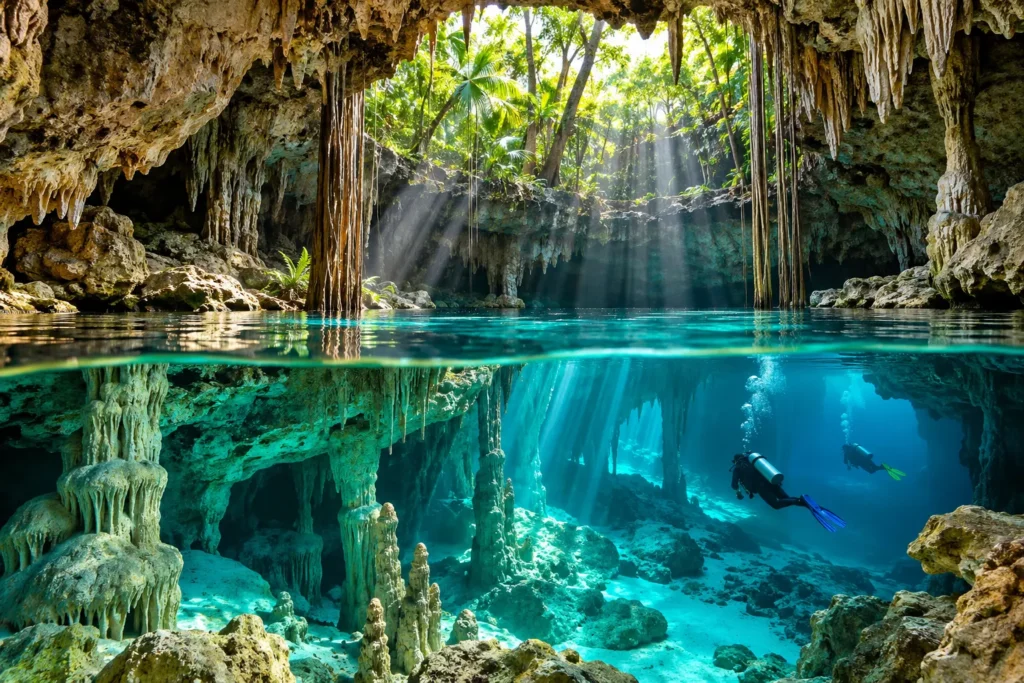
The newly published guide details the distinctive subterranean landscape of the Yucatan Peninsula, which houses the world’s most extensive submerged cave networks and cenote systems. In addition to mapping major underground routes, the publication emphasizes the exceptional archaeological, paleontological, and geological heritage preserved within these freshwater flooded formations. These unique environments contain prehistoric human remains, ice-age megafauna fossils, and sacred Mayan ceremonial artifacts that have reshaped global historical research.
Recognizing the fragile nature of submerged karst formations, the guide outlines comprehensive safety protocols, technical preparation standards, and conservation mandates. The document emphasizes responsible exploration practices designed to minimize diver impact on subterranean ecosystems, preserve delicate mineral speleothems, and ensure strict environmental stewardship across all operations.
Professionalization and Regulatory Accreditation via RETUR-Q
To maintain visitor safety and protect natural ecosystems, state authorities are tightly integrating the promotion of subterranean exploration with formal industry accreditation. The guide directly aligns with the Quintana Roo State Tourism Registry, known as RETUR-Q, which enforces rigorous certification standards for all active commercial operators.
Under state tourism frameworks, service providers, including technical diving centers, transport services, and cavern guides, must maintain up-to-date registration within RETUR-Q. This operational standard ensures that international travelers receive professional guidance from certified instructors equipped with verified emergency management training and environmental certifications.
The formal presentation commended renowned local researchers, photographers, and cave explorers who contributed their expertise and documentation to the publication, including Alberto Friscione, Luis Leal, and Jerónimo Avilés. Key administrative leaders attending the launch included Undersecretary of Tourism Pablo Casas, SEDETUR Director of Sustainable Development Miguel Cámara, and Andrés Martínez, Director of the Quintana Roo Tourism Promotion Council (CPTQ).
Driving Shared Economic Prosperity Across Local Communities
The specialized cavern and cave diving initiative forms a central component of the broader development agenda spearheaded by the Government of Quintana Roo under Governor Mara Lezama. This tourism governance framework focuses on diversifying visitor experiences across inland regions, safeguarding natural reserves, and building an equitable economic development model.
By steering international attention toward inland cenotes and regional communities, the state channels tourism revenues directly to specialized local businesses, certified dive guides, family-operated services, and rural cooperatives managing cenote access points. Through systematic promotion, enhanced safety certification, and rigorous resource conservation, Quintana Roo continues to advance its ambition to serve as an internationally accredited capital for cave and cavern exploration.
For more travel news like this, keep reading Global Travel Wire