International passenger movement across coastal waters, oceanic corridors, and inland waterways has expanded at an unprecedented pace, establishing new benchmarks for the global tourism economy. Official sector evaluations and market intelligence releases from the Cruise Lines International Association confirm that maritime vacation demand continues to outpace broader travel trends, with global passenger tallies rising well past pre-pandemic levels. Within this surging operational footprint, luxury cruise tourism has emerged as one of the fastest-growing revenue segments, driven by affluent travelers prioritizing bespoke itineraries, immersive regional exploration, and personalized hospitality.
Government maritime registries, regional port authorities, and national tourism ministries are increasingly adapting coastal infrastructure to welcome boutique expedition vessels and ultra-luxury megayachts. Unlike conventional mass-market operations that rely on mega-ships carrying thousands of vacationers, the luxury cruise sector delivers outsized economic dividends to host communities through higher per-passenger port expenditures, private shore excursions, and direct sourcing of regional culinary supplies. By combining personalized shore exploration with five-star onboard accommodations, luxury cruise operators are transforming remote archipelagos and historic ports of call into premier travel destinations.
Redefining Shipboard Standards and Exclusive Accommodations
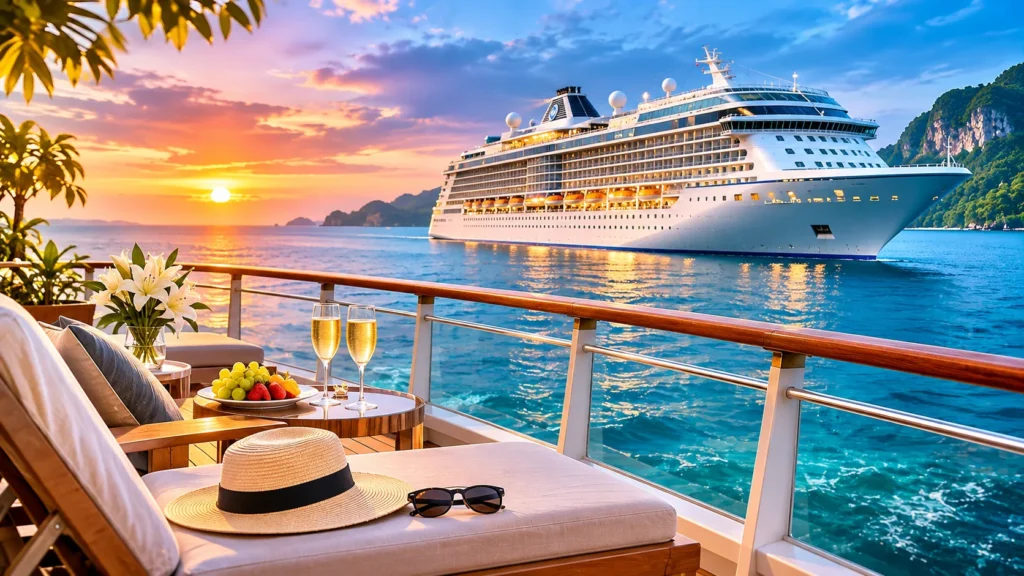
The modern fleet of ultra-luxury ships represents an engineering and architectural revolution tailored to an uncompromising demographic of high-net-worth travelers. Shipbuilders and marine designers are intentionally limiting overall vessel capacities, offering an intimate guest-to-crew ratio that guarantees tailored, attentive service at all hours. Private verandas, multi-room owner suites, custom marble interiors, and around-the-clock dedicated butler teams have transitioned from exceptional upgrades into non-negotiable baselines across luxury ocean operators.
Culinary excellence serves as a central pillar of the luxury cruise proposition. Vessels operating in this category feature Michelin-caliber dining rooms, customized sommeliers, and continuous access to world-class gastronomic delicacies, ranging from unlimited premium caviar service to vintage champagne pairings. Wellness amenities mirror the world’s most acclaimed land-based retreats, housing state-of-the-art thermal suites, hydrotherapy pools, and holistic spa treatments. These maritime facilities allow travelers to cross major oceans while indulging in continuous physical rejuvenation.
Expanding Horizons from Polar Frontiers to Cultural Waterways
Beyond onboard indulgences, luxury travelers are systematically pivoting toward destination-focused journeys that venture far past common tourist lanes. In response, premier operators have diversified their sailing catalogs across three distinct travel formats: remote polar expeditions, extended circumnavigational world voyages, and culturally focused river journeys.
In the polar regions, purpose-built luxury expedition vessels equipped with advanced ice-class hulls navigate uncharted fjords and glacial channels across Antarctica, Greenland, and the Canadian High Arctic. These ice-strengthened vessels deploy dedicated fleets of Zodiac craft, sea kayaks, and even passenger submersibles, giving guests safe, direct access to wild ecosystems while maintaining pure five-star comforts. Naturalists, marine biologists, and polar historians accompany each voyage, turning scientific field research into an engaging, intellectually stimulating dimension of the journey.
Simultaneously, long-haul grand voyages spanning three to six months are witnessing unprecedented advance bookings. These circumnavigations bypass conventional quick-turnaround port schedules, incorporating multi-day overnight stays in celebrated global harbors throughout the Mediterranean, the Arabian Gulf, Southeast Asia, and the South Pacific. By granting guests extended evenings in historic coastal capitals, operators allow travelers to participate in after-hours museum tours, private vineyard tastings, and private performances arranged exclusively for shipboard guests.
Inland, luxury river cruising provides an intimate vantage point on continental history and natural geography. Specialized boutique river vessels traverse legendary inland arteries including the Danube, the Rhine, the Mekong, and the Upper Nile. With floor-to-ceiling panoramic windows and central city dockings, river journeys place travelers directly into cultural centers without the transit friction or airport queues associated with terrestrial journeys.
Port Modernization and Sustainable Infrastructure Commitments
As coastal tourism ministries and national transport departments observe the clear economic advantages of premium maritime arrivals, international ports are upgrading their terminal facilities to cater to upscale operators. Port authorities across Europe, North America, and the Asia-Pacific region are prioritizing shore-side electrical connections to let docked ships connect directly to local clean energy grids, dramatically cutting idle emissions and localized port pollution.
Furthermore, strict ecological guidelines enforced by international maritime bodies and national environment ministries ensure that luxury vessels maintain advanced wastewater treatment systems, low-emission propulsion engines, and single-use plastic elimination mandates. This regulatory alignment between public tourism boards and cruise lines preserves sensitive marine environments while sustaining long-term tourism value.
As the appetite for extraordinary journeys continues to rise across every corner of the travel industry, the luxury cruise sector stands as a testament to maritime innovation. By pairing world-class amenities with responsible exploration, the world’s most prestigious cruises offer travelers a completely reimagined way to engage with the globe’s oceans, rivers, and remote coastal frontiers.
For more travel news like this, keep reading Global Travel Wire