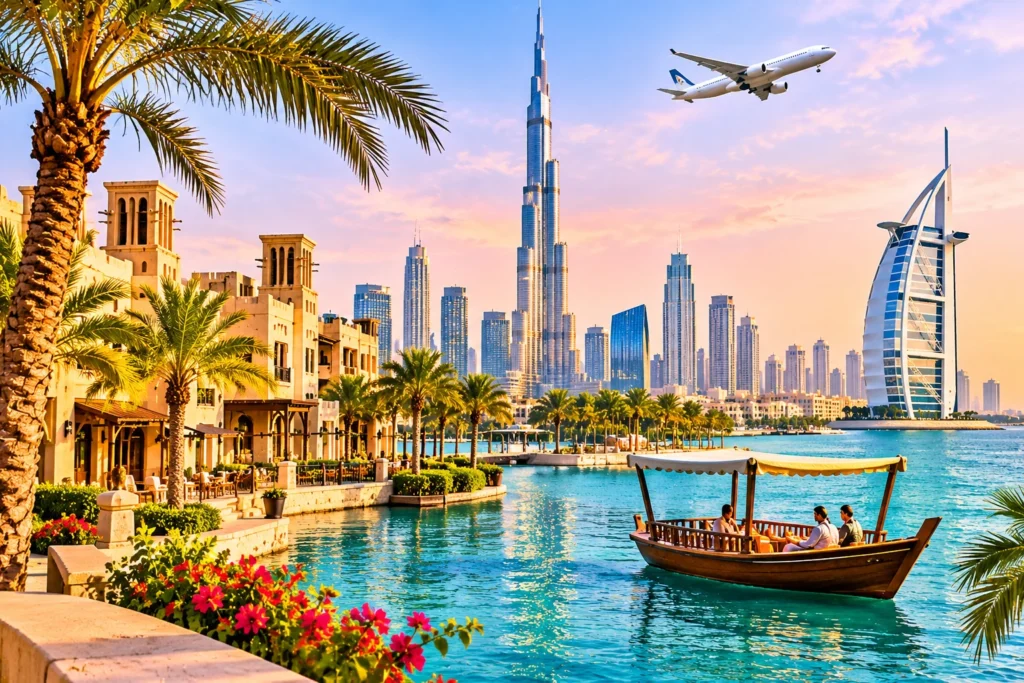
Official government declarations, national tourism board reports, and multilateral tourism agency statistics indicate that travel authorities across the Gulf and wider Middle East are prioritizing diplomatic stability and airspace integrity to safeguard visitor mobility. Following limited military exchanges in southern coastal areas along the Strait of Hormuz and consecutive diplomatic mediation led by the State of Qatar, regional ministries are emphasizing the continuity of transport infrastructure, commercial aviation routes, and long-term tourism development strategies.
Official Diplomatic Statements on Transit Security and Maritime Navigation
High-level diplomatic discussions between regional leaders and international counterparts have centered directly on keeping vital trade, maritime, and passenger routes open. Official statements released through the state-run Qatar News Agency confirm that the Emir of Qatar, Sheikh Tamim bin Hamad Al-Thani, held discussions with the President of the United States regarding de-escalation initiatives across the Gulf. Official Qatari communiqués stressed the critical importance of sustaining diplomatic channels to settle disputes, avoid broader escalation, and protect freedom of commercial navigation and maritime transport across the Gulf waterway.
In parallel, public foreign ministry statements from Doha highlighted ongoing collaboration with international and regional partners to contain volatility. Speaking at public institutional forums, Qatar’s Prime Minister and Minister of Foreign Affairs affirmed that official engagement remains active to prevent disruptions to regional peace and logistics. The diplomatic focus on shielding air navigation and sea lanes represents an essential pillar for safeguarding international tourism corridors that connect transit passengers between Asia, Europe, and Africa.
Official Statistical Benchmarks for Middle East Tourism
Statistical bulletins published by the United Nations Tourism organization demonstrate that the Middle East has exhibited noteworthy resilience in post-pandemic international tourist arrivals. UN Tourism data confirms that the broader region recorded an exceptional performance relative to historical baselines, registering arrivals nearly thirty percent above pre-2020 levels during peak travel quarters. While seasonal quarterly figures have shown occasional variations tied to geopolitical tensions, official statistics identify the Gulf Cooperation Council countries as pivotal drivers of inbound travel expansion and luxury hospitality demand.
According to national statistical disclosures and official reports published by Qatar Tourism and the Government Communications Office, tourism diversification programs under the Third National Development Strategy 2024 to 2030 continue to advance. Government records demonstrate that visa-free entry arrangements extended to citizens of over one hundred nations have strengthened the flow of leisure and business travelers. Tourism ministry releases indicate that the expansion of cultural districts, such as the Katara Cultural Village, heritage quarters in Souq Waqif, and integrated exhibition venues in Lusail, has diversified destination offerings and insulated urban visitor economies from external shocks.
Safeguarding Air Corridors and Inbound Tourism Inflows
Civil aviation authorities and national flag carriers throughout the Gulf operate under standardized global safety protocols overseen by the International Civil Aviation Organization. Official ministry updates indicate that commercial flight routes across primary transit hubs—including Hamad International Airport in Doha, King Abdulaziz International Airport in Jeddah, and regional partner hubs—continue scheduled flight frequencies under adjusted flight paths where necessary.
Public data released by civil aviation and national carrier administrations reflects steady passenger movements, with airlines reporting quarterly traffic volumes exceeding tens of millions of commercial passengers. Aviation authorities note that early-warning coordination and flexible airspace routing remain standard operational policies, ensuring uninterrupted transit for international long-haul itineraries connecting Europe, North America, and the Asia-Pacific region.
Coordinated Regional Tourism Policies and Cross-Border Initiatives
Beyond short-term crisis management, tourism ministries across the Gulf region are continuing the structured rollout of joint travel facilitation policies. Official announcements from meetings of the Gulf Cooperation Council Tourism Ministers confirm steady implementation milestones for the unified tourist visa framework. Engineered to simplify multi-country travel throughout the Arabian Peninsula, the initiative mirrors unified border models found in other major international travel zones.
Government releases from tourism boards in Qatar, Saudi Arabia, Oman, and the United Arab Emirates emphasize that regional collaboration enhances mutual market access. Joint promotional packages, regional events coordination, and inter-city transport modernization are positioned as protective mechanisms against localized travel disruptions. National development authorities report that public investment in eco-resorts, desert conservation reserves, and historic preservation corridors remains on schedule under respective national economic transformation agendas.
Outlook for Visitor Confidence and Heritage Tourism Development
Official statements issued by ministries of foreign affairs and regional tourism bodies affirm that sustained dialogue remains the cornerstone of economic security. While regional defense spokespersons continue to monitor coastal boundaries and sovereign security parameters, tourism administrations are reinforcing messaging centered on traveler safety, certified hospitality credentials, and municipal visitor support services.
With global visitor arrivals tracking steady multi-year recovery across international travel markets, Middle Eastern tourism boards remain focused on delivering secure, high-standard hospitality. Through active state diplomacy, clear administrative communication, and rigorous civil transport standards, regional authorities continue working to ensure that vital international travel corridors remain open, reliable, and commercially vibrant.
For more travel news like this, keep reading Global Travel Wire