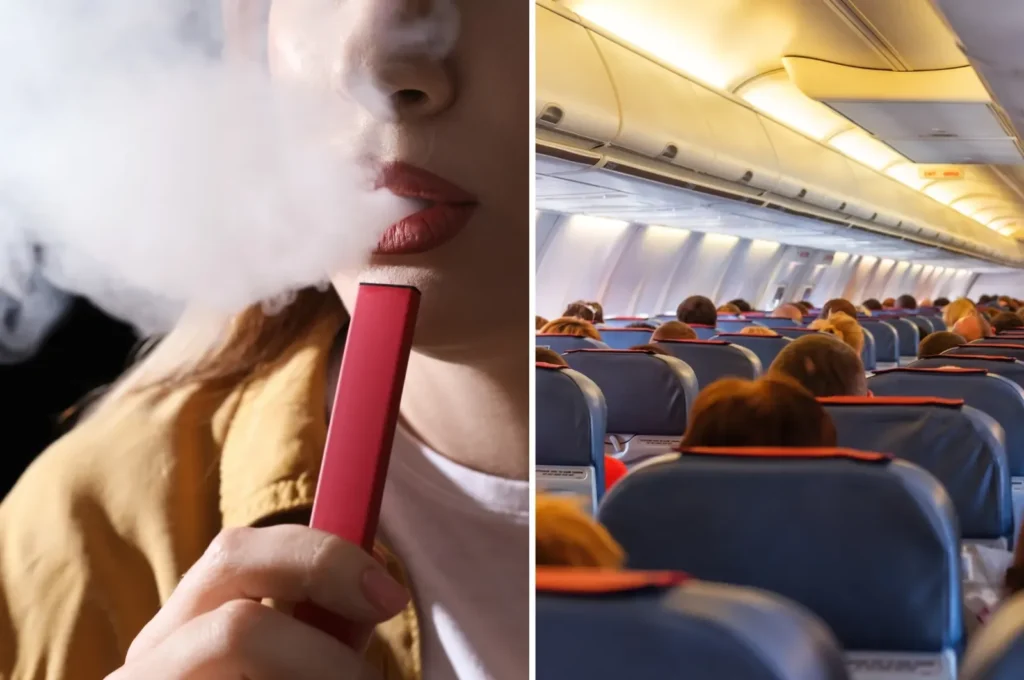
Cabin crew on a Delta Air Lines flight from Atlanta to Newark reportedly investigated a lavatory smoke alarm after a passenger used an electronic cigarette. The reported incident occurred on flight DL2498 on 4 November 2026. The Airbus A321neo continued to Newark Liberty International Airport and landed without a reported diversion.
The account says the passenger acknowledged vaping in the rear lavatory after flight attendants investigated the alert. It also describes a request for a ground supervisor to meet the aircraft on arrival. The incident details could not be independently confirmed through Delta or federal aviation authorities.
For travellers, the report draws attention to two separate rules. US restrictions prohibit vaping aboard covered passenger flights, while battery safety rules govern how passengers may transport the devices.
Why Cabin Crew Investigate a Lavatory Alarm
A lavatory smoke detector gives crew an early warning in a space they cannot see from the cabin. When an alarm activates, crew need to assess the area and establish what caused it. The same alert can call attention to an electrical problem, smoke or an aerosol released inside the lavatory.
That investigation matters even when the flight continues to its planned destination. Crew must work out whether the conditions require further action and communicate with the flight deck or ground staff as needed. Passengers can help by following crew instructions and reporting any smoke, unusual heat or burning smell they notice.
The reported Newark incident concerns use of an e-cigarette and activation of an alarm. Interfering with a lavatory smoke detector is a separate violation under US law. The account provides no indication that anyone disabled or tampered with the equipment.
US Smoking Rules Cover Electronic Cigarettes
The US Department of Transportation explicitly included electronic cigarettes in its aircraft smoking prohibition in 2016. The rule covers scheduled passenger flights within, to and from the United States, including flights operated by foreign airlines. It also applies to qualifying charter services.
The restriction applies throughout the aircraft, including inside lavatories. Delta’s passenger guidance also prohibits using or recharging electronic cigarettes aboard its aircraft. A passenger who brings a device for use after arrival must leave it switched off and protected during the flight.
For people travelling on several flights, the rule applies on each covered segment. A connection also gives passengers a separate question to check. Airport smoking or vaping rules govern where a device can be used on the ground.
Where to Pack a Vape When Flying
Under Federal Aviation Administration guidance, electronic smoking devices belong in carry-on baggage or on the passenger’s person. Travellers must keep them out of checked luggage and take steps to prevent accidental activation. Spare lithium batteries must be protected against short circuits, and passengers cannot charge a vaping device or its batteries aboard the aircraft.
A gate check can change an otherwise compliant packing arrangement. If an airline asks a passenger to hand over a cabin bag for carriage in the hold, the passenger should remove any vaping device and spare lithium batteries first. Keeping them somewhere easy to reach can simplify that step at boarding.
How the device is packed also matters after a connection. Passengers who move items between bags during a layover need to keep the device and any spare batteries with their cabin belongings for the next flight.
International Trips Add a Separate Entry Check
An airline’s baggage policy addresses carriage. Destination and transit rules can separately govern whether travellers may import, possess or use electronic cigarettes. That distinction matters for passengers whose itineraries include an overnight stop or require them to leave the airport between flights.
Travellers who intend to take a device abroad should check the rules for each country they will enter and review the baggage policy of each operating airline. At the airport, the practical decision is where to pack the device and whether to remove it if a bag goes into the hold. Once aboard, both use and charging are prohibited on covered US flights.
For more travel news like this, keep reading Global Travel Wire