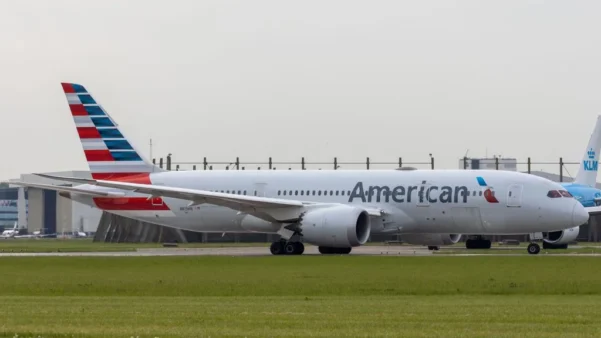
American Airlines flight AA206 reportedly returned to Miami International Airport shortly after take-off on 9 November 2026 after the crew received a landing gear warning. The Boeing 787-8 Dreamliner landed back in Miami, and American arranged another aircraft to take passengers to Milan Malpensa.
Reported flight-tracking times put the replacement aircraft’s departure at about 10.55 pm Miami time. It reached Milan at approximately 1.45 pm local time on 10 November, around two hours and 15 minutes after the scheduled arrival.
The incident account identifies a warning involving the landing gear system. The precise warning and the component that prompted it remain unconfirmed. A final engineering assessment would be needed to establish the cause.
Crew Declared an Emergency Shortly After Departure
AA206 reportedly left Miami at approximately 7.49 pm on its scheduled overnight flight to northern Italy. The aircraft levelled off at about 5,000 feet before turning back. During the return, the crew reportedly selected transponder code 7700, the general emergency signal used to alert air traffic controllers.
The code tells controllers that a crew is declaring an emergency. The crew can then communicate the nature of the problem and any assistance it requires. In the reported sequence, the aircraft returned to its departure airport and landed there the same evening.
Accounts described the warning in different ways, with some referring to a landing gear door and others to a discrepancy in the gear position indication. A gear position warning can appear when the system has yet to register the expected configuration. The exact message matters because it helps crews decide which procedures to follow and gives maintenance teams a starting point for inspection.
A Second Dreamliner Took Passengers to Italy
The original aircraft carried registration N884AA. American assigned another Boeing 787-8, registered N819AN, to continue the journey. The aircraft change meant passengers could resume their trip that evening while the first Dreamliner remained in Miami for assessment.
For a long-haul airline, replacing an aircraft involves more than finding another jet. Operations teams have to coordinate the crew, prepare the replacement aircraft for departure and organise the transfer of passengers and checked baggage. Each step affects when the flight can leave and how much of the original schedule the airline can recover.
Miami’s role in American’s network gives the airline a base from which to manage such a return. The airport handled approximately 55.3 million passengers in 2025, including around 24.85 million international passengers. For this flight, the availability of another Dreamliner allowed the airline to continue the Milan service on the original departure date.
The Delay Changed Onward Plans at Malpensa
A two-hour delay can have different consequences for passengers on the same flight. Someone staying in Milan may only need to move a hotel transfer or rearrange an afternoon booking. A traveller connecting to another flight or taking a prebooked train may have less flexibility.
The reported 1.45 pm arrival was the starting point for those decisions. Passengers still needed time for border processing and baggage collection where applicable. A traveller with an onward departure from another terminal or a rail booking from a different station also had to allow for that journey.
Ticketing arrangements matter when a late arrival causes a missed connection. Passengers with an onward flight on the same booking can ask the ticketing airline about rebooking. Those with separate reservations can check the change terms with the onward carrier and contact any transfer provider expecting them at the original time.
A Return and a Replacement Solve Different Problems
The return gave the crew a way to address an unresolved indication before crossing the Atlantic. The aircraft substitution addressed the passenger disruption that followed. Those decisions involved different teams and different timings, even though both formed part of the same evening’s operation.
For travellers reviewing what happened, the original departure time, the replacement departure and the eventual arrival describe separate stages of the journey. The final arrival matters most for onward bookings. Keeping the revised itinerary and any airline notices gives passengers a record of the schedule they ultimately travelled on, especially if they need to explain a missed transfer or request help with a disrupted reservation.
For more travel news like this, keep reading Global Travel Wire