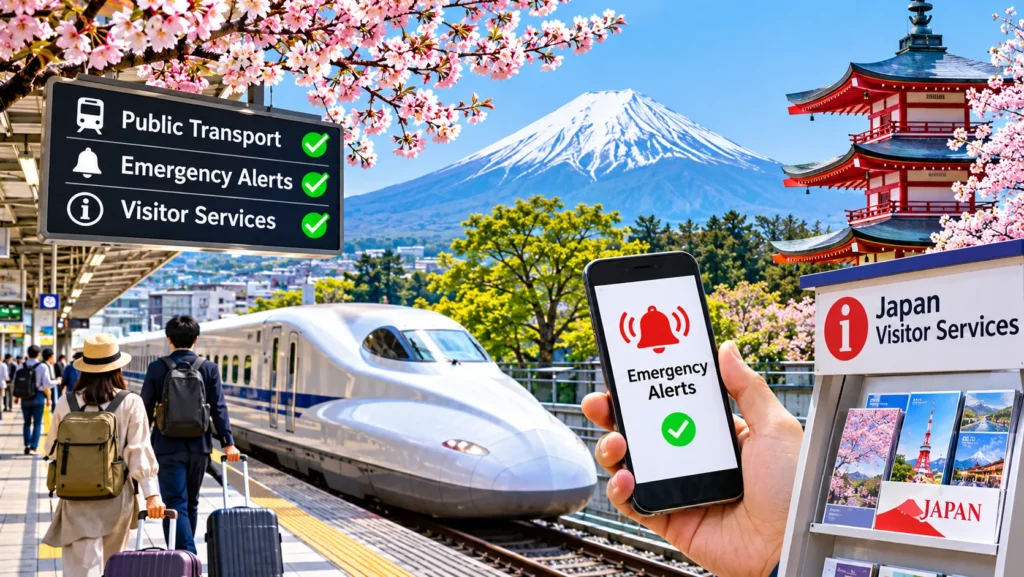
International visitors and domestic travelers across Japan can continue their autumn itineraries without interruption following a widespread enterprise cloud service disruption on November 13, 2026. Official statements issued by the Government of Japan, municipal transit authorities, and national meteorological agencies confirm that critical tourism infrastructure—including metropolitan railways, municipal buses, utility networks, and disaster warning systems—remains completely operational despite temporary email and administrative delays across central government offices.
Core Transit and Municipal Infrastructure Operate Normally in Tokyo
For travelers navigating the Japanese capital, the Tokyo Metropolitan Government officially confirmed that public transportation networks experienced zero operational disruptions during the November 13 cloud outage. Subway lines and Toei bus services maintained regular schedules throughout the day, ensuring seamless connectivity across major sightseeing districts, rail terminals, and airport transfer corridors.
In addition to urban transit, municipal authorities verified that essential civic utilities—including Tokyo’s water supply and sewage management systems—do not rely on the affected cloud software platforms and continued functioning at full capacity. Hotels, cultural venues, and visitor attractions reliant on municipal infrastructure faced no utility interruptions, allowing autumn foliage tourism across the Kanto region to proceed smoothly.
Meteorological Warnings and Visitor Safety Systems Remain Intact
Travel safety and real-time hazard monitoring are vital components of Japan’s tourism framework, particularly during seasonal weather transitions. The Japan Meteorological Agency issued an official clarification confirming that its core warning infrastructure was entirely insulated from the cloud service disruption. The dedicated networks used to transmit emergency alerts for earthquakes, tsunamis, volcanic activity, and severe rainfall directly to local governments and public broadcast channels do not utilize the affected commercial email or collaboration tools.
While the Japan Meteorological Agency noted temporary limitations in using standard email channels to notify press organizations about scheduled briefings, public-facing disaster alert mechanisms continued operating without delay. International tourists using official government safety applications and municipal warning portals maintained uninterrupted access to real-time environmental and seismic updates.
Central Ministries Activate Backup Channels to Maintain Public Operations
The service disruption, which began around 3:00 a.m. Japan Standard Time on November 13, affected enterprise cloud applications including Outlook, Teams, SharePoint, and Copilot after multiple servers experienced unexpected capacity loss. Within Japan, the outage impacted the Government Solution Service, a shared digital administrative platform managed by the Digital Agency and utilized across various national ministries.
According to official remarks from Digital Agency Minister Shunichi Furukawa, central ministries and agencies immediately activated multi-channel backup protocols—including telephone networks, text messaging, and physical notice boards—to prevent any breakdown in administrative coordination. Economy Minister Ryosei Akazawa emphasized that the government is closely monitoring the situation in coordination with the Ministry of Internal Affairs and Communications to safeguard business and public service continuity.
Several central institutions adjusted their external press procedures while keeping public-facing services online. The Cabinet Office and the Defense Ministry temporarily transitioned from electronic press releases to physical bulletin board notices within their respective press rooms. Meanwhile, the National Tax Agency confirmed that while internal staff email experienced delays, external digital portals used by taxpayers and visitors remained fully accessible. Telecommunications provider NTT East also reported temporary disruptions to its 113 fault-reporting and 116 contract inquiry lines, implementing alternative customer support measures while restoration progressed.
Practical Guidance for Autumn Visitors in Japan
As recovery efforts steadily stabilized cloud capacity across the Asia-Pacific region by Friday evening, the incident underscored the resilience of Japan’s segregated public infrastructure. Because mission-critical transportation, border processing, and disaster warning systems operate independently of commercial office email suites, travelers experienced minimal impact on the ground.
Visitors currently traveling in Japan are encouraged to rely on official digital resources—such as the Japan National Tourism Organization’s safety portals and dedicated railway operator applications—for real-time transit schedules and regional advisories. Should temporary telecommunications or email delays affect private tour operators or hospitality desks, direct telephone calls and in-person concierge desks remain reliable channels for confirming reservations and local excursion details.
For more travel news like this, keep reading Global Travel Wire