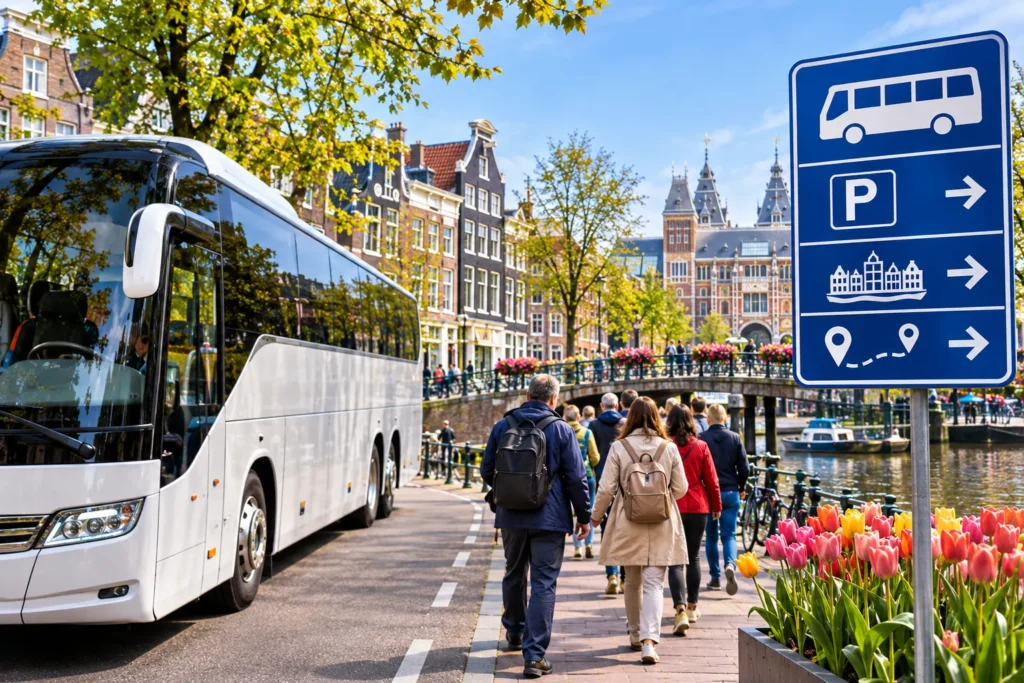
International tour operators preparing group itineraries for the Netherlands frequently misinterpret municipal traffic regulations in the Dutch capital. While the Municipality of Amsterdam enforced restrictions on heavy coaches inside its historic canal core starting on 1 January 2024, the city remains accessible for organized coach tourism. Under official municipal mobility rules, touring coaches weighing over 7.5 tonnes are restricted from entering the zone inside the S100 ring road unless they hold a valid exemption. However, the S100 ring itself, the prominent museum district positioned immediately outside the perimeter, and a designated north-south transit corridor remain fully open to coach traffic.
According to operational planning insights shared by Gergely Horváth, Managing Director of European coach operator Coach Rental Group, understanding the exact boundary between restricted inner streets and permitted perimeter zones allows tour planners to deliver passengers directly to Amsterdam’s leading cultural landmarks without disruption.
Designated Coach Stops and Permitted Access Points in Amsterdam
Although heavy vehicles cannot circulate freely through the narrow medieval streets inside the S100 perimeter, municipal transport infrastructure maintains dedicated boarding, alighting, and parking facilities along the ring road and major arterial corridors. Tour operators scheduling Amsterdam coach groups in 2027 can still utilize key stops positioned steps away from major visitor attractions:
Rijksmuseum: Coaches have direct access to Busparking Musea, a dedicated underground parking facility located immediately beneath the museum complex.
Van Gogh Museum and Stedelijk Museum: Designated stopping zones operate around Museumplein, supplemented by limited coach parking spaces directly in front of the Van Gogh Museum.
Heineken Experience: Groups can disembark directly at the entrance along Stadhouderskade 78 on the S100 ring road.
Amsterdam Central Station: Permitted boarding and alighting points are situated at De Ruijterkade Oost, adjacent to the main railway terminal.
Passenger Terminal Amsterdam: Cruise passengers and touring groups can access the terminal on Piet Heinkade, which features its own dedicated on-site coach parking area.
Eastern Cultural Corridor: Access to the Hermitage, the Jewish Museum, and the National Maritime Museum remains open to all coaches via the designated through route running along Weesperstraat, Valkenburgerstraat, and Kattenburgerstraat.
RAI Amsterdam: Exhibition and conference delegates are served via designated stops along Europaboulevard.
Gassan Diamonds: Visitors scheduled for factory tours can utilize private coach parking located inside the facility courtyard.
Municipal Enforcement, Emission Standards, and Operating Rules
Compliance with Amsterdam’s municipal traffic ordinances is strictly monitored via automated camera enforcement and on-street traffic officers. Drivers and tour planners must adhere to specific operational conditions when navigating the metropolitan area:
Strict Drop-Off and Pick-Up Limits: Roadside coach stops are designated exclusively for passenger boarding and alighting. Drivers are prohibited from waiting or parking at kerbside stops, and idling engines must be switched off completely while passengers enter or exit the vehicle.
Dedicated Long-Stay Parking: Once passengers disembark, coaches must relocate immediately to authorized parking facilities, including the underground museum garage, designated Museumplein bays, the cruise terminal lot, or the P+R Zeeburg coach facility.
Low-Emission Zone Requirements: Inside the wider A10 orbital motorway ring, all diesel-powered coaches must comply with Euro VI emission standards to enter the municipal environmental zone.
Targeted S100 Exemptions: Permits allowing heavy coaches to enter the restricted area inside the S100 ring are issued exclusively for vehicles transporting primary school pupils, elderly passengers, individuals with disabilities, or performing artists travelling directly to or from verified educational, cultural, or artistic venues. Operators must submit exemption applications to the municipality in advance of travel.
Periodic Stop Adjustments: The Municipality of Amsterdam regularly updates stop locations and operating hours to manage urban traffic flow. Following municipal revisions introduced in April 2026 affecting stops near the Rijksmuseum, the Stedelijk Museum, and Europaboulevard, many stopping bays enforce strict operating windows, predominantly between 10:00 and 18:00.
Practical Itinerary Planning for Tour Operators
Structuring group schedules around Amsterdam’s permitted corridors ensures smooth logistics and minimizes walking distances for travellers. For museum-focused itineraries, operators can drop passengers along Stadhouderskade, park in the underground Rijksmuseum facility or at the Van Gogh Museum bays, and collect the group from the same point without crossing the restricted city centre.
When booking accommodation inside the historic canal belt where heavy coaches cannot enter, planners should identify the nearest authorized stop along the S100 ring or the Weesperstraat–Valkenburgerstraat–Kattenburgerstraat corridor, factoring in a brief luggage transfer on foot or selecting hotels situated directly along permitted routes. For multi-country European circuits connecting the Netherlands with the United Kingdom via North Sea ferry ports—such as Hook of Holland to Harwich, IJmuiden to Newcastle, or Rotterdam Europoort to Hull—coordinating ferry crossings alongside municipal stop schedules ensures full compliance with European drivers’ hours regulations.
By aligning routes with official municipal corridors, emission rules, and designated parking hubs, tour operators can continue delivering seamless group travel experiences in Amsterdam throughout 2027.
For more travel news like this, keep reading Global Travel Wire