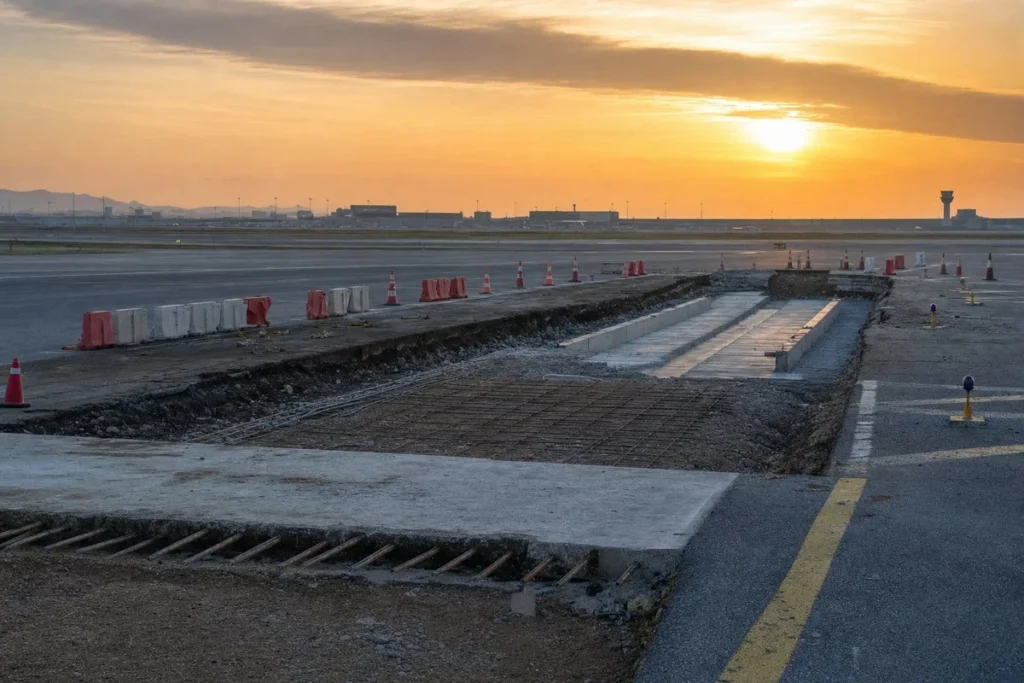
Barcelona-El Prat Airport is operating with a single runway from 16 to 26 November 2026 during a €3.1 million taxiway upgrade. The planned restrictions have removed 1,441 flight slots, reducing available capacity by approximately 15% at one of Spain’s principal international gateways.
Airport operator Aena coordinated the reductions with airlines ahead of construction, allowing carriers to adjust their schedules. Travellers may still encounter delays, particularly if weather or another operational problem affects the remaining runway. Normal runway arrangements are expected to resume from 27 November, subject to conditions.
Two Runways Close During the Main Construction Phase
Runways 02/20 and 06L/24R are temporarily closed during the principal works. The coastal runway, 06R/24L, is handling both arrivals and departures.
That configuration gives airport teams less flexibility to sequence aircraft across separate surfaces. An interruption on the operating runway could affect both incoming and outgoing flights, with consequences for later services.
The restrictions also place aircraft performance under closer consideration. Aena’s earlier planning assessment identified around 40 aircraft that could require load adjustments while using the coastal runway in place of the airport’s longest runway.
Slot Reductions Were Built Into Airline Planning
The 1,441 removed slots represent scheduled opportunities for aircraft to arrive or depart. Airlines received advance information so they could revise their programmes before the closures began.
For passengers, the relevant details are the current times and status attached to their reservation. The slot total provides a measure of reduced airport availability, while individual airline schedules show the flights passengers can use.
With fewer operating options, recovery from an unexpected delay may take longer. That makes timely airline updates important for travellers arranging connections, transfers and appointments around their arrival.
New Taxiway Aims to Shorten Runway Occupancy
The construction project will create a rapid-exit taxiway linking runway 02/20 with taxiway T4. Work includes pavement, drainage, airfield lighting and electrical systems.
The new exit is intended to help landing aircraft clear the runway more quickly. Shorter runway occupancy can support smoother aircraft sequencing and reduce waiting during suitable operating configurations.
Aena expects benefits for punctuality, ground movement, fuel consumption and environmental performance. The project’s stated purpose is to improve the efficiency of existing infrastructure. Its wider construction programme is expected to last approximately 12.5 months.
Aviation Conference Overlaps With the Restrictions
Airports Innovate 2026 is scheduled in Barcelona from 23 to 25 November, during the final days of single-runway operations.
Hosted by Aena, the event brings together airport professionals to discuss technology and operational developments. ACI EUROPE, ACI Asia-Pacific & Middle East and ACI World are organising the conference jointly.
Delegates travelling during that period will need to coordinate flights with hotel check-in, airport transfers and meeting times. The supplied information gives no quantified estimate of additional passenger demand associated with the event.
For conference organisers and travel managers, updated arrival details will help ground transport providers respond to schedule changes.
Ground Transport Needs Separate Attention
Rail disruption has added another consideration for passengers travelling around Catalonia. Renfe reported that industrial action on 17 November affected services across several regions.
Its operational account recorded cancellations equivalent to 40% of scheduled minimum services on Rodalies de Catalunya. Travellers should check the services operating on their own departure date.
A separate claim about industrial action on 23 November remains unconfirmed in the supplied information. Airport buses, taxis and other authorised services may provide alternative arrangements where required.
Passengers should compare transfer times with airline check-in and boarding deadlines when planning their journey.
Further Construction Continues After November
The principal runway restriction is scheduled to end late on 26 November. The expected return to normal operations the following day marks the end of this construction phase.
Overnight activity is planned into December, with further stages potentially requiring temporary runway or taxiway closures. Aeronautical information identifies project-related works extending towards an estimated September 2027 date.
Specific operational restrictions will be communicated through aviation notices. Travellers flying later in winter should continue following their airline’s flight information as the programme progresses.
Travellers Face Reduced Flexibility Until 27 November
For tourism businesses, the immediate task is coordinating arrivals while runway availability remains constrained. Hotels, tour operators and transfer providers can use revised flight details to adjust collection times and guest arrangements.
Passengers should review their booking before leaving for the airport and follow airline notifications during the journey. Those connecting through Barcelona should also check onward flight arrangements if their inbound service changes.
The completed taxiway is intended to improve aircraft movement over the longer term. Until the main closure ends, travellers face a reduced schedule with less room to absorb unexpected disruption.
For more travel news like this, keep reading Global Travel Wire