
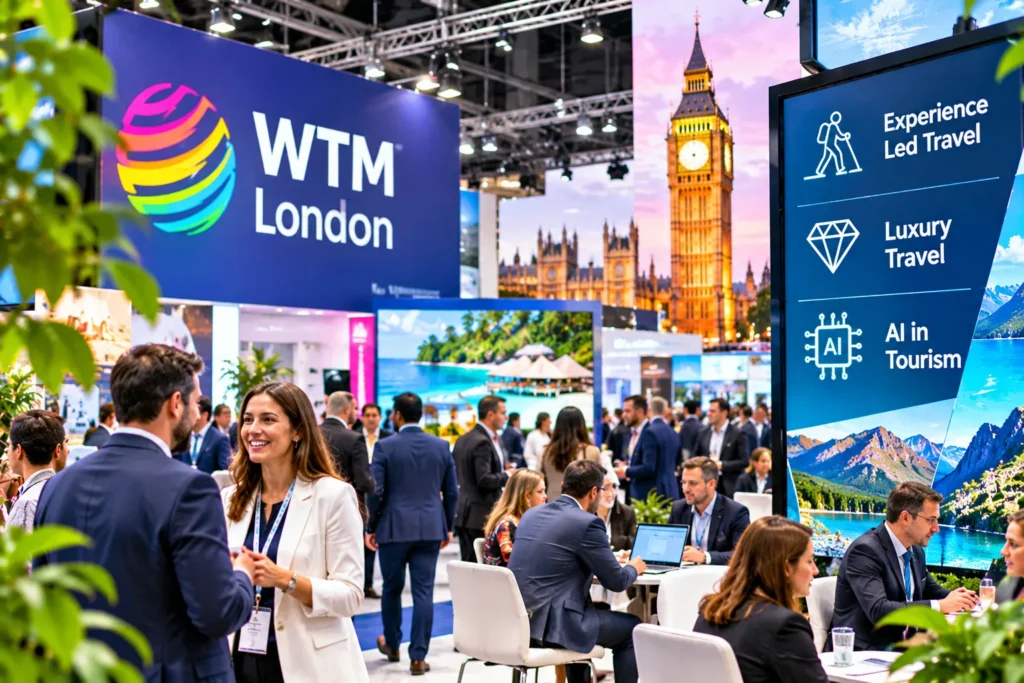
Global travel leaders, destination marketing organizations, and hospitality innovators gathered at ExCeL London for WTM London 2026, outlining the structural forces reshaping international tourism. Anchored by the official release of the WTM Global Travel Report—produced in partnership with Tourism Economics—the conference underscored a decisive industry pivot toward experience-led travel, evolving luxury expectations, inclusive hospitality, and AI in tourism.
Despite persistent macroeconomic headwinds and household budget pressures, official data shared during the event demonstrated sustained global appetite for leisure mobility. Tourism Economics Managing Director for EMEA Dave Goodger noted that while constrained consumer purchasing power continues to test household budgets, travelers are adapting by allocating funds deliberately toward high-value experiences rather than abandoning trips altogether.
Redefining Luxury Around Access and Personal Enrichment
Research presented at WTM London 2026 revealed that traditional definitions of luxury hospitality are rapidly giving way to personalized, meaningful journeys. According to Sean Morgan, Head of Travel Research at Tourism Economics, 60 percent of surveyed international travelers expressed interest in luxury holidays, with curated experiences ranking as a primary decision driver.
Industry strategists at the summit emphasized that next-generation luxury prioritizes privileged access and emotional resonance over material excess. Three distinct luxury traveler profiles are shaping product development across global destinations:
Prestige and Exclusivity Seekers: Travelers drawn to rare, private, or behind-the-scenes cultural and natural encounters.
Personal Growth Enthusiasts: Visitors prioritizing wellness, skill acquisition, educational immersion, and self-enrichment.
Connection-Focused Travelers: Multi-generational families and friend groups investing in shared milestones and meaningful time together.
Major Events and Cultural Festivals Drive International Mobility
Experience-led travel emerged as one of the strongest commercial catalysts across global aviation and hospitality. According to the WTM Global Travel Report, 58 percent of international travelers have taken a trip abroad specifically to attend a live event over the past two years.
Destination leaders showcased how global concerts, premier sporting tournaments, and iconic cultural festivals generate substantial economic spillovers beyond ticketed venues. Representatives from Visit Philadelphia highlighted how major international sporting fixtures and headline stadium concert tours attract high-spending visitors who extend their stays to explore local culinary scenes, museums, and regional attractions. Similarly, data from the Netherlands’ Awakenings festival demonstrated that international attendees represent roughly half of total festival capacity, with 80 percent stating they would not have visited the destination without the event.
This appetite for immersive cultural programming is also reshaping river and ocean cruising. Century Cruises announced strategic expansion plans across Europe and North Africa through 2028, introducing new itineraries along the Rhine, Danube, and Nile rivers designed around regional gastronomy, cultural celebrations, and curated shore excursions.
Accessible Tourism Gains Momentum Through Official Guidance
Ensuring travel infrastructure welcomes visitors of all abilities stood out as a central policy and commercial priority at WTM London 2026. The Spanish Tourist Office unveiled a dedicated hotel accessibility guidance initiative under its national Spain for All strategy. Designed to support hospitality operators across Spain, the programme provides practical frameworks for auditing physical facilities, standardizing transparent accessibility information, and elevating service standards for travelers with disabilities.
AI in Tourism Accelerates Discovery While Human Connection Remains Vital
Technology occupied center stage at the newly expanded WTM Travel Tech zone and Future Stage, where industry executives examined how artificial intelligence is transforming both trip discovery and operational efficiency. easyJet Holidays Chief Executive Officer Garry Wilson highlighted how conversational AI systems streamline routine customer service inquiries, freeing specialist staff to resolve complex itinerary needs with greater care.
Speakers on the Future Stage also stressed that reliable, structured destination data is essential for effective AI deployment. Digital strategy presentations cited a 3,500 percent year-on-year surge in generative AI referral traffic to United States travel websites as of July 2025, underscoring how rapidly travelers are adopting AI assistants to research destinations and compare options. Case studies from retail leader IKEA further illustrated how AI customer support automation enabled the reskilling of 8,500 employees into high-value advisory roles, generating $1.37 billion in incremental service revenue.
Even as digital innovation accelerates, speakers cautioned against losing the human warmth at the heart of hospitality. Creative strategists urged travel brands to design spaces and gatherings that foster genuine interpersonal connection and emotional storytelling, noting that bringing people together remains the ultimate luxury in an increasingly automated world. Concluding the opening programme, WTM London Event Director Chris Carter-Chapman commended the global tourism sector’s adaptability and resilience as destinations prepare for continued expansion into 2027.
For more travel news like this, keep reading Global Travel Wire

