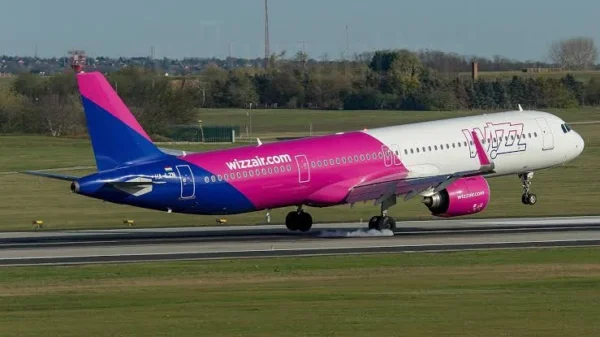
Wizz Air is preparing to operate its largest winter schedule for 2026–27 as passengers book Christmas and New Year trips. The airline is coordinating with airports, ground handlers and air traffic control providers to prepare for snow, ice and other weather that can slow departures. It is also asking travellers to check their flight status before leaving for the airport and to follow its baggage and boarding instructions.
The airline reported operating 23% more flights between April and September 2026 than in the same period in 2025, alongside fewer cancellations. It did not give a cancellation total or a winter punctuality target. For passengers comparing flights from London and elsewhere in Europe, the figures describe growth across the airline’s summer operation. The winter announcement did not specify how many extra services individual airports would receive.
Why Snow and De-Icing Can Delay Departures
Winter weather can slow several parts of an airport’s operation at once. Crews may need to clear or inspect runways and taxiways, while ground handlers take longer to prepare aircraft for the next flight. When several aircraft need de-icing at the same time, they can queue for treatment even while the runway remains open.
De-icing removes snow, frost or ice from aircraft surfaces before take-off. Crews can also apply anti-icing treatment to limit further build-up before departure. The process requires trained staff, equipment and enough fluid to treat the aircraft waiting to leave. A late departure can then affect the aircraft’s next flight, even if the weather at the next airport is clear.
Amsterdam Schiphol illustrated the problem in January 2026, when persistent winter weather limited flights despite round-the-clock runway clearance and aircraft de-icing. Airport rail services were also disrupted on 6 January. For passengers, that meant checking both the flight and the journey to the terminal.
Air Traffic Capacity Also Shapes Winter Reliability
EUROCONTROL recorded an average of 27,649 daily flights across its network from 2 to 8 November 2026. Arrival punctuality was 81.8%, while departure punctuality reached 77.5%. Air traffic control capacity and staffing accounted for 89% of en-route delays attributed to air traffic flow management that week.
Those figures cover the European network across airlines. They show how a restriction away from an airport can influence its departure schedule. A passenger whose aircraft is arriving from another city may therefore see a delay even when local conditions appear manageable. Flight-specific updates are especially important for travellers with a separately booked connection or a transfer tied to their arrival time.
Cabin Baggage and Power Bank Rules
Wizz Air includes one under-seat cabin bag measuring up to 40 × 30 × 20 centimetres and weighing up to 10 kilograms. Passengers with WIZZ Priority can also bring a trolley bag measuring up to 55 × 40 × 23 centimetres and weighing up to 10 kilograms. The larger bag goes in the overhead compartment. The airline asks passengers to stow the smaller bag under the seat in front and move promptly to their assigned seats.
Power banks must stay in the cabin, where passengers can monitor them. Keep them on your person or in an accessible under-seat bag. Wizz Air prohibits using power banks during the flight, and passengers should leave them disconnected. UK Civil Aviation Authority guidance limits passengers to two power banks each and sets restrictions based on battery capacity. Check the rating before packing and follow the operating airline’s instructions.
What to Check Before a Christmas or New Year Flight
Review the flight status before leaving for the airport and keep airline notifications enabled. If snow or ice is forecast, check the train, bus or road route to the terminal separately. Travellers meeting family or relying on a prepaid transfer should share any revised arrival time once the airline confirms it.
Before packing, check which cabin bags your booking includes and keep documents and essential medication accessible. For an itinerary with a separate onward ticket, allow time for baggage collection and another check-in where required. The larger winter schedule gives passengers more flights to choose from across the network. On the day of travel, the details that matter are the status of the booked flight, access to the airport and the time available for the next leg.