London, United Kingdom, November 25, 2026 — As the global tourism industry prepares to enter the United Nations-designated International Year of Sustainable and Resilient Tourism in 2027, sweeping shifts in traveller behaviour, digital planning tools, and destination discovery are redefining how journeys are conceived and booked. Following a year in which artificial intelligence moved rapidly into mainstream trip research and major cultural, culinary, and sporting gatherings drove international demand, industry leaders across travel technology, live entertainment, and retail travel agencies are forecasting a decisive evolution in global travel trends 2027.
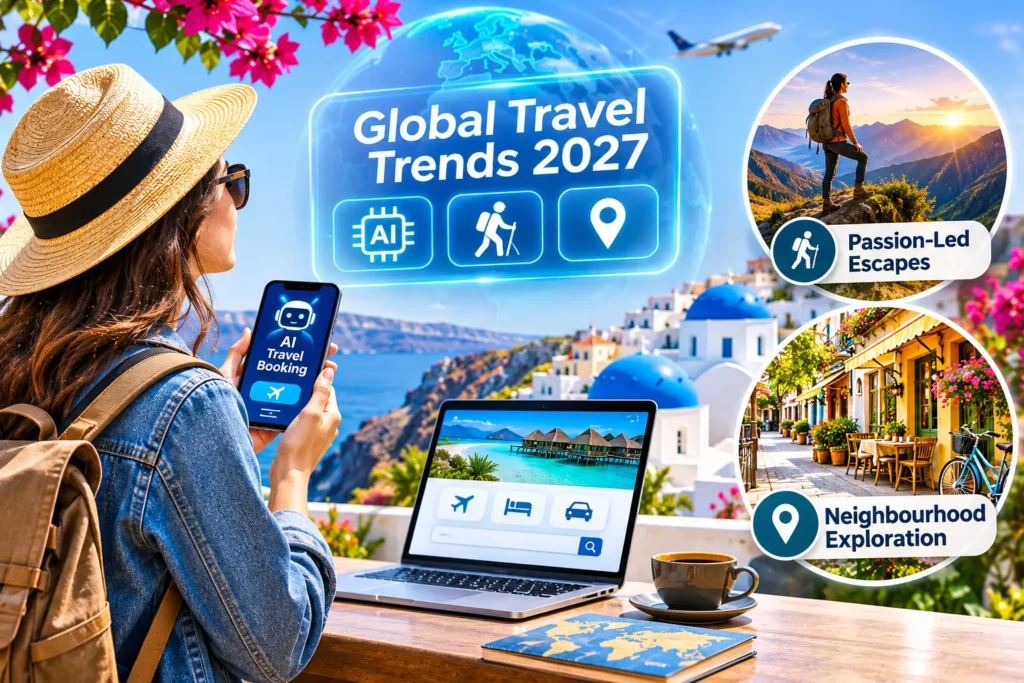
Rather than relying on conventional sightseeing checklists or fragmented multi-tab booking journeys, travellers in 2027 are expected to embrace conversational booking assistants, passion-driven destination selection, short event-focused breaks, and deeper immersion into local neighbourhoods.
From Inspiration to Execution: AI-Powered and Agent-Backed Booking
Throughout 2026, travellers increasingly adopted artificial intelligence to compare flight routes, generate itinerary ideas, and uncover lesser-known destinations—a shift corroborated by the International Air Transport Association’s October 2026 Global Passenger Survey, which found that nearly half of surveyed air passengers already use AI tools during trip planning.
Looking ahead to 2027, travel technology executives anticipate that conversational AI will transition from offering inspiration to executing complete reservations within a single unified interface. Industry perspectives from travel booking platform Reservations highlight growing demand for tab-free planning, where travellers can discover, compare, and confirm flights, accommodation, and local experiences seamlessly rather than switching across multiple websites and apps. At the same time, hybrid service models that pair instant AI-driven reservation capabilities with experienced human travel advisors are gaining traction—enabling automated systems to handle routine logistics while specialists curate complex multi-stop journeys.
Event-Led Micro-Escapes, Local Music Scenes, and Active Race Holidays
Live entertainment and participatory fitness are also reshaping trip duration and destination choice. Insights from event ticketing and travel specialist TicketPlanner point to three fast-expanding segments in 2027:
Hyper-Short-Haul Event Breaks: Rather than reserving international travel exclusively for extended two-week vacations, travellers are increasingly organising 24- to 72-hour domestic and short-haul international micro-breaks around headline concerts, seasonal festivals, and major motorsport weekends—from European music gatherings to Formula One races in Abu Dhabi.
Local Sound Escapes: Music-motivated tourism is expanding beyond stadium tours toward grassroots cultural discovery. Travellers are selecting destinations and boutique neighbourhood stays anchored around local jazz venues, independent listening bars, and regional music traditions.
Participatory Sports Holidays: Active sports tourism is shifting from passive spectatorship to personal participation. Amateur runners, endurance athletes, and fitness communities are building multi-day wellness trips around international marathons, functional fitness competitions, and mountain cycling challenges—pairing race registration with recovery-focused hospitality and post-event exploration.
Neighbourhood-First Discovery, Passion Communities, and Extended Cruises
Alongside technology and live events, traveller preferences are moving decisively away from overcrowded landmark corridors toward authentic local districts and shared interest communities. Observations from international host travel agency InteleTravel underscore how online communities and AI recommendations are guiding visitors toward independent coffee roasters, neighbourhood dining rooms, local fashion studios, and artisan workshops—spotlighted by growing interest in creative districts such as Lisbon’s Príncipe Real and Ho Chi Minh City’s contemporary design quarters.
Equally prominent is the rise of passion-powered travel, where literary enthusiasts, culinary explorers, and gaming communities plan international trips around shared interests, conventions, and filming or literary locations. In the cruise sector, travellers are increasingly adopting a “cruise-plus-one” approach—extending Mediterranean, Alaskan, or Caribbean voyages with multi-day pre- or post-sailing land stays to explore port cities and inland regions in greater depth.
Aligning Traveller Demand with UN Tourism’s 2027 Sustainability Mandate
These evolving consumer patterns arrive at a pivotal moment for national tourism ministries and destination management organisations. Under United Nations General Assembly Resolution 78/260, 2027 marks the International Year of Sustainable and Resilient Tourism, led by UN Tourism to promote local value creation, community inclusion, seasonal dispersion, and environmental stewardship across member states.
By encouraging travellers to explore residential neighbourhoods beyond congested monuments, travel during shoulder seasons, support small local enterprises, and combine transport modes thoughtfully, the emerging global travel trends 2027 align closely with international goals for balanced, resilient, and community-benefiting tourism growth.
For more travel news like this, keep reading Global Travel Wire