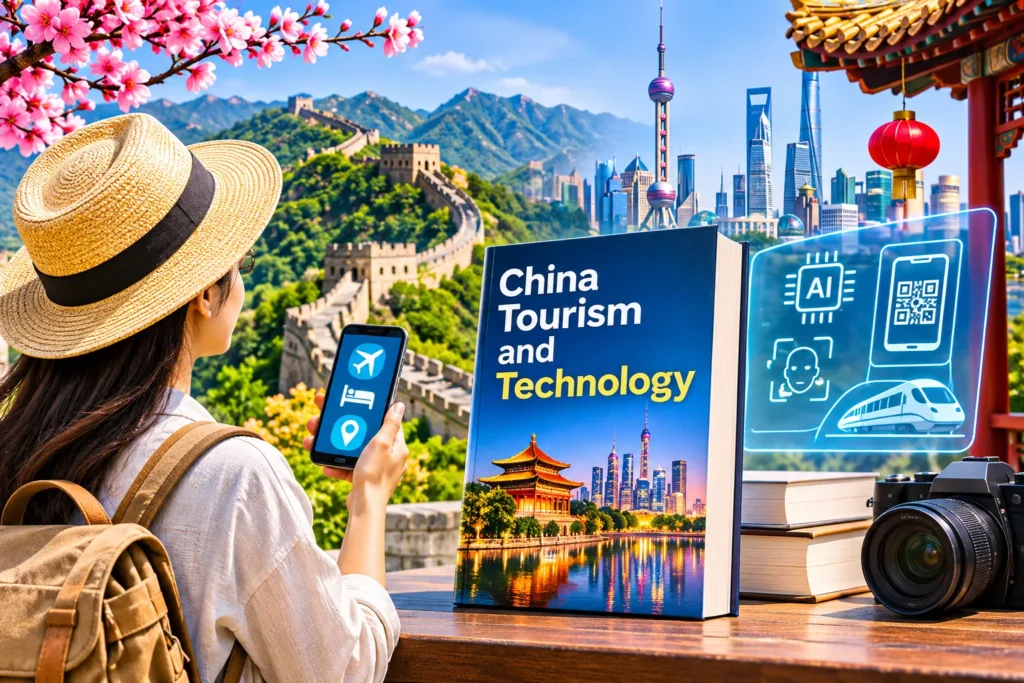
Singapore, November 26, 2026 — Over the past three decades, the rapid convergence of national infrastructure policy, consumer digital platforms, and artificial intelligence has transformed China into one of the world’s most influential travel economies. Examining this structural evolution in detail, Asia-based travel market and tourism policy analyst Gary Bowerman is set to release a new book titled China, Tourism and Technology: How China’s Digital Eco-Systems are Transforming Global Travel, scheduled for publication by Routledge on December 1, 2026.
Spanning nearly thirty years of transformation since 1997, the 156-page volume investigates how China tourism and technology have been purposefully integrated across government policy, trade relations, transportation networks, and commercial digital ecosystems—and how those developments are increasingly shaping destination strategies, aviation, hospitality, and consumer expectations worldwide.
Tracing Three Decades of Visitor Economics and Digital Integration
Drawing on decades of regional market research—including six years living and working in Shanghai—Bowerman traces China’s ascent from an emerging outbound and domestic travel market following its accession to the World Trade Organization into a global tourism superpower. Featuring a night-time photograph of Shenzhen, one of China’s foremost centres for artificial intelligence and advanced hardware innovation, on its cover, the book examines how visitor economics and industrial policy operate as interconnected forces.
According to Bowerman, China led the international travel sector in making tourism distinctly techno-centric, technocratic, and geostrategic. Rather than treating travel solely as a leisure or hospitality transaction, decisions shaped in government ministries, bilateral trade negotiations, corporate boardrooms, and AI research laboratories now directly govern how trips are discovered, financed, booked, and experienced.
Closed-Loop SuperApps, Social Commerce, and Frontier AI Models
A central focus of the publication is the rise of China’s homegrown, closed-loop digital ecosystems and their growing international footprint. Bowerman analyses how domestic pioneers and technology platforms—ranging from online travel agencies such as Ctrip (Trip.com Group) to multi-purpose SuperApps and digital commerce networks including Alibaba, WeChat, and lifestyle social platform Xiaohongshu—have redefined every stage of the traveller journey.
The book explores several interlocking technological pillars driving China’s visitor economy:
Mobile Commerce and SuperApp Ecosystems: Integrated digital platforms combining search, social inspiration, livestreamed travel retail, instant mobile payments, and post-trip reviews inside seamless consumer environments.
Smart Transport and Electrotech Mobility: The expansion of high-speed rail networks, commercial aviation, electric and new energy vehicles, autonomous mobility, robotics, and commercial drone applications across tourist destinations and supply chains.
Frontier and Embodied AI Solutions: The deployment of large-scale artificial intelligence models, automated customer service agents, and smart destination management tools across airlines, hotel groups, and cultural attractions.
By building tightly integrated digital networks, Chinese travel-tech enterprises have created distinctive consumer conveniences at home while introducing new competitive dynamics and partnership models for international destinations seeking to attract Chinese visitors.
Policy Shifts, Inbound Visa Waivers, and Global Brand Expansion
Beyond domestic digital innovation, China, Tourism and Technology examines major policy turning points across recent years, including the pandemic-era travel hiatus between 2020 and 2023 and China’s subsequent inbound tourism turnaround driven by expanded bilateral and unilateral visa-waiver programmes. By lowering border entry barriers and streamlining mobile payment compatibility for overseas visitors, national policy initiatives have sought to reconnect international travellers with China’s high-tech urban hubs and cultural heritage regions.
Simultaneously, the book charts how Chinese airlines, hotel groups, electric vehicle manufacturers, and digital booking platforms are expanding overseas—influencing how global tourism boards, hospitality operators, and financial institutions plan long-term investments. Designed as a practical resource for tourism policymakers, aviation and hospitality executives, international destination marketers, and academic researchers, Bowerman’s latest work underscores why understanding China’s digital and technological trajectory has become indispensable for navigating the future of global travel.
For more travel news like this, keep reading Global Travel Wire