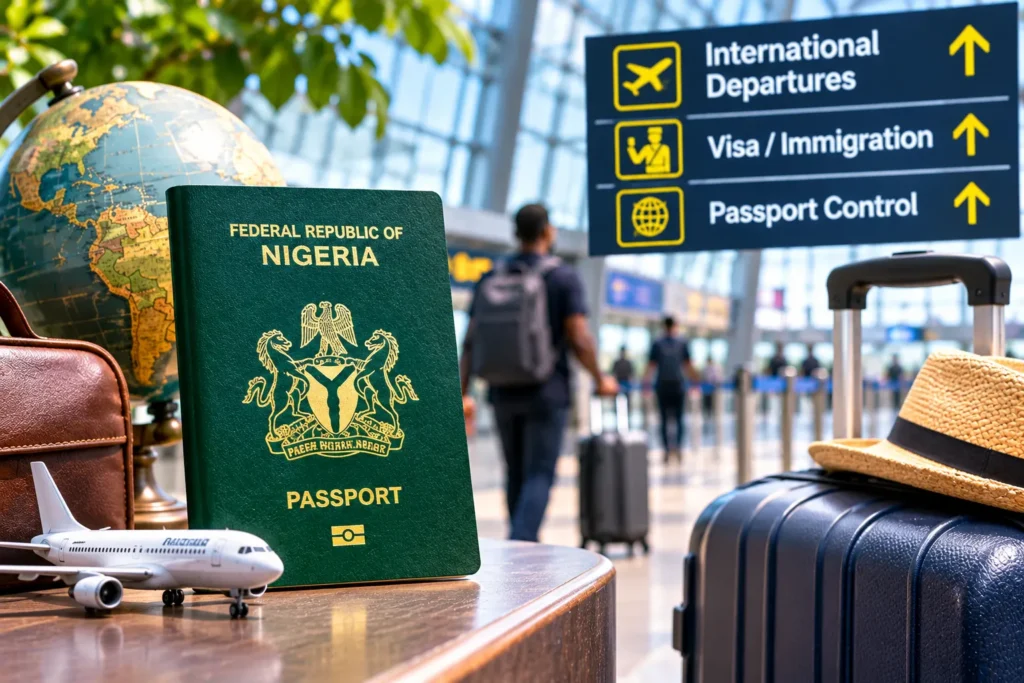
In an era of heightened border security, digital immigration screening, and shifting bilateral visa agreements, a national passport serves as far more than an identity document—it is the primary key governing access to global tourism, business travel, and cultural exchange. For citizens of Africa’s most populous nation, Nigerian passport mobility has experienced a notable contraction over the past two decades. Falling from 62nd globally in 2006 to 92nd in 2026, Nigeria’s international travel standing illustrates how economic performance, diplomatic reciprocity, and regional security directly influence how freely travelers can cross international borders.
While modern travel documents originated in the early twentieth century following World War I and the 1919 Treaty of Versailles’ mandate to maintain freedom of transit, today’s global mobility landscape is sharply stratified. Global passport benchmarks measure short-term travel freedom by counting how many destinations a citizen can enter without obtaining an embassy visa in advance. At the top of the global spectrum, travelers holding passports from Singapore can access 193 destinations visa-free, followed closely by Japan and the United Arab Emirates at 188 destinations, South Korea at 187, and a dozen European nations—including France, Germany, Italy, Spain, and the Netherlands—at 185 destinations. Even major Western powers such as the United Kingdom and the United States sit further down the global list at joint 22nd and joint 37th respectively, underscoring how selective reciprocal border agreements have become worldwide.
Diplomatic Reciprocity and Regional Visa-Free Travel in Africa
For Nigerian travelers, international mobility is heavily concentrated within regional frameworks rather than long-haul intercontinental corridors. Through Economic Community of West African States protocols and bilateral agreements, Nigerian citizens enjoy visa-free entry across West African neighbors including Benin, Ghana, Senegal, and Côte d’Ivoire, alongside select Caribbean and Pacific destinations such as Barbados and Saint Kitts and Nevis, and visa-on-arrival access in countries like Rwanda, Uganda, Kenya, Ethiopia, and Namibia.
Conversely, travel to North America, the Schengen Area, the United Kingdom, and major Asian tourism hubs requires advance embassy visa applications, biometric appointments, and detailed financial vetting. Immigration authorities in destination countries routinely evaluate bilateral security cooperation, migration compliance rates, and economic indicators when setting visa requirements. Consequently, short-term leisure tourists, conference delegates, and academic visitors from Nigeria often navigate lengthy processing timelines and substantial administrative fees before embarking on international trips.
Economic and Security Drivers Behind Travel Barriers
The trajectory of Nigerian passport mobility is closely intertwined with domestic macroeconomic shifts and regional security dynamics. Following the restoration of civilian governance in 1999 and an early-2000s economic expansion fueled by oil revenues—which account for over 80 percent of export earnings—Nigeria’s international profile strengthened alongside annual growth exceeding 6 percent. However, subsequent global oil price downturns, including the 2016 recession, currency volatility, and rising living costs have placed sustained pressure on household purchasing power. According to national poverty assessments, the share of Nigerians living below the national poverty line rose from 40.1 percent in 2018–2019 to 56.2 percent in 2022–2023.
At the same time, prolonged security challenges in northeastern Nigeria and the wider Lake Chad basin—requiring joint regional military operations alongside Niger, Chad, and Cameroon—have heightened international border scrutiny. Combined with rising outbound migration, which saw more than two million Nigerians residing abroad by 2024 and contributing remittances exceeding 8 percent of gross domestic product, foreign consular authorities have tightened visa screening criteria to mitigate perceived overstay risks. For genuine outbound tourists and business travelers, these macroeconomic and security assessments translate directly into stricter documentation requirements and reduced visa-free access.
Federal Border Modernization and Digital Passport Reforms
To strengthen document integrity, enhance international trust, and streamline the travel experience for citizens at home and abroad, the Federal Government of Nigeria and the Nigeria Immigration Service have rolled out sweeping border management and passport modernization initiatives. Under the Enhanced e-Passport framework, Nigeria introduced polycarbonate data pages, ten-year validity booklets, and automated online application portals to eliminate manual bottlenecks and document tampering.
In November 2026, the Ministry of Interior commenced construction on a dedicated domestic passport manufacturing plant scheduled for completion in May 2027, designed to produce six million booklets annually and end reliance on foreign printing. Alongside clearing a backlog of more than 204,000 applications, deploying automated e-gates at major international airports, and launching contactless passport renewals for Nigerians in the diaspora, the Nigeria Immigration Service has deepened bilateral border governance partnerships with international counterparts, including Germany.
As global tourism continues to digitize, restoring upward momentum in Nigerian passport mobility will depend on sustained economic diversification, regional security stabilization, and active diplomatic engagement. By pairing modern biometric travel credentials with stronger bilateral reciprocity, Nigeria aims to expand cross-border opportunities for its citizens while welcoming international visitors to experience its vibrant cultural and creative industries.
For more travel news like this, keep reading Global Travel Wire