











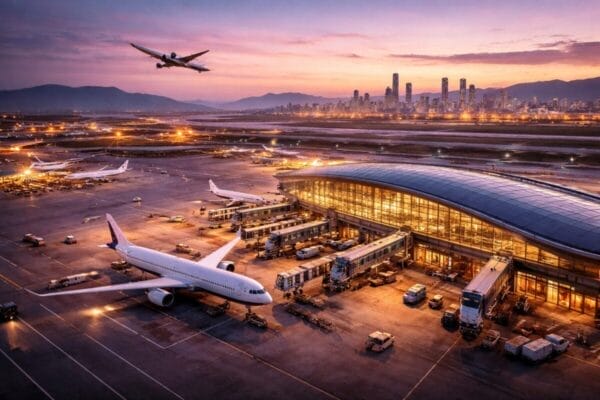
Asia Pacific aviation growth has surged beyond pre pandemic levels. Passenger demand now exceeds earlier records in many markets. Domestic travel recovery has fueled this rebound. Cross border traffic has also strengthened across major corridors.
However, airlines still face narrow profit margins. Rising fuel prices, labor costs, and supply chain delays add pressure. Geopolitical tensions also disrupt planning and route stability. Therefore, the next decade will test airline resilience.
Carriers must combine airline capacity management with strategic agility. Only disciplined operators will secure long term profitability.
Domestic Travel Anchors Regional Capacity
Domestic routes account for nearly three quarters of total seat capacity in the region. Large countries such as China, India, and Indonesia rely heavily on internal connectivity.
Strong domestic demand ensures consistent passenger volumes. Yet intense competition reduces pricing power. Many routes host multiple operators competing for similar travelers.
As fares decline, margins tighten further. Airlines must therefore optimize scheduling and adjust frequencies carefully. Network planning teams now monitor demand patterns daily.
Several carriers have begun shifting aircraft toward international markets. This move aims to capture higher yields from premium travelers.
International Routes Regain Momentum
International travel has expanded rapidly across Asia Pacific. Popular corridors between Japan and South Korea now exceed earlier traffic levels. Low cost carriers have driven much of this growth.
Premium demand also shows strong recovery. Business travelers and leisure passengers now seek long haul connections again.
Airlines are forming alliances and partnerships to strengthen cross border presence. Strategic cooperation reduces operational duplication. It also expands global reach without excessive fleet growth.
This shift highlights the importance of balanced airline capacity management. Carriers that redeploy aircraft quickly gain competitive advantage.
China Shapes Regional Aviation Dynamics
China remains the largest aviation market in Asia Pacific. The country schedules nearly 390 million seats this winter season. This figure surpasses India’s capacity by a wide margin.
Government policy influences route approvals and fleet purchases. Regulatory decisions directly impact regional capacity distribution.
Recent policy adjustments have forced airlines to redirect services from restricted destinations. At the same time, Chinese carriers have expanded flights to Europe, Oceania, and South America.
China’s scale gives it unmatched influence in Asia Pacific aviation growth. Fleet decisions in Beijing often reshape network strategies across neighboring markets.
Fleet Modernization Transforms Connectivity
Airlines across Asia Pacific continue investing in next generation aircraft. New narrow body jets offer extended range and improved fuel efficiency.
These aircraft enable direct links between secondary cities. Passengers can now bypass traditional hub airports. Travel times decrease while operational costs decline.
Wide body fleets also continue to expand. Ultra long haul routes now connect cities without intermediate stops. Premium travelers value nonstop convenience.
Manufacturers predict that Southeast Asia and India will absorb a large share of future global seat growth. Therefore, fleet planning remains central to airline strategy.
Airport Expansion Fuels Growth
Governments across the region are investing heavily in airport infrastructure. Western Sydney International Airport will expand Australia’s gateway capacity.
India continues upgrading terminals in Mumbai and Delhi. China plans 18 new airports to meet rising domestic demand.
Singapore Changi Airport is preparing Terminal 5. Hong Kong International Airport has added new runways and terminal capacity.
These developments support long term Asia Pacific aviation growth. Modern airports improve passenger experience and operational efficiency.
Technology Innovation Drives Competitive Edge
Aviation technology innovation now shapes airline performance. Artificial intelligence helps airlines forecast demand accurately. Predictive analytics guide pricing and seat allocation.
Automation also improves baggage handling and ground operations. Digital booking platforms personalize travel options in real time.
Airlines that leverage data effectively can adjust routes faster. They can also respond to geopolitical shocks with minimal disruption.
Technology reduces waste and improves on time performance. These gains strengthen customer loyalty in competitive markets.
Profitability Remains a Key Challenge
Despite strong traffic numbers, profitability per passenger remains modest. Average net profit in the region stands at just over three US dollars per traveler.
This margin remains lower than returns seen in the Middle East. Rising operating costs continue to erode earnings.
Legacy carriers with disciplined growth strategies have reported stronger results. They manage capacity carefully and focus on premium segments.
Low cost carriers must balance expansion with cost control. Sustainable growth depends on financial discipline and strategic planning.
Strategic Flexibility Determines Success
The next decade will reward airlines that adapt quickly. Network planners must redeploy aircraft based on demand shifts.
Carriers must also diversify revenue streams. Cargo services, loyalty programs, and ancillary sales offer additional support.
Regional complexity requires constant monitoring of political and economic trends. Airlines that maintain flexibility can absorb shocks more effectively.
Outlook for the Next Ten Years
Asia Pacific aviation growth will continue at a strong pace. Domestic markets will anchor traffic stability. International routes will drive yield improvement.
Fleet modernization and airport expansion will support structural development. Aviation technology innovation will shape efficiency and personalization.
China will remain a decisive force in regional planning. Meanwhile, Southeast Asia and India will experience rapid seat expansion.
Ultimately, airline capacity management will determine long term winners. Carriers that combine discipline, innovation, and agility will lead the region.
Asia Pacific aviation now stands at a critical turning point. The decisions made today will define competitiveness for the next decade.
For more travel news like this, keep reading Global Travel Wire