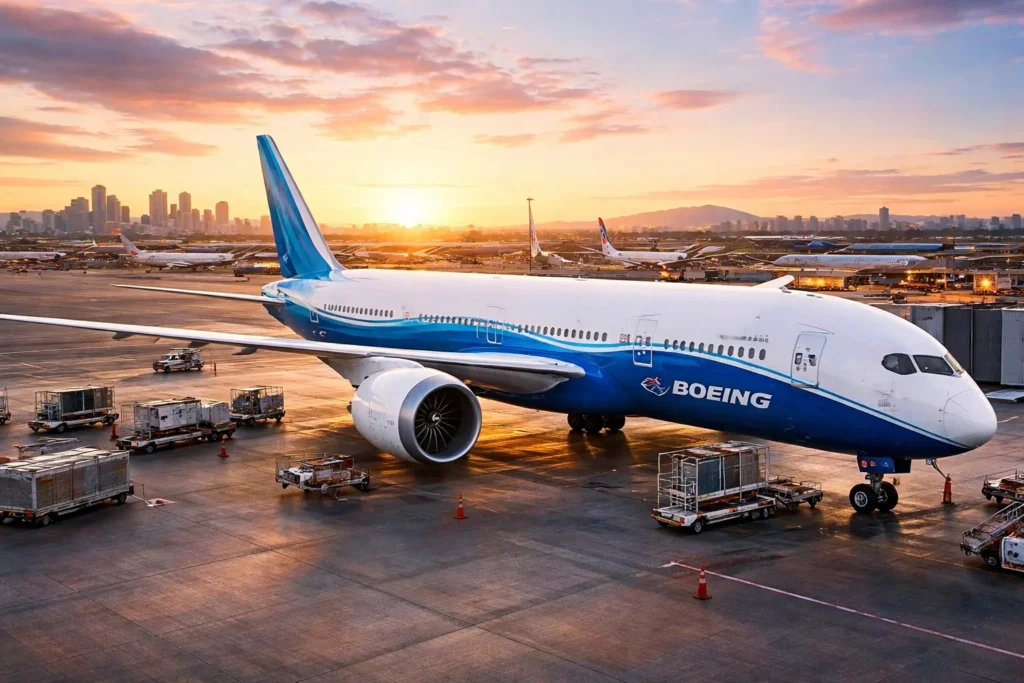
The global tourism industry continues to evolve alongside advancements in aviation, and the pricing of modern aircraft plays a crucial role in shaping travel accessibility. In 2026, the Boeing 787 Dreamliner remains a key driver of long-haul tourism expansion, with its cost structure influencing airline strategies, route development, and international connectivity.
The Boeing 787 family, developed by Boeing, is widely recognized for enabling airlines to operate longer routes more efficiently. This capability has allowed tourism boards and aviation authorities worldwide to open new direct connections between emerging destinations and major global hubs, supporting tourism growth through improved accessibility.
Although exact aircraft pricing is not publicly standardized, industry benchmarks and official aviation data indicate that the Boeing 787 price in 2026 varies depending on the variant. The smaller 787-8 typically falls within a higher hundreds of millions range in US dollars, while the larger 787-9 and 787-10 command progressively higher values due to increased capacity and operational capability. These figures are based on historically published manufacturer pricing frameworks used across the aviation sector.
However, official aviation authorities and civil aviation ministries emphasize that real-world procurement costs differ significantly. Airlines often negotiate pricing based on bulk purchases, delivery timelines, and long-term service agreements. As a result, the effective cost per aircraft is usually considerably lower than baseline estimates. This pricing flexibility allows airlines to expand fleets while maintaining financial sustainability—an essential factor in supporting tourism growth.
From a tourism perspective, the Boeing 787 has played a transformative role in route development. According to international aviation and tourism policy statements, long-range aircraft like the Dreamliner enable direct flights between secondary cities, reducing reliance on major transit hubs. This shift aligns with tourism board strategies aimed at dispersing visitor traffic beyond traditional destinations and promoting regional tourism economies.
The 787-9 variant, in particular, has become the preferred choice for many airlines due to its balance of range and passenger capacity. Civil aviation authorities note that this model supports medium to high-density international routes, making it ideal for connecting tourism markets across continents. Meanwhile, the larger 787-10 is often deployed on high-demand routes linking major tourism centers, helping airlines maximize passenger volumes during peak travel seasons.
Government tourism agencies have also highlighted how modern aircraft efficiency contributes to sustainable tourism goals. The Dreamliner’s fuel efficiency reduces operating costs for airlines, which can translate into more competitive ticket pricing. Lower fares, in turn, stimulate international travel demand, making destinations more accessible to a broader range of travelers.
In addition to commercial aviation, specialized configurations of the Boeing 787 are used for government and VIP transport. These versions, often customized with premium interiors, represent a different pricing category entirely. While not directly tied to mass tourism, such aircraft underscore the versatility of the platform and its role in supporting diplomatic and international engagement travel.
Recent fleet expansion announcements from national carriers and aviation ministries further illustrate the importance of aircraft pricing in tourism planning. Orders for widebody aircraft like the 787 are often aligned with national tourism strategies, aiming to increase inbound visitor numbers and strengthen global connectivity. These decisions are typically supported by official projections from tourism departments, which forecast growth in international arrivals based on expanded air capacity.
The broader aviation market also influences pricing dynamics. Competition between aircraft manufacturers and evolving demand patterns can impact how airlines negotiate deals. During periods of strong travel demand, production slots become more valuable, affecting delivery schedules and pricing structures. Conversely, during slower periods, airlines may secure more favorable terms, enabling them to invest in fleet upgrades that support future tourism growth.
Ultimately, the Boeing 787 price in 2026 is not defined by a single figure but by a range shaped by negotiations, operational needs, and market conditions. What remains clear from official aviation and tourism data is that the Dreamliner continues to be a cornerstone of global travel infrastructure.
For the tourism sector, the significance goes beyond aircraft cost. The introduction of efficient, long-range aircraft directly impacts how destinations are marketed, how routes are developed, and how travelers experience international journeys. As governments and tourism boards focus on sustainable growth and improved connectivity, the role of aircraft like the Boeing 787 will remain central to shaping the future of global tourism.