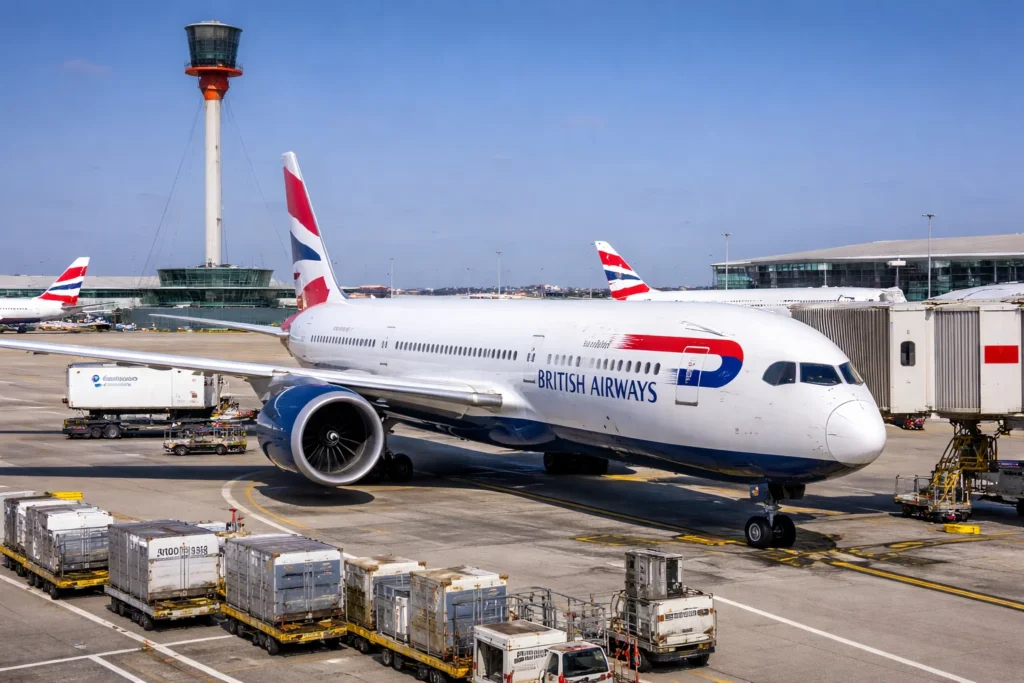
A major boost to international tourism connectivity is on the horizon as British Airways unveils an ambitious expansion plan featuring 12 new and returning routes from London between 2026 and 2027. This strategic development, aligned with aviation growth frameworks and supported by airport authorities in the United Kingdom, is set to strengthen London’s position as one of the world’s leading global travel hubs.
Operating primarily from the UK capital, British Airways continues to play a central role in connecting travelers to key global destinations. Official aviation data and airport coordination reports confirm that the airline accounts for a substantial share of flights from London, particularly at Heathrow Airport, where it maintains a dominant presence in long-haul and domestic operations.
The newly announced routes will be launched across four major London airports, including Heathrow, Gatwick, London City, and Stansted. Seven of the new services will depart from Heathrow, reinforcing its role as a primary international gateway supported by the UK Department for Transport and airport expansion strategies.
Among the most notable additions is the return of flights to Melbourne, a destination last served by the airline nearly two decades ago. Scheduled to begin in early 2027, the route will operate via Kuala Lumpur, offering seamless connectivity between Europe and Australia. This development aligns with broader international aviation cooperation and tourism growth initiatives between the UK and Australia, as outlined in bilateral aviation agreements.
The airline is also introducing new long-haul services to destinations such as St. Louis in the United States and San Jose in Costa Rica. These additions reflect growing demand for transatlantic and eco-tourism travel, supported by official tourism board data highlighting increased visitor interest in North America and Central America.
Short-haul tourism routes are equally prominent in the expansion plan. New and returning European leisure destinations include Tivat, Kalamata, Chania, and Olbia. These destinations are recognized by regional tourism authorities for their growing appeal among international travelers seeking coastal and cultural experiences.
Additionally, the airline will resume services to Colombo, marking a significant return to South Asia. Tourism ministries in Sri Lanka have actively promoted international air connectivity as part of national tourism recovery strategies, making this route a key development for inbound travel.
Caribbean tourism will also benefit from expanded connectivity, with increased services to Bridgetown. Government tourism agencies in Barbados have emphasized the importance of direct flights from major European hubs, and the enhanced schedule is expected to support year-round visitor growth.
Within the United States, British Airways is strengthening its network further by adding new routes and increasing frequency on existing ones. Official aviation statistics indicate that the airline will serve 27 US destinations, marking one of its most extensive transatlantic networks to date. This expansion supports tourism flows between the UK and the US, a key market highlighted in bilateral tourism reports.
Domestic and regional connectivity is also receiving attention. The reintroduction of flights to Guernsey underscores efforts to enhance links between London and regional destinations. Local tourism boards have consistently emphasized the importance of improved air access to boost visitor numbers and support local economies.
From an operational perspective, the airline will deploy a mix of modern aircraft, including the Boeing 787 Dreamliner and Airbus A320 family jets, ensuring efficiency and passenger comfort. These aircraft align with international aviation standards and environmental guidelines promoted by regulatory authorities, focusing on reduced emissions and improved fuel efficiency.
The expansion also reflects broader trends in global tourism recovery and growth. Government tourism strategies across Europe and beyond have prioritized air connectivity as a critical driver of economic development. By increasing route options and frequencies, airlines like British Airways contribute to the resilience and competitiveness of the tourism sector.
For travelers, the introduction of these routes opens up a wider range of destinations and travel experiences. Whether it is long-haul journeys to Australia and North America or short-haul escapes to Mediterranean hotspots, the expanded network offers greater flexibility and accessibility.
Tourism officials have highlighted that improved connectivity can lead to increased visitor spending, job creation, and cultural exchange. As London continues to serve as a major international gateway, the addition of these routes is expected to enhance its role in global tourism networks.
Looking ahead, aviation authorities anticipate further route announcements as airlines respond to evolving demand patterns. The 2026–2027 expansion by British Airways signals confidence in the future of travel and underscores the importance of strategic route planning in supporting global tourism growth.
With a combination of new destinations, returning routes, and enhanced frequencies, British Airways is positioning itself to meet the needs of modern travelers while contributing to the continued recovery and expansion of the global tourism industry.