
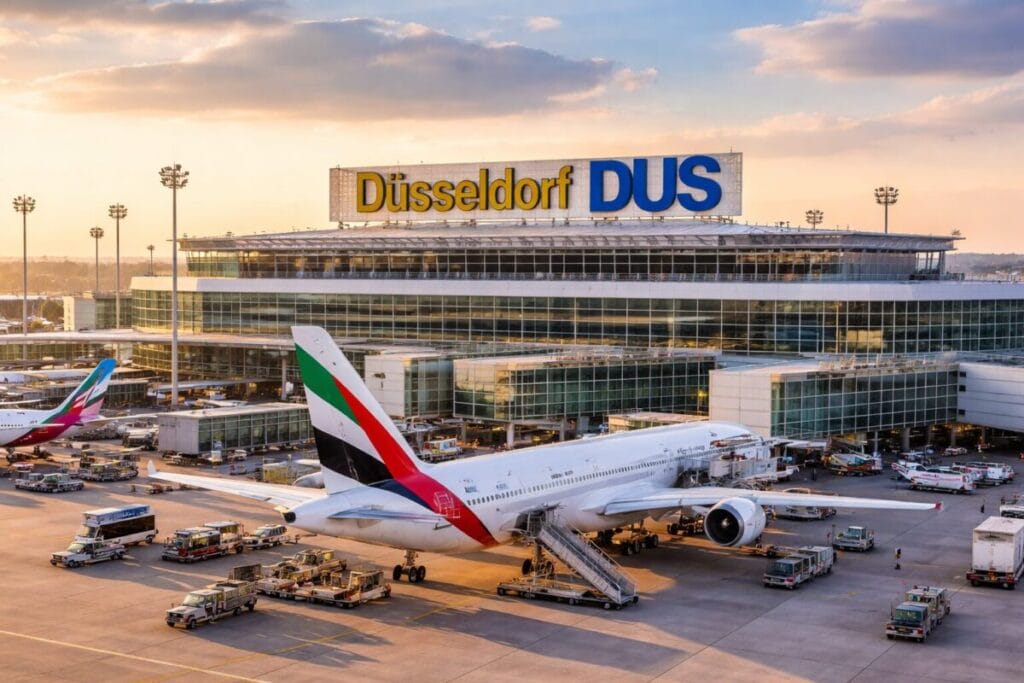
Düsseldorf Airport has strengthened its reputation as one of Europe’s most advanced aviation hubs after achieving the 21st position in the continent’s top 50 airports for 2026. The recognition reflects years of strategic investments focused on digital transformation, sustainable aviation, and customer-centric innovation. Positioned at the heart of Germany’s Rhine-Ruhr region, the airport continues to evolve into a technologically sophisticated and environmentally responsible gateway serving millions of travelers annually.
The achievement highlights the airport’s long-term vision of becoming a “Destination of Excellence,” combining operational efficiency with seamless passenger experiences. As airports worldwide adapt to shifting traveler expectations and environmental demands, Düsseldorf Airport stands out as a model for intelligent growth and innovation-driven aviation management.
Expanding Connectivity and Operational Growth
Flight operations at Düsseldorf Airport have shown strong momentum heading into 2026. Passenger traffic has surpassed the 21 million mark annually, signaling a robust recovery and steady expansion after pandemic disruptions. Forecasts suggest continued growth as airlines expand routes and frequencies to meet increasing demand from both business and leisure travelers.
The airport has strengthened its global network through expanded long-haul services and enhanced European connectivity. Middle Eastern carriers have increased their presence, providing improved access to international transit hubs, while European routes continue to serve both tourism hotspots and important industrial cities. As a major base for a leading German airline group, Düsseldorf offers frequent connections to more than 100 destinations, reinforcing its role as a central link between Western Germany and global markets.
Despite operating within an urban environment with space limitations, the airport has optimized runway usage and air traffic coordination to maintain high punctuality. Operational strategies have improved aircraft turnaround times and allowed the airport to handle increased flight movements efficiently during peak travel periods.
Agentic AI Driving Smart Airport Operations
A defining feature of Düsseldorf Airport’s transformation is the adoption of advanced AI systems designed to manage operations autonomously. Unlike earlier automation tools that simply provided data insights, the latest AI platforms function as digital decision-makers capable of predicting challenges and implementing solutions in real time.
Within the Airport Operations Center, AI-driven systems analyze scenarios such as gate assignments, passenger flow, and baggage handling logistics. By anticipating potential delays before they occur, these systems help maintain smoother operations and improve on-time performance.
The introduction of AI has also enabled virtual capacity expansion. Through precise coordination of ground handling activities and aircraft movements, the airport has increased operational throughput without needing large-scale physical infrastructure expansion. Additionally, AI-powered commerce tools enhance the traveler journey by offering personalized recommendations for retail and dining based on passenger preferences.
Advanced Security and Biometric Travel
Security procedures at Düsseldorf Airport have undergone significant modernization with the adoption of advanced biometric technology and automated border control systems. The introduction of digital entry and exit processes replaces traditional manual stamping for many travelers, reducing processing times and improving accuracy.
Self-service kiosks allow non-European travelers to complete biometric registration independently, while facial recognition technology enables eligible passengers to pass through border control quickly via automated gates. Upgraded security lanes equipped with advanced scanning technology allow travelers to keep electronic devices and liquids inside their bags during screening, speeding up the process and enhancing convenience.
These changes have contributed to shorter wait times, with most passengers moving through key checkpoints within minutes. Digital reservation systems for security slots further streamline the experience by allowing travelers to plan their airport journey in advance.
Sustainability at the Core of Growth
Environmental responsibility remains a central pillar of Düsseldorf Airport’s strategy. The airport has committed to achieving carbon neutrality by 2035, supported by investments in renewable energy and alternative fuels.
A pioneering initiative focuses on producing sustainable aviation fuel using captured carbon dioxide combined with green hydrogen, demonstrating innovative approaches to reducing aviation emissions. Hydrogen-powered ground vehicles and apron buses are gradually replacing conventional equipment, contributing to cleaner airport operations.
Solar energy plays a growing role in powering the airport’s infrastructure, with extensive photovoltaic installations generating significant amounts of renewable electricity each year. These efforts position Düsseldorf Airport as a leader in Europe’s transition toward greener aviation.
Passenger Experience and Smart Services
While embracing technological innovation, the airport continues to prioritize passenger comfort. Digital tools such as time-slot booking for security checkpoints minimize waiting times, while modern lounges and redesigned commercial areas enhance the overall travel experience.
Retail and dining options reflect the cultural diversity of the North Rhine-Westphalia region, combining local culinary offerings with international brands. Thoughtful design elements and efficient navigation systems help travelers move through the terminal smoothly, contributing to consistently high satisfaction levels.
Positive Market Outlook and Future Vision
Looking ahead, Düsseldorf Airport expects continued growth fueled by expanding airline partnerships, rising demand for European travel, and government policy changes aimed at supporting the aviation sector. Passenger numbers are forecast to approach pre-pandemic highs, supported by increased long-haul routes and strong regional demand.
The airport’s long-term Masterplan 2045 outlines further digitalization across operations, including automated logistics and smart infrastructure upgrades. By combining innovation, sustainability, and customer-focused services, Düsseldorf Airport aims to strengthen its position as a leading European aviation hub and a driver of economic growth in the region.
The ranking among Europe’s top airports confirms the success of its forward-looking strategy, demonstrating how technology and sustainability can reshape the future of travel while delivering a seamless journey for passengers.
For more travel news like this, keep reading Global Travel Wire