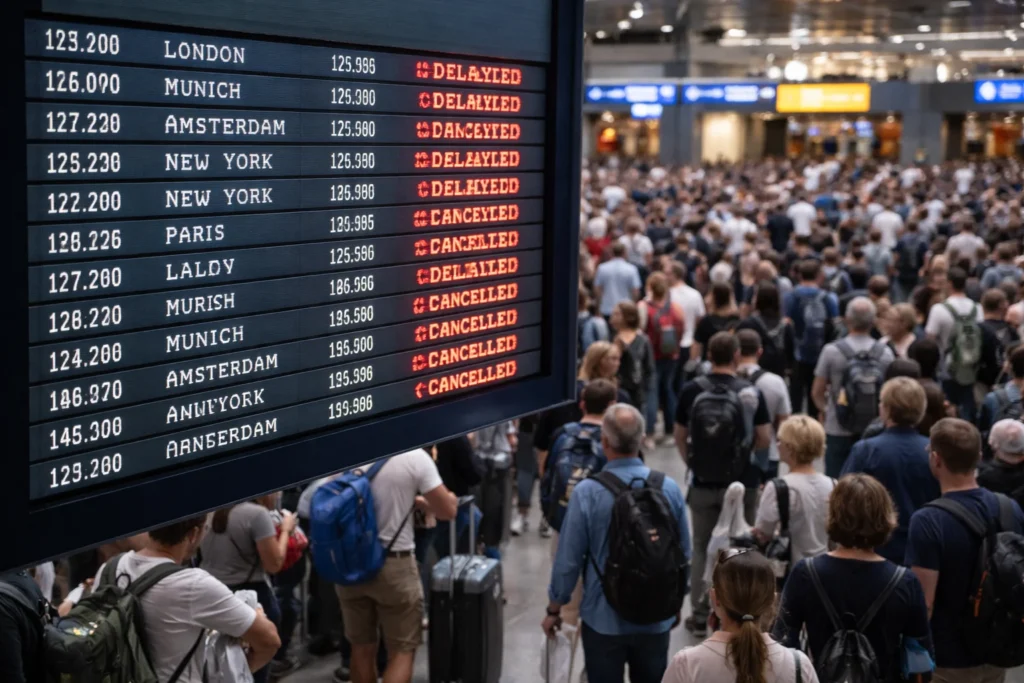
Air travel across Europe faced major disruption as hundreds of flights were delayed and dozens canceled at some of the continent’s busiest airports. A total of more than 1,170 delays and 76 cancellations were recorded in a single day, creating significant challenges for passengers and airlines alike.
The disruption impacted key aviation hubs including Frankfurt, London Heathrow, Munich, Brussels, Amsterdam Schiphol, Zurich, Hamburg, Keflavik, and Paris Charles de Gaulle. These airports serve as crucial gateways for both regional and long-haul travel, meaning the ripple effects were felt far beyond Europe.
Frankfurt and Paris Among the Hardest Hit
Frankfurt Airport emerged as the most severely affected hub, recording over 300 delays along with more than 30 cancellations. As one of Europe’s primary transit points, disruptions here quickly spread across international routes, affecting travelers connecting to destinations in Asia, North America, and beyond.
Paris Charles de Gaulle also faced heavy congestion, with more than 200 delayed flights. As a major entry point for global tourists visiting France, delays at this airport created significant inconvenience for both inbound and outbound passengers.
Amsterdam Schiphol and London Heathrow were similarly impacted, reporting hundreds of delays combined. These airports play a critical role in connecting Europe with global markets, and even minor disruptions can lead to widespread scheduling issues.
Passengers Face Long Waits and Uncertainty
For travelers, the disruptions resulted in long queues, missed connections, and uncertainty about onward journeys. Many passengers were left stranded in terminals for hours, while others scrambled to find alternative flights.
Connecting passengers were particularly affected, as delays in one airport caused a domino effect across multiple destinations. Business travelers missed important meetings, while tourists saw carefully planned itineraries disrupted.
Airlines worked to manage the situation by offering rebooking options, meal assistance, and in some cases, overnight accommodation. However, the sheer scale of the disruption made it difficult to provide immediate solutions for everyone affected.
Impact on Tourism and Travel Demand
The timing of the disruption is significant, as Europe enters a busy travel period with increasing tourist arrivals. Cities such as London, Paris, Amsterdam, and Munich rely heavily on smooth air connectivity to support their tourism industries.
Delays and cancellations at this scale can discourage travelers, especially those on tight schedules. Tour operators and travel agencies may also face challenges as customers reconsider their plans or seek alternative routes.
In some cases, travelers are expected to shift to other modes of transportation such as high-speed rail, particularly for short-distance travel within Europe. This shift highlights the importance of reliable transport networks during periods of aviation disruption.
Smaller Airports Also Affected
While major hubs experienced the most severe delays, smaller airports were not immune. Zurich, Hamburg, and Keflavik also reported disruptions, demonstrating how interconnected the European aviation system has become.
Even a relatively small number of delays at mid-sized airports can lead to missed connections and logistical challenges. For destinations that rely on efficient air links, such disruptions can impact both tourism and business travel.
Causes and Operational Challenges
Although disruptions of this scale can arise from multiple factors, common causes include adverse weather conditions, air traffic congestion, staffing shortages, and technical issues. In highly interconnected airspace like Europe, even minor disruptions can quickly escalate.
Airports and airlines are increasingly focusing on improving operational resilience. This includes better coordination between air traffic control, airlines, and ground services to minimize delays and maintain smoother passenger flow.
Passenger Satisfaction Under Pressure
Flight delays and cancellations have a direct impact on passenger satisfaction. Travelers often experience frustration due to limited communication, long waiting times, and uncertainty about rebooking options.
Airlines are under pressure to provide timely updates and efficient customer support during such events. Clear communication, compensation policies, and quick rebooking services play a crucial role in maintaining customer trust.
Failure to address these issues can lead to long-term damage to airline reputation, particularly among frequent travelers who rely on punctuality and reliability.
Industry Response and Recovery Efforts
Airport authorities and airlines across Europe have been working to restore normal operations as quickly as possible. Additional staff have been deployed to assist passengers, while airlines are adjusting schedules to accommodate delayed flights.
Efforts are also being made to improve coordination between airports to prevent further disruptions. As operations stabilize, airlines are expected to gradually clear backlogs and resume regular schedules.
Global Ripple Effect on Air Travel
The disruption in Europe has had a global impact, affecting flights to and from North America, Asia, and the Middle East. International travelers connecting through European hubs experienced delays even if their origin or destination was outside the continent.
This highlights the critical role European airports play in global aviation. Any disruption in these hubs can quickly spread across international networks, affecting millions of passengers worldwide.
What Travelers Should Do
Passengers affected by delays or cancellations are advised to stay updated through airline notifications and airport announcements. Checking flight status regularly and contacting airline support can help secure alternative arrangements.
Travelers should also be aware of their rights regarding compensation and assistance, which may include meals, accommodation, and rebooking options depending on the length of delay.
Keeping travel documents accessible and remaining flexible with travel plans can help reduce stress during such disruptions.
A Reminder of Aviation’s Complex Network
The large-scale disruption across Europe serves as a reminder of how interconnected modern aviation systems are. While airlines and airports continue to improve efficiency, unexpected challenges can still create significant disruptions.
As the travel industry continues to recover and grow, maintaining reliability and passenger confidence will remain a top priority. Strengthening infrastructure, improving communication, and investing in technology will be essential to prevent similar disruptions in the future.
Despite the challenges, Europe remains one of the world’s most important travel regions, and efforts are underway to ensure smoother journeys for passengers in the days ahead.