Flydubai faced major operational challenges on 20 November 2025. The airline cancelled ten flights and delayed hundreds more. These issues affected travel across the UAE, Israel, Iran, Syria, Turkey and Ethiopia. The sudden disruption created uncertainty for tourists who planned journeys through Dubai and other major hubs. Many travellers now face long waits, changed itineraries and missed connections.
The disruption spread across several popular tourism markets. Travellers heading to Dubai saw long queues and shifting departure times. Visitors flying to Tel Aviv, Shiraz, Damascus, Istanbul and Addis Ababa faced similar problems. Flydubai’s regional network saw strain that influenced both inbound and outbound tourism flows.
Key Flights Hit by Cancellations
Several important routes recorded confirmed cancellations. These flights link Dubai with major regional tourism and business centres. The list includes:
- FDB1635 from Dubai to Tel Aviv
- FDB241 from Dubai to Shiraz
- FDB1113 from Dubai to Damascus
- FDB727 from Dubai to Istanbul
- FDB242 from Shiraz to Dubai
- FDB1636 from Tel Aviv to Dubai
- FDB647 from Dubai to Addis Ababa
- FDB1114 from Damascus to Dubai
- FDB728 from Istanbul to Dubai
- FDB648 from Addis Ababa to Dubai
Tourists heading to religious, cultural and historical sites in these cities saw sudden changes to their travel plans. These cancellations affected travellers visiting Israel’s coastal attractions, Iran’s cultural landmarks, Turkey’s urban centres, Syria’s historic markets and Ethiopia’s transit hotspots.
Delays Surge Across the Network
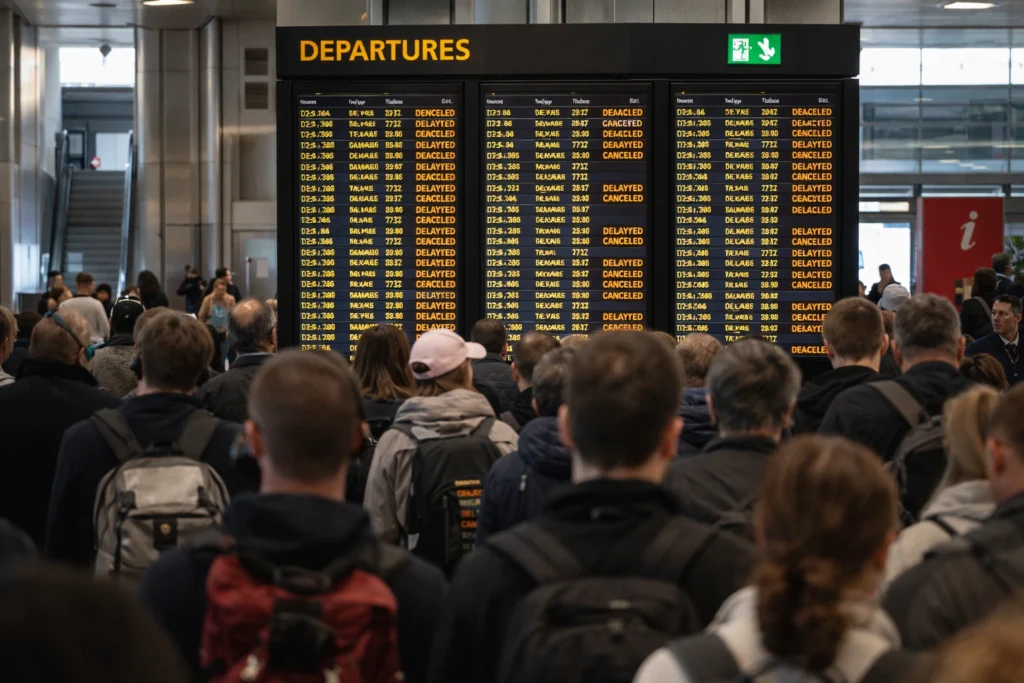
The number of delayed flights reached 214. This figure represents a delay rate of about 57 percent. Many travellers missed onward connections because these delays created timing gaps at Dubai International Airport. Some travellers changed full itineraries to avoid further inconvenience.
Tourists connecting to Africa, Europe or Asia from Dubai faced uncertainty as schedules shifted throughout the day. Longer queues formed at transit counters. Travellers waited for frequent updates from staff as the network struggled to recover.
Airports with Major Impact
The disruption spread across six major international airports. Each location plays an important role in regional travel and tourism.
Dubai International Airport, UAE
Dubai serves as Flydubai’s home hub. Delays here affect transit traffic, hotel stays and airport shopping. Many travellers ended up in long lines as they waited for new departure times.
Ben Gurion Airport, Tel Aviv, Israel
Tourists heading to beaches, museums and business districts saw schedule changes. Travel groups adjusted guided tours and day trips because of the delays.
Shiraz Shahid Dastghaib Airport, Iran
Many cultural tourists travel to Shiraz for gardens, mosques and heritage sites. Cancelled flights disrupted family visits and domestic tour plans.
Damascus International Airport, Syria
Travelers visiting relatives or cultural attractions faced setbacks. Flight cancellations affected short trips and cross-border travel.
Istanbul Airport, Turkey
Istanbul attracts travellers year-round for its history and food culture. Disruptions reduced footfall in major tourist districts and delayed short city breaks.
Bole International Airport, Addis Ababa, Ethiopia
Addis Ababa links many African tourism routes. Delays here disrupted safari connections and regional business visits.
Tourism Effects Across the Region
The flight issues pressured local tourism markets. Dubai saw heavy congestion in terminals, which influenced purchases in duty-free areas. Tourists with long layovers needed extra hotel nights and transport. Istanbul also experienced setbacks, as delayed visitors missed guided tours and cruise departures.
Tel Aviv’s business tourism sector felt pressure due to delayed meetings and event schedules. In Shiraz and Damascus, families and cultural tourists faced emotional stress as planned visits collapsed. Addis Ababa saw slowed tourist flow toward wildlife destinations and regional cultural circuits.
Tour operators across the region scrambled to adjust schedules. Many guides, drivers and hotels needed updated arrival lists. The ripple effect reached travel planners who now had to rethink full itineraries.
What Travellers Should Do Now
Affected travellers can take several steps to reduce disruption.
Check Flight Status
Travellers should monitor flights frequently through the airline’s official channels. Real-time updates help travellers avoid unnecessary airport waits.
Seek Rebooking or Refund Options
Travellers can request new bookings or refunds for the ten confirmed cancellations. Many travellers choose new travel dates to avoid peak disruptions.
Review Travel Insurance
Insurance policies often cover meals, lodging or trip changes. Travellers should check their policy benefits before spending on extra services.
Prepare for Extended Waiting
Travellers should carry essentials in hand luggage. Portable chargers, snacks and water help during long airport waits in Dubai or other impacted cities.
A Challenging Day for Regional Tourism
Flydubai’s large-scale disruption created strain across tourism networks in the Middle East and Africa. Travellers felt the impact in airports, hotels and tour hubs. The situation highlighted the strong links between Dubai and its regional partners. As operations stabilise, tourists hope for smoother travel days and more predictable schedules.
For more travel news like this, keep reading Global Travel Wire