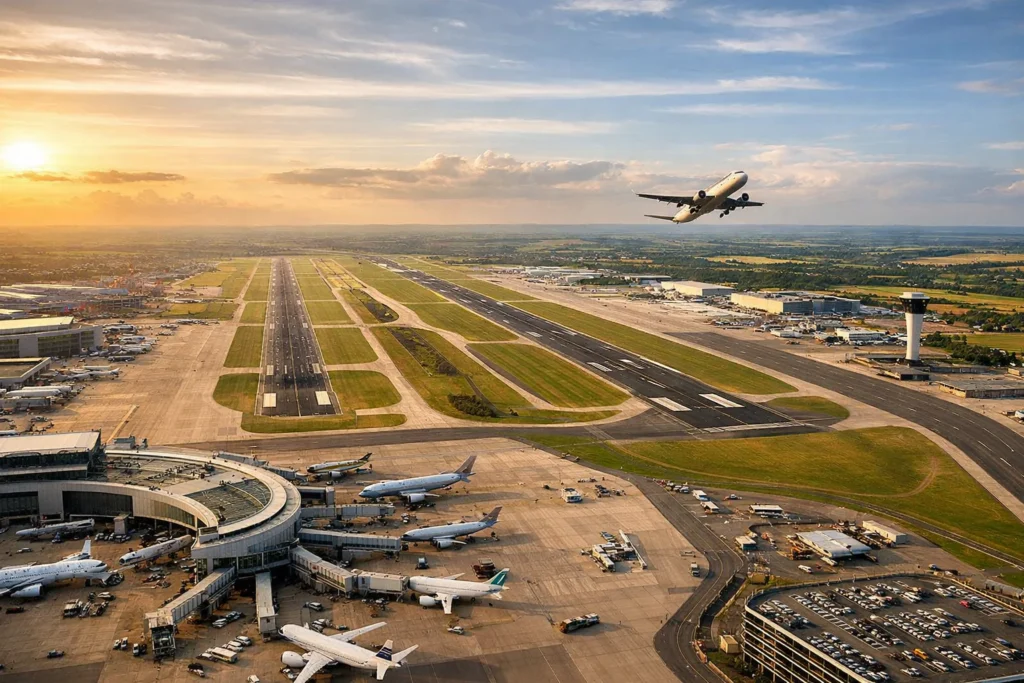
London Gatwick Airport is preparing for a landmark year in 2026, with ambitious expansion plans and infrastructure upgrades aimed at strengthening its position as one of the United Kingdom’s busiest international gateways. Building on strong passenger growth and operational performance in recent years, the airport is moving forward with a series of developments designed to improve efficiency, expand connectivity, and enhance the overall travel experience.
With increasing global travel demand and a renewed focus on international business and tourism, Gatwick’s expansion strategy reflects a broader effort to future-proof its operations while maintaining high service standards.
Northern Runway Project to Transform Capacity
At the heart of Gatwick’s expansion is the long-anticipated Northern Runway Project, a multi-billion-pound development that has received government approval. This project will enable the airport to significantly increase its operational capacity by bringing an existing standby runway into routine use.
The addition of the northern runway is expected to improve resilience, reduce delays, and support a higher volume of flights. For both airlines and passengers, this translates into more reliable schedules and increased availability of routes.
The enhanced capacity will particularly benefit long-haul travel, allowing airlines to introduce new international services while maintaining efficient operations during peak periods. As demand for global connectivity continues to rise, this project positions Gatwick as a key hub for both short-haul and intercontinental travel.
Expanding Global Route Network
Gatwick has already made significant progress in expanding its global network, now connecting travelers to hundreds of destinations across multiple continents. The addition of new airline partners and services has strengthened links to major cities worldwide, providing passengers with greater choice and flexibility.
Long-haul travel has shown notable growth, especially to regions such as Africa, the Middle East, and Asia. These routes are becoming increasingly important not only for tourism but also for international trade and business travel.
The airport’s growing network ensures that passengers can access a wide range of destinations directly, reducing the need for connecting flights and improving overall travel convenience.
Improved Runway Efficiency and Operations
In addition to expanding capacity, Gatwick is focusing on optimizing its existing operations. The airport has introduced advanced measures to improve runway efficiency, enabling it to handle more aircraft movements per hour.
One of the key innovations is the implementation of time-based separation, a system that enhances the flow of arrivals and departures by adjusting spacing between aircraft based on real-time conditions. This approach reduces delays, increases punctuality, and ensures smoother operations even during busy travel periods.
Such improvements are particularly valuable for business travelers and frequent flyers who rely on timely departures and arrivals. By minimizing disruptions, Gatwick aims to deliver a more dependable travel experience.
Investment in Passenger Facilities
Gatwick’s expansion is not limited to airside operations. The airport is also investing heavily in improving passenger facilities across its terminals. These upgrades include expanded departure lounges, upgraded security systems, and new infrastructure designed to streamline the passenger journey.
The development of additional aircraft stands and taxiways will further support the airport’s ability to accommodate more flights. At the same time, enhanced terminal spaces will provide greater comfort for travelers, whether they are preparing for long-haul journeys or short trips within Europe.
Premium services and lounge facilities are also being upgraded, catering to the needs of business travelers who require efficient and comfortable environments. These improvements reflect a growing emphasis on delivering a high-quality airport experience.
Sustainability at the Core of Growth
As part of its long-term vision, Gatwick is placing a strong emphasis on sustainability. The airport has introduced initiatives aimed at reducing carbon emissions and improving environmental performance across its operations.
Efforts include investing in cleaner energy solutions, promoting the use of electric vehicles, and implementing more efficient construction practices. These measures align with broader industry goals to reduce the environmental impact of aviation while supporting continued growth.
Sustainable travel is becoming an increasingly important factor for passengers, and Gatwick’s commitment to greener operations positions it as a forward-thinking airport in a rapidly evolving industry.
Strengthening Business Travel and Tourism
The planned upgrades are expected to have a significant impact on both business travel and tourism. With improved connectivity and more flight options, Gatwick is set to become an even more attractive gateway for international travelers.
Business travelers will benefit from increased access to global markets, enhanced airport facilities, and more reliable flight schedules. At the same time, leisure travelers will enjoy greater convenience and a wider range of destinations to choose from.
The airport’s strategic location and expanded network make it a vital hub for connecting the UK with key economic regions around the world.
Looking Ahead to 2026 and Beyond
As Gatwick moves forward with its expansion plans, 2026 is shaping up to be a transformative year. The combination of infrastructure development, operational improvements, and sustainability initiatives will redefine the airport’s role in global aviation.
Passengers can expect a more efficient, comfortable, and connected travel experience, while airlines will benefit from increased capacity and improved operational conditions.
With its continued investment and forward-looking approach, Gatwick Airport is positioning itself as a leading international hub ready to meet the demands of modern travel.