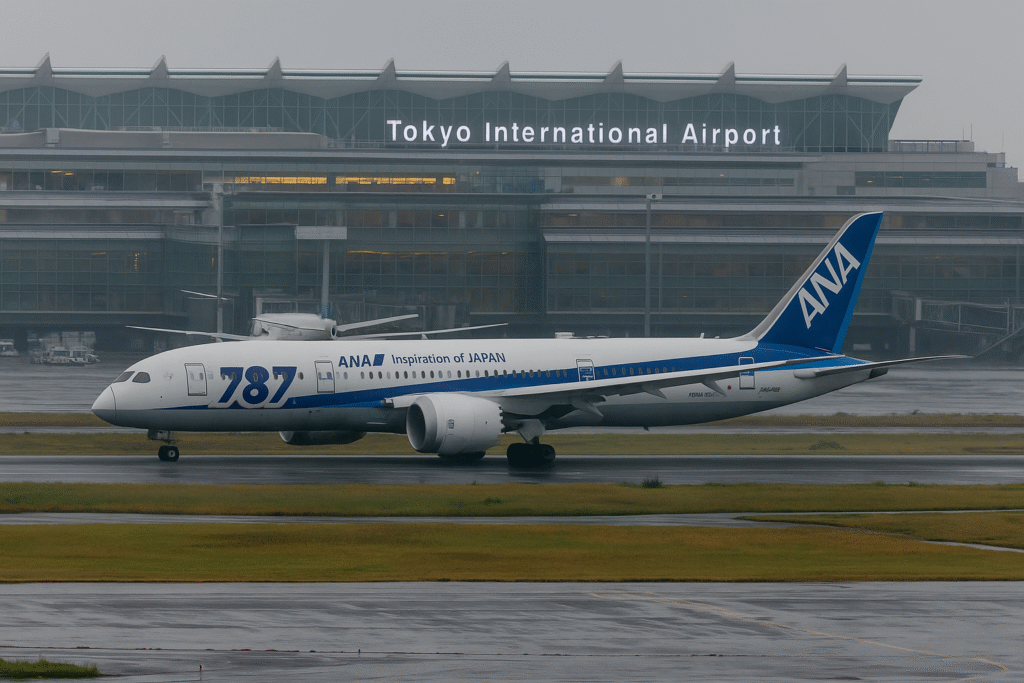
Japan is facing significant challenges in its aviation sector as Haneda Airport in Tokyo continues to grapple with the aftermath of a powerful storm. Heavy thunderstorms struck the capital late Thursday, bringing torrential rain and strong winds that severely disrupted both domestic and international flights. The incident left thousands of passengers stranded, while airlines and airport officials launched recovery efforts to stabilize operations.
Haneda, one of the busiest airports globally and a critical hub for Japan’s domestic and international connectivity, bore the brunt of the storm. While safety remains the top priority, the impact on schedules has been far-reaching, causing ripple effects across multiple airports and destinations.
Flight Cancellations by Japan’s Leading Airlines
The two largest Japanese carriers—Japan Airlines (JAL) and All Nippon Airways (ANA)—were forced to cancel dozens of flights in the immediate aftermath of the storm. By Friday morning, JAL had canceled 42 domestic services to and from Haneda. ANA, equally hard hit, canceled 70 domestic flights during the same period.
While most cancellations involved domestic routes, the disruptions also extended to some international services, as delays at Haneda created knock-on effects for long-haul flights. Both airlines stressed that passenger safety remains paramount and have committed to rebooking travelers, offering penalty-free changes to travel plans.
The Storm’s Intensity and Its Impact
The thunderstorms that swept across Tokyo were unusually intense, with heavy downpours and gale-force winds making flying conditions unsafe. The storm disrupted ground operations as well, with water pooling in parts of the airport and delays at check-in counters, boarding gates, and baggage claim areas.
Airport crews worked overnight to clear waterlogged sections and restore order. While no major structural damage was reported at the terminals, the sheer volume of stranded passengers created logistical challenges. Long queues formed at airline service desks as travelers scrambled to reschedule their flights or make alternative plans.
Passenger Experience Amid Chaos
For passengers, the storm’s impact has been both stressful and frustrating. Many spent hours waiting in terminals with limited information about when flights might resume. Airlines have been making announcements in multiple languages, and customer service teams have been providing updates through digital platforms, but the backlog remains difficult to clear.
Affected passengers were encouraged to check the status of their flights online before heading to the airport. Both JAL and ANA opened flexible rebooking options, allowing travelers to adjust their schedules without penalties. Despite these measures, congestion in terminals and long waiting times have been unavoidable.
Timing During Peak Travel Season
The storm arrived at a particularly difficult time for Japan’s aviation industry. August and September mark a busy travel season, with families, business travelers, and tourists alike using domestic and international services. With demand already high, the sudden wave of cancellations has amplified the strain on both airlines and passengers.
Tourism, a vital sector for Japan, is particularly affected. Haneda serves as a gateway for millions of international visitors who come to experience Tokyo’s culture, cuisine, and attractions, or to connect to other destinations such as Kyoto, Osaka, and Hokkaido. Delays and cancellations risk dampening the travel experience, especially for visitors with limited time in the country.
Airlines’ Response and Recovery Efforts
Both Japan Airlines and All Nippon Airways have stressed their commitment to restoring operations as quickly as possible. Crews worked overnight to reposition aircraft, reorganize flight schedules, and provide assistance to stranded passengers.
Efforts are being made to prioritize flights with the highest passenger loads and to ensure essential connections continue. However, given the scale of the cancellations, recovery is expected to take several days. Airlines are advising all passengers to remain flexible and stay informed via official channels.
Broader Aviation and International Impacts
The disruptions at Haneda are not limited to Japan’s domestic travel. International passengers, especially those connecting through Tokyo to other global destinations, have also been affected. Delays at Haneda have cascaded into global flight networks, causing missed connections and altered itineraries for travelers bound for North America, Europe, and Asia-Pacific regions.
Neighboring airports such as Narita are also experiencing indirect impacts, as some flights have been rerouted or rescheduled to manage capacity constraints. For Japan, which relies heavily on its efficient aviation network, the storm underscores the vulnerability of even the most advanced transport systems to extreme weather.
Safety, Communication, and Passenger Patience
While disruptions continue, authorities emphasize that safety remains the overriding concern. Pilots and ground crews must wait until conditions meet strict safety standards before flights can resume. This cautious approach, while frustrating for passengers, ensures the protection of travelers and staff alike.
Passengers are being urged to remain patient as airlines work to clear the backlog. Extra staff have been deployed in terminals to provide information, direct passengers, and assist with accommodations for those whose flights have been rescheduled for later dates.
Looking Ahead: Weather Resilience in Japanese Aviation
Japan is no stranger to weather-related disruptions. Seasonal storms, typhoons, and heavy rains often test the resilience of its transport infrastructure. Airports such as Haneda and Narita have contingency measures in place, but Thursday’s storm highlighted the difficulty of maintaining seamless operations when extreme weather coincides with peak demand.
In the coming days, flight schedules are expected to stabilize gradually, though travelers should continue to anticipate delays. Both airlines have reassured passengers that efforts will remain focused on resuming normal operations as swiftly as possible.
Conclusion
The severe storm that struck Tokyo has caused widespread delays and cancellations at Haneda Airport, underscoring how quickly weather can disrupt one of the world’s busiest travel hubs. With dozens of flights canceled, thousands of passengers stranded, and ripple effects across international routes, Japan’s airlines face a challenging recovery period.
Despite the setbacks, both Japan Airlines (JAL) and All Nippon Airways (ANA) are working tirelessly to restore confidence, safety, and efficiency. For travelers, patience and vigilance remain key, as airlines and airport officials strive to stabilize operations and ensure Japan continues to be a welcoming destination for global visitors.
For more travel news like this, keep reading Global Travel Wire