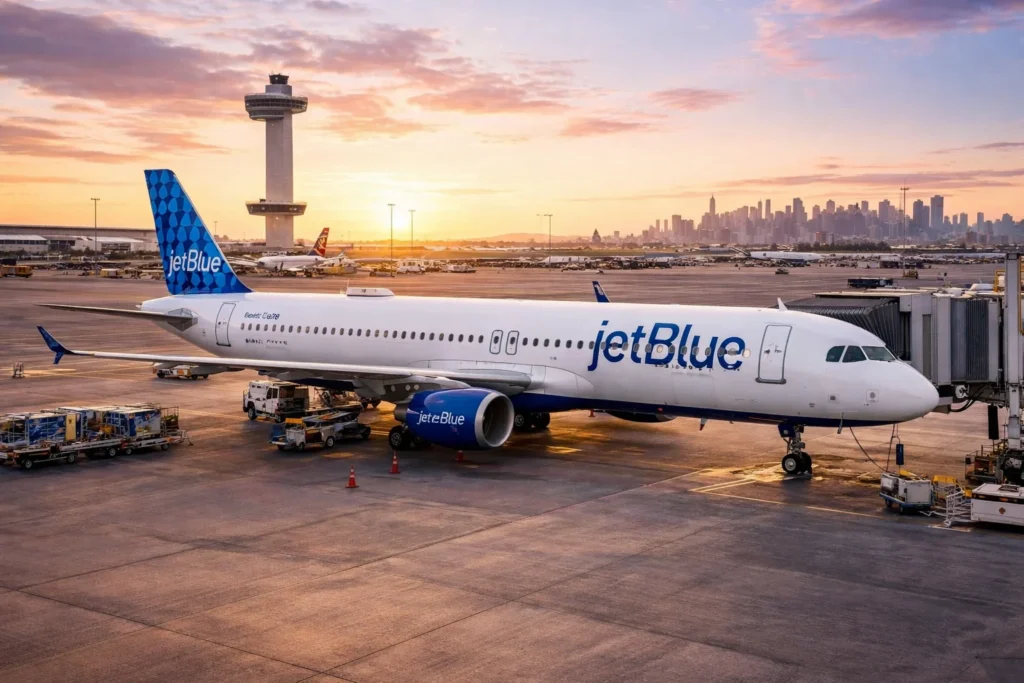
In 2026, JetBlue Airways continues to play a distinctive and strategically important role at John F. Kennedy International Airport, shaping both domestic and international tourism flows. Positioned between traditional full-service airlines and low-cost carriers, JetBlue has carved out a hybrid model that aligns closely with evolving tourism trends and traveler expectations.
According to aviation authorities in the United States and tourism development agencies in New York, JFK remains one of the busiest international gateways in the world. The airport serves as a primary entry point for millions of international visitors each year, making airline operations at JFK critical to sustaining tourism growth. Within this competitive landscape, JetBlue has emerged as a key player, particularly in leisure and transatlantic markets.
JetBlue’s role at JFK is best understood through its focus on high-demand leisure destinations. Official tourism data highlights strong travel demand between New York and destinations across the Caribbean and Latin America. Routes connecting to locations such as San Juan, Punta Cana, and the Bahamas are central to JetBlue’s network strategy. These destinations are frequently promoted by regional tourism boards, and JetBlue’s capacity helps support consistent visitor inflows, especially during peak holiday seasons.
In addition to leisure travel, JetBlue has expanded its presence in the premium travel segment. While traditionally known for affordable fares, the airline has introduced enhanced cabin offerings and onboard services that appeal to higher-spending travelers. This shift aligns with broader tourism strategies focused on attracting premium visitors who contribute more significantly to local economies.
At JFK, JetBlue operates in a highly competitive environment alongside major carriers like Delta Air Lines and American Airlines. Both airlines maintain substantial operations at the airport, supported by extensive global networks and strong partnerships. Aviation regulators note that this competition benefits passengers by providing more choices, competitive pricing, and improved service quality.
Despite not being the dominant airline at JFK, JetBlue’s influence is significant. The airline serves as a major connector between New York and key tourism markets, particularly in regions where leisure travel demand is consistently high. Its network complements the broader aviation ecosystem by filling capacity gaps and offering direct routes that might otherwise require connections.
Government tourism agencies emphasize that connectivity is a critical factor in destination competitiveness. JetBlue’s ability to provide frequent, direct flights supports tourism growth not only in outbound travel from New York but also in inbound travel to the United States. Visitors arriving via JetBlue flights contribute to local economies through spending on accommodation, dining, and attractions.
JetBlue’s expansion into transatlantic routes has further strengthened its role at JFK. In recent years, the airline has introduced services connecting New York to major European cities, aligning with official tourism initiatives aimed at boosting transatlantic travel. These routes provide additional capacity in a market traditionally dominated by legacy carriers, increasing accessibility for travelers and supporting tourism exchange between North America and Europe.
From a tourism infrastructure perspective, JFK’s ongoing development projects have also influenced airline operations. Airport authorities have invested in modernization efforts to enhance passenger experience and increase capacity. These improvements support airlines like JetBlue in maintaining efficient operations while accommodating growing passenger volumes.
JetBlue’s operational model also reflects changing traveler preferences. Tourism boards and aviation ministries note a rising demand for value-driven travel, where passengers seek a balance between affordability and comfort. JetBlue’s offerings align with this trend, providing competitive fares alongside upgraded amenities, which appeals to both leisure and business travelers.
Seasonal travel patterns further highlight JetBlue’s importance at JFK. During peak travel periods, particularly in winter and summer, the airline increases capacity to popular vacation destinations. This flexibility supports tourism demand cycles and ensures that destinations reliant on seasonal visitors receive consistent air service.
The airline’s presence also contributes to regional tourism diversification. By offering direct flights to a wide range of destinations, JetBlue enables travelers to explore beyond traditional hubs. This aligns with global tourism strategies that encourage the distribution of visitor traffic across multiple destinations, reducing pressure on overcrowded locations.
While Delta Air Lines is often viewed as having strong pricing power at JFK, and American Airlines maintains a significant international presence, JetBlue occupies a unique middle ground. It is neither a niche operator nor a dominant hub carrier, but rather a flexible and adaptive airline that responds to market demand and tourism trends.
Looking ahead, aviation authorities and tourism planners expect JetBlue to continue playing a vital role in supporting travel growth through JFK. Its focus on leisure routes, combined with its expansion into international markets, positions the airline as a key contributor to the airport’s overall connectivity.
In the broader context of global tourism, JetBlue’s role at JFK demonstrates how airlines can influence travel patterns, support economic development, and enhance passenger choice. By bridging the gap between affordability and premium service, JetBlue remains an integral part of New York’s aviation landscape and a significant driver of tourism in 2026.