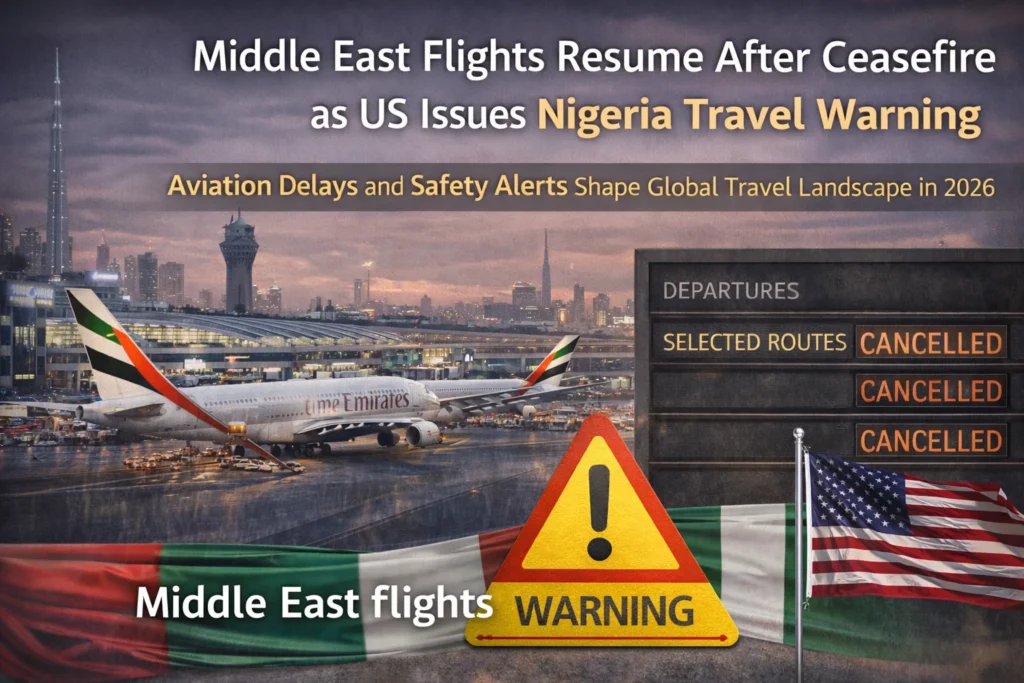
The unfolding Middle East aviation crisis in early 2026 has sent shockwaves across global tourism and long-haul travel networks, disrupting one of the world’s most critical airline ecosystems. With the region acting as a vital bridge between Europe, Asia, and Australasia, the sudden escalation of conflict has led to widespread flight cancellations, reduced connectivity, and significant uncertainty for international travelers.
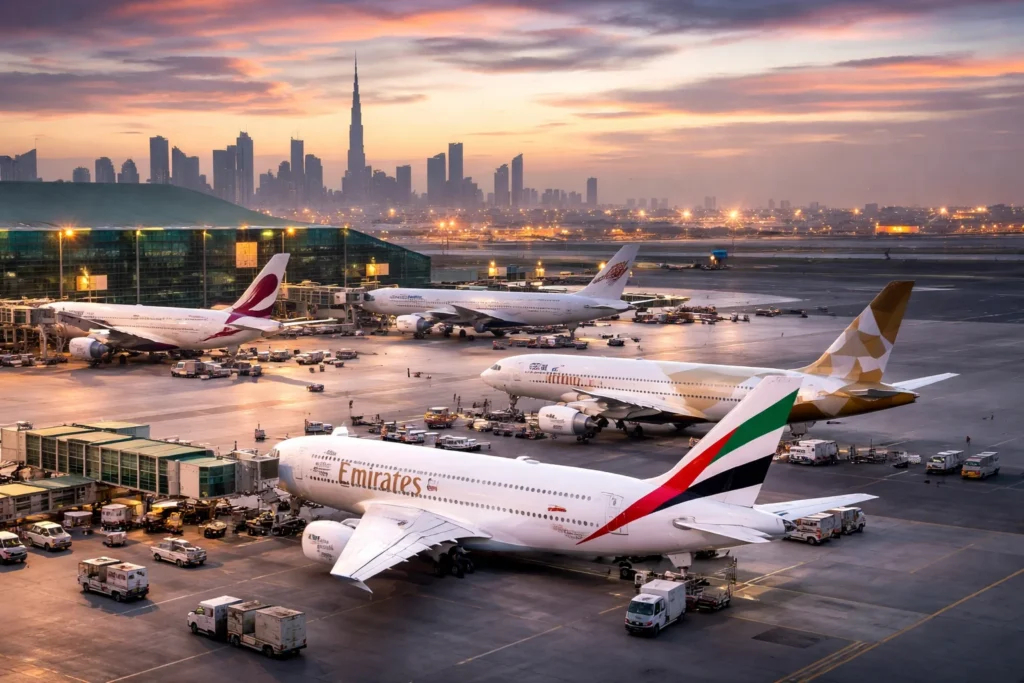
The Gulf region has long been a cornerstone of global aviation, supported by world-class hub airports and high-capacity airlines. These hubs have enabled seamless intercontinental travel, particularly for long-haul passengers relying on efficient transit routes. However, recent developments have exposed the vulnerability of this interconnected system, with immediate consequences for tourism flows and airline operations.
Official aviation and transport authorities across the region have acknowledged the scale of disruption, as airlines were forced to respond rapidly to changing security conditions and airspace restrictions. Within days of the crisis beginning, flight operations were significantly reduced, affecting both leisure and business travel.
In the initial phase, the aviation sector experienced a severe shock. On the first day alone, more than one-third of scheduled departures were cancelled or did not operate. Within just a few days, disruption levels intensified dramatically, with over 65 percent of flights grounded across several Middle Eastern airspaces. This resulted in thousands of daily cancellations, effectively halting a large portion of regional air traffic.
The impact on passengers has been substantial. Based on aviation capacity estimates and average occupancy levels, approximately five million travelers were affected during the first two weeks of the crisis. These disruptions extended beyond the Middle East, influencing global travel itineraries and forcing airlines to reconfigure routes or suspend services altogether.
Despite the initial shock, official data from aviation authorities indicates a gradual recovery trend beginning in mid-March. Airlines and airport operators began adapting to the evolving situation, implementing revised schedules and operational strategies. Cancellation rates steadily declined from peak levels, falling into the 20–30 percent range before improving further to below 15 percent by early April.
By April 6, daily cancellations had dropped to around 10 percent, signaling a move toward partial stabilization. However, the recovery remains uneven, with many international carriers yet to fully resume services in the region. Tourism boards have noted that while connectivity is improving, uncertainty continues to affect traveler confidence and booking patterns.
The crisis has impacted airports differently depending on their geographic location and exposure. Major global hubs such as Dubai and Abu Dhabi have demonstrated relative resilience, maintaining operations despite significant disruptions. These airports reported cancellation rates around the 48–50 percent mark during peak disruption periods, which, while severe, allowed them to sustain a level of connectivity.
In contrast, other airports faced much higher levels of disruption. Doha experienced particularly intense operational challenges, with a large portion of flights affected. Similarly, airports in high-risk zones saw extremely elevated cancellation rates due to safety concerns and direct exposure to conflict-related risks.
Airlines have also responded in varied ways. Regional carriers have worked to maintain essential routes where possible, while adjusting capacity and schedules in response to demand and operational constraints. At the same time, several international airlines suspended services to the region entirely, citing safety and logistical challenges.
According to official aviation data, the three major Gulf carriers collectively reduced their April schedules by millions of seats and thousands of flights compared to pre-crisis levels. This reduction reflects a strategic shift to align capacity with current conditions while ensuring operational safety and efficiency.
Key long-haul routes connecting major global cities have also been affected. Popular travel corridors linking the Middle East with destinations in Europe, Southeast Asia, Australia, and North America have seen noticeable reductions in frequency. These changes have had a ripple effect on global tourism, particularly for travelers relying on one-stop connections through Gulf hubs.
Tourism authorities are closely monitoring the situation, emphasizing the importance of clear communication and flexible travel policies. Many destinations have begun advising travelers to check flight status regularly and remain informed about evolving conditions.
The Middle East aviation crisis underscores the critical role of regional hubs in global tourism infrastructure. It also highlights the need for resilience and adaptability within the aviation sector, particularly in times of geopolitical uncertainty.
While signs of recovery are emerging, the long-term outlook remains dependent on regional stability and coordinated efforts between governments, airlines, and tourism bodies. For now, travelers and industry stakeholders alike are navigating a rapidly changing landscape, with cautious optimism for a return to more stable operations in the months ahead.