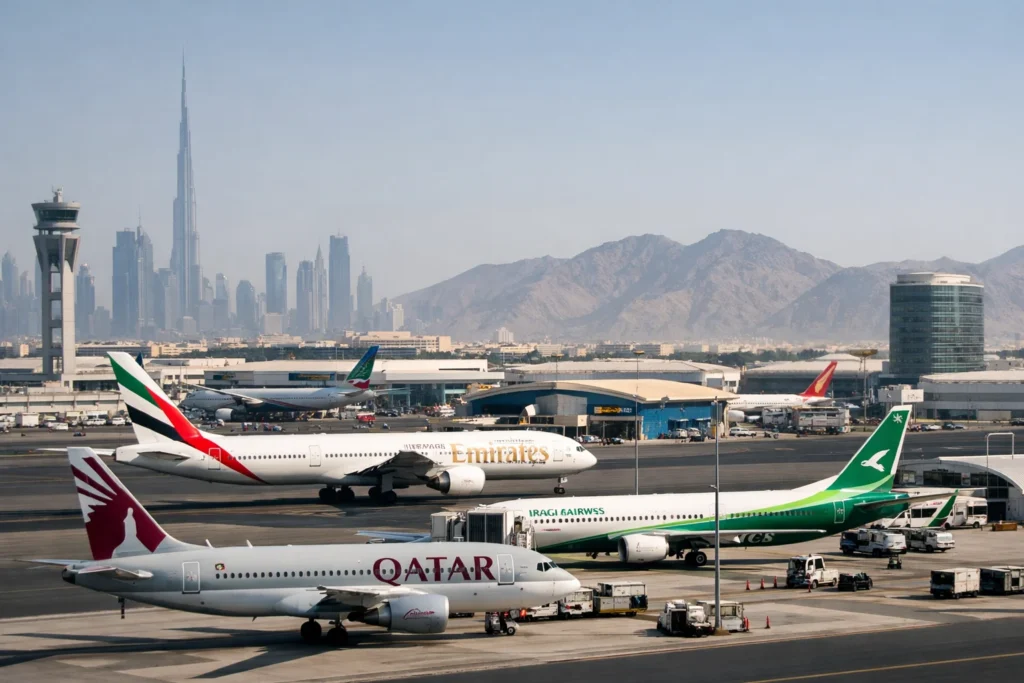
A gradual recovery is underway for regional travel after recent Middle East flight disruptions forced airlines to reduce services, reroute aircraft, and suspend selected routes. Following official ceasefire developments announced in early April, several countries have started reopening airspace and restoring commercial operations, offering fresh confidence to tourists, business travellers, and the wider aviation sector.
For international visitors planning holidays, stopovers, or family trips, the latest changes signal improving connectivity across one of the world’s most important travel hubs. Major airports in the Gulf region are resuming services in phases, while airlines continue to expand schedules based on operational safety approvals and aviation authority guidance.
Bahrain and Iraq Reopen Airspace
Among the most positive developments for tourism is the reopening of airspace in Bahrain and Iraq. National aviation authorities confirmed the restart of civilian air traffic, allowing carriers to gradually bring back domestic and international flights.
Bahrain’s national airline has announced phased resumptions from Bahrain International Airport, reconnecting the kingdom with key tourism and business markets including London, Mumbai, Delhi, Riyadh, Jeddah, Kochi, Dhaka, and Nairobi. This is welcome news for travellers heading to Bahrain’s luxury hotels, Formula 1 attractions, waterfront districts, and growing cultural tourism sector.
Iraq has also restarted commercial services, including routes linking Baghdad with Cairo, Istanbul, and Amman, alongside domestic flights to Basra, Erbil, and Sulaymaniyah. The reopening supports religious tourism, heritage travel, and business movement across the country.
UAE and Qatar Continue Controlled Operations
The United Arab Emirates remains one of the region’s busiest tourism gateways, and airports in Dubai and Abu Dhabi are continuing to operate through managed aviation corridors. While some schedules remain reduced, flights are steadily increasing.
Dubai International Airport and Al Maktoum International Airport continue handling selected services, while Abu Dhabi’s Zayed International Airport is maintaining operations with airline-specific adjustments. Travellers are advised to confirm schedules before heading to the airport, as timings may still change.
Qatar is also maintaining partial airspace access, enabling Doha’s Hamad International Airport to continue operating a controlled number of international flights. As one of the world’s top transit hubs, Doha plays a major role in connecting Europe, Asia, Africa, and the Americas, making its continued operation highly significant for global tourism flows.
Major Airlines Expand Services
Several leading regional airlines have increased operations in recent days. Carriers based in the Gulf are progressively restoring routes as conditions allow, helping tourists regain access to popular destinations such as Dubai, Doha, Abu Dhabi, Bahrain, Muscat, and Jeddah.
Travel demand is expected to rebound quickly because the Middle East is a key market for luxury holidays, shopping tourism, desert experiences, cruise stopovers, and long-haul transit travel. As more routes return, hotel bookings, tour activity, and airport passenger volumes are likely to improve.
Low-cost and hybrid carriers are also reintroducing services on selected routes, giving travellers more affordable options for regional breaks and connecting trips.
Airspace Restrictions Still Remain
Despite encouraging progress, some restrictions continue. Authorities in parts of the region, including Iran and Kuwait, still have airspace closures or tighter controls in place. This means some airlines are avoiding certain routes or operating longer flight paths around restricted zones.
These detours can increase travel times and create schedule pressure across wider networks. Even flights that are operating normally may face delays caused by aircraft rotation changes, crew scheduling adjustments, or congestion at reopened hubs.
For tourists, flexibility remains important when booking travel over the coming weeks.
What Travellers Should Expect Now
Holidaymakers planning trips through the region should prepare for a transitional period rather than an instant return to normal schedules. Airlines and airports are prioritising safety while rebuilding capacity step by step.
Travellers may still experience:
- Last-minute schedule changes
- Longer journey times due to rerouting
- Reduced flight frequencies on some routes
- Rebooking onto alternative services
- Temporary fare increases on high-demand sectors
- Bus or land transfers linked to nearby airports in special cases
Passengers should monitor airline notifications, verify departure terminals, and arrive early for check-in while systems stabilise.
Positive Outlook for Tourism Recovery
The easing of Middle East flight disruptions is an encouraging sign for tourism across the region. The Gulf remains a major global travel crossroads, and restored air access supports everything from city breaks and beach holidays to pilgrimage travel, conferences, and family visits.
Destinations such as Dubai, Abu Dhabi, Doha, Bahrain, Muscat, and Riyadh depend heavily on international connectivity, and each additional flight helps rebuild traveller confidence. Tourism boards across the region have continued promoting events, attractions, and visitor experiences, showing confidence in long-term demand.
With summer travel planning already underway, airlines are expected to add more frequencies and reopen more routes if conditions remain stable.
Best Advice for Tourists Booking Now
If you are planning travel through the Middle East soon, choose flexible fares where possible, check entry rules, and review your airline’s latest operating schedule before departure. Booking with reputable carriers and allowing extra connection time can reduce stress during this recovery phase.
While some uncertainty remains, the broader direction is positive. Airspace reopenings, returning flights, and growing airport activity all point toward a stronger tourism outlook for one of the world’s most important travel regions.
For more travel news like this, keep reading Global Travel Wire