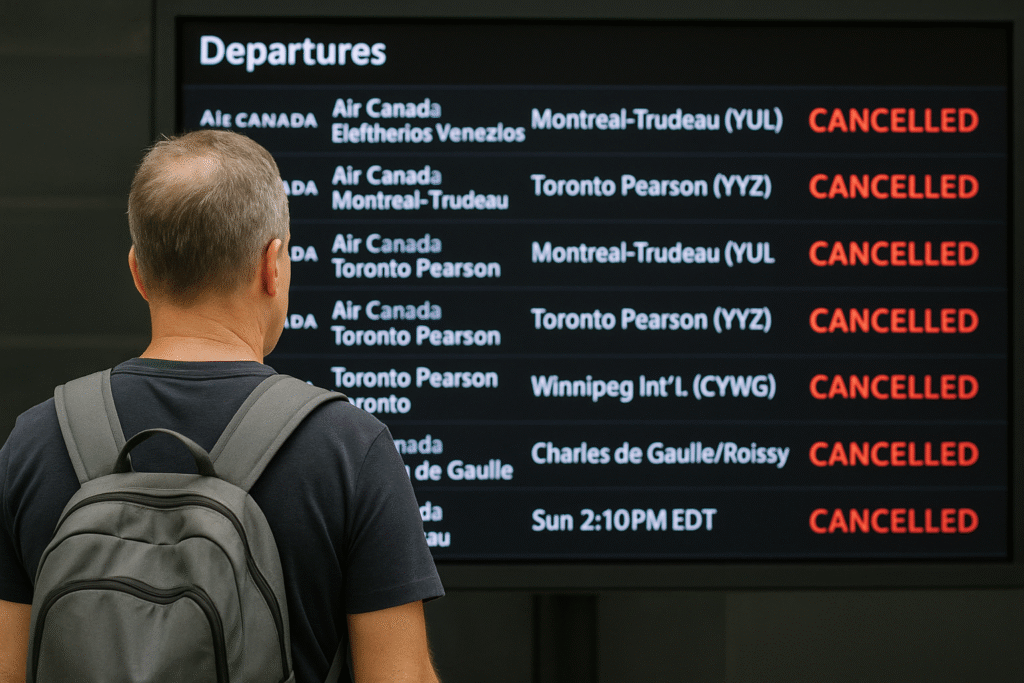
Air Canada is grappling with a fresh wave of travel disruptions, with widespread cancellations and delays affecting passengers across multiple destinations. Over the weekend, the airline cancelled 12 flights and recorded at least 58 delays, impacting thousands of travellers. These disruptions are causing mounting frustration at key hubs such as Toronto Pearson International Airport, Montreal-Trudeau International Airport, Athens International Airport, and Manchester Airport.
The ripple effect of these cancellations has been felt not only in Canada but also in the United Kingdom, Greece, and France. Many passengers have been left stranded, scrambling to rebook flights, and in some cases, uncertain about their travel options.
Major Airports Impacted
Airports across several countries are reporting severe impacts due to these flight cancellations. The affected locations include:
- Toronto Pearson International Airport (CYYZ), Canada
- Montreal-Trudeau International Airport (CYUL), Canada
- Ottawa Macdonald-Cartier International Airport (CYOW), Canada
- Winnipeg International Airport (CYWG), Canada
- Athens International Airport (ATH / LGAV), Greece
- Manchester Airport (MAN / EGCC), United Kingdom
- Charles de Gaulle Airport (CDG / LFPG), France
Toronto Pearson and Montreal-Trudeau have seen some of the highest numbers of cancellations and delays, affecting both domestic and international connections. Meanwhile, European hubs such as Athens and Manchester reported cancelled flights to and from Canada, adding to the scale of disruption.
Breakdown of Cancellations and Delays
The airline has reported 12 cancellations in total, many of which involved crucial international routes. Flights from Athens to Montreal and from Manchester to Toronto were among the first to be grounded. Domestic travellers also faced challenges, with cancellations between Toronto, Ottawa, Winnipeg, and Montreal.
In addition to outright cancellations, Air Canada recorded 58 delays across its network, with a delay rate of approximately 9%. Flights departing from Toronto, Montreal, and Ottawa were the hardest hit, affecting both business and leisure travellers.
This combination of delays and cancellations has strained passenger services at airports, with long queues forming at rebooking counters and customer service desks.
Passengers Left Stranded
The timing of these disruptions has intensified the impact, as September remains a busy period for both corporate travel and leisure trips. Many passengers travelling for family visits, holidays, or business commitments have found themselves stranded, with limited rebooking options.
Travellers at Toronto Pearson and Montreal-Trudeau reported long wait times for customer service and difficulties finding alternate flights. Those at Athens and Manchester, traveling to or from Canada, expressed concerns about missed connections and overnight stays.
For international passengers, uncertainty around re-entry requirements and potential visa implications has added further stress.
What Passengers Can Do
If you are affected by these cancellations, there are several steps you can take to minimize disruption:
- Check Flight Status Frequently
Use the Air Canada website or mobile app to receive real-time updates on flight schedules. - Contact Air Canada Customer Service
Rebooking assistance, compensation claims, and travel vouchers can often be arranged directly with Air Canada staff. - Consider Travel Insurance Options
Travellers with coverage may be entitled to reimbursement for cancelled flights, hotel stays, or meals during extended delays. - Stay Aware of Travel Guidelines
For international routes, passengers should monitor official government updates regarding entry requirements, especially when flying to or from the United Kingdom, Greece, or France. - Remain Prepared and Flexible
Keeping essential items such as medication, identification, and chargers handy can make unexpected waiting times more manageable.
Air Canada’s Response
Air Canada has acknowledged the ongoing disruptions and confirmed that efforts are underway to stabilize schedules. The airline has apologized for the inconvenience caused and has assured passengers that rebooking assistance and, where necessary, accommodations are being provided.
Operational challenges such as staffing shortages, aircraft rotations, and air traffic control delays have been cited as contributing factors. However, the scale of the cancellations highlights the fragile state of global aviation as airlines continue to adjust to fluctuating demand and logistical pressures.
Broader Impact on Travel
The disruptions come at a critical time for Canadian tourism and international travel. With airports like Toronto Pearson and Montreal-Trudeau serving as major gateways to North America, disruptions at these hubs create a domino effect across multiple destinations.
Leisure travellers heading to Europe for autumn holidays and business passengers commuting between major cities have both been heavily impacted. The cancellations also raise concerns about reliability for travellers planning trips during the upcoming holiday season.
Conclusion
Air Canada’s widespread cancellations and delays are creating chaos across Canada and key international airports. With 12 cancellations and nearly 60 delays over the weekend alone, the airline faces mounting challenges in restoring confidence among passengers.
While Air Canada is working to stabilize operations, travellers are advised to remain vigilant by monitoring flight statuses, contacting customer service for rebooking, and preparing for potential disruptions.
As the situation unfolds, the hope remains that improved scheduling and better communication will ease the strain on both domestic and international travellers.
For more travel news like this, keep reading Global Travel Wire