



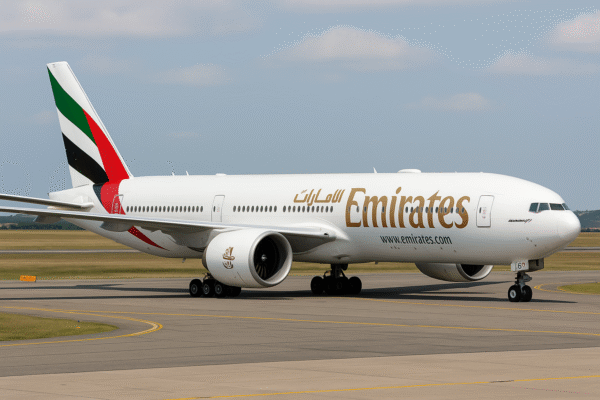






A major aviation crisis is unfolding across the Middle East, leaving thousands of travellers stranded and severely disrupting global travel networks. As of mid-March 2026, more than 1,000 flights have been either cancelled or delayed across key airports in Bahrain, Kuwait, Iraq, the United Arab Emirates, and beyond. The large-scale disruption follows temporary airspace closures and heightened security alerts linked to escalating regional tensions.
Airlines and aviation authorities are prioritising passenger safety, leading to widespread operational changes. While some airspace has partially reopened, the backlog of grounded flights and displaced travellers is expected to take several days to resolve, creating uncertainty for both leisure and business travellers.
Airspace Closures Trigger Widespread Flight Disruptions
The crisis began when multiple countries temporarily restricted their airspace due to missile and drone threats. These precautionary measures forced airlines to cancel flights or reroute aircraft through longer, safer corridors. As a result, travel times have increased significantly, while airport congestion has intensified.
Major international carriers, including those based in the Gulf, have adopted “safe corridor” strategies. While these routes allow limited operations to continue, they also reduce capacity and delay schedules, affecting thousands of passengers daily.
Doha and Dubai Face Severe Passenger Congestion
Hamad International Airport in Doha has been among the hardest hit, with hundreds of flights cancelled in a short span. As a major global transit hub, disruptions here have triggered a ripple effect across international travel, particularly for routes connecting Europe, Asia, and North America.
Dubai International Airport is also experiencing heavy congestion, with a combination of cancellations and delays creating operational gridlock. Although airspace has reopened, airlines are struggling to manage the backlog, leaving many transit passengers stranded or rebooked onto later flights.
Bahrain and Kuwait Experience Complete Flight Groundings
Airports in Bahrain and Kuwait are facing a different type of disruption, where cancellations have outpaced delays entirely. In these locations, authorities have opted to cancel flights outright rather than postpone them, creating a “fly or don’t fly” situation for travellers.
This approach has reduced confusion within terminals but has left passengers scrambling to secure alternative bookings or accommodations. Travellers are being advised to confirm their flight status before heading to the airport to avoid unnecessary delays.
Saudi Arabia Maintains Partial Operations Amid Delays
Saudi Arabia’s major airports, including those in Riyadh and Jeddah, are continuing operations but with significant delays. Unlike other hubs, authorities are attempting to keep flights moving rather than cancelling them outright.
This has resulted in rolling delays, where departure times are repeatedly pushed back. While this strategy helps maintain connectivity, it creates challenges for passengers managing tight schedules, connecting flights, or ground transport arrangements.
Mixed Impact Across Regional Airports
Other airports across the region are experiencing varying levels of disruption. Beirut is managing a combination of delays and cancellations, maintaining limited connectivity despite operational pressure. Amman is facing moderate disruptions, with passengers needing to rebook flights or adjust travel plans.
Baghdad, however, has emerged as a relatively stable hub, with minimal cancellations and no major delays reported. This contrast highlights the uneven impact of the crisis across the region, depending on proximity to restricted airspace and operational capacity.
Airlines Shift to Safety-First Strategies
Airlines across the Middle East are adapting quickly to the evolving situation. Some carriers have temporarily reduced their schedules, focusing on operating fewer flights with greater reliability. Others are prioritising rerouted paths that avoid high-risk areas, even if it means longer journey times.
Certain airlines have adopted a “delay-and-depart” model, where flights are held until safe departure windows are confirmed. This approach minimises cancellations but requires passengers to remain flexible and prepared for extended waiting periods.
Additionally, many carriers have introduced flexible rebooking policies, allowing travellers to change or cancel flights without penalties. This move aims to reduce passenger stress and provide greater adaptability during the crisis.
“Safe Corridor” Flying Reshapes Regional Aviation
A key feature of the current situation is the implementation of “safe corridor” routes. These carefully planned flight paths allow aircraft to operate within designated secure zones, avoiding restricted or high-risk airspace.
While effective in maintaining limited connectivity, these routes are contributing to longer flight durations and reduced overall capacity. Airlines must also coordinate closely with aviation authorities, further complicating scheduling and operations.
Global Travel Networks Feel the Ripple Effect
The impact of the Middle East aviation crisis extends far beyond the region. As one of the world’s most important transit corridors, disruptions here are affecting international travel on a global scale.
Flights between major continents are being rerouted, leading to increased travel times and higher fuel costs. Passengers worldwide are experiencing delays, missed connections, and rising ticket prices as airlines adjust to the new operational landscape.
At the same time, alternative transit hubs in Europe and Asia are seeing increased demand as travellers seek routes that bypass the Middle East.
Travellers Urged to Remain Flexible
Authorities and airlines are advising travellers to remain flexible and stay informed through official communication channels. Passengers are strongly encouraged to check flight status updates before leaving for the airport and to avoid unnecessary travel unless bookings are confirmed.
Airport terminals across the region are experiencing high volumes of stranded passengers, making rebooking services and customer support channels particularly busy.
Recovery Dependent on Regional Stability
The timeline for recovery remains uncertain and is closely tied to improvements in regional security conditions. While partial reopening of airspace offers some relief, the scale of disruption means that normal operations will take time to resume.
Aviation experts suggest that it could take several days for schedules to stabilise fully, with lingering delays likely even after immediate backlogs are cleared.
A Defining Moment for Global Aviation
This crisis underscores the vulnerability of global aviation to geopolitical developments. The Middle East, a critical hub for international travel, plays a central role in connecting continents. Any disruption in this region has immediate and far-reaching consequences.
For now, airlines, airports, and travellers are navigating a rapidly changing situation where flexibility and real-time information are essential. As recovery efforts continue, the focus remains on restoring connectivity while ensuring safety in an increasingly complex travel environment.
For more travel news like this, keep reading Global Travel Wire