




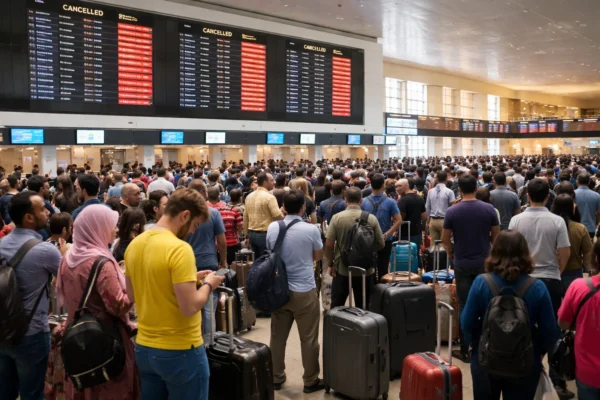





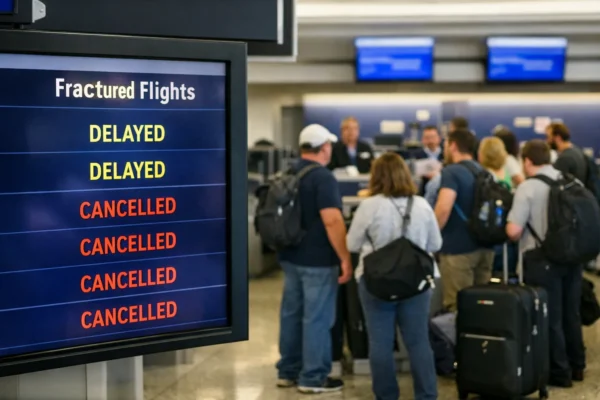
A wave of flight disruptions at Raleigh-Durham International Airport has caused widespread travel chaos, leaving hundreds of passengers stranded and significantly impacting domestic air travel across the United States. With dozens of delays and multiple cancellations reported within a short period, the situation has highlighted ongoing operational challenges facing airports and airlines as travel demand continues to rise.
Passengers traveling through the North Carolina hub experienced long waiting times, missed connections, and limited rebooking options, turning routine journeys into stressful and uncertain experiences. The disruptions affected major airlines and key routes linking Raleigh-Durham with major cities such as New York, Chicago, Atlanta, and Washington, D.C.
Scale of the Disruptions
Over the course of a single day, more than 50 flights were delayed while several others were canceled, creating a ripple effect across airline schedules. These disruptions impacted both departures and arrivals, affecting travelers at multiple points in their journeys.
The delays were not isolated incidents but part of a broader pattern of operational strain. Flights arriving from other busy airports were also affected, leading to a chain reaction that disrupted schedules throughout the network.
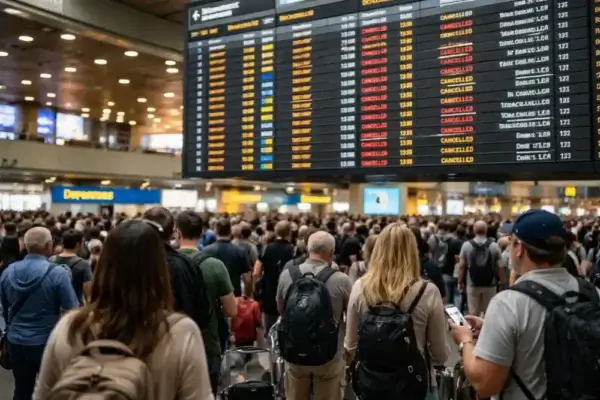
For passengers, the impact was immediate and visible, with crowded terminals, long queues at service counters, and a noticeable lack of timely information in some cases.
Key Routes and Airlines Affected
The disruptions impacted several major airlines operating at Raleigh-Durham, including leading carriers that handle a significant share of domestic traffic. Flights connecting to major hubs such as New York, Chicago, and Atlanta were among those most affected, as these routes are critical for onward connections across the country.
When delays occur on such high-traffic routes, the consequences extend beyond a single airport. Missed connections, rescheduled itineraries, and aircraft repositioning challenges can disrupt entire networks, affecting travelers far beyond the initial point of delay.
Causes Behind the Delays
A combination of factors contributed to the disruptions at Raleigh-Durham. One of the primary issues was air traffic management constraints, which can limit the number of flights that can safely operate within a given time frame. When traffic volumes increase, even minor delays can escalate quickly.
Staffing shortages also played a role, particularly in areas such as flight crews, ground operations, and customer service. Many airlines and airports are still rebuilding their workforce following pandemic-related reductions, and the surge in travel demand has put additional pressure on available resources.
Weather conditions in other parts of the country further compounded the problem. Even when local conditions at Raleigh-Durham were stable, delays at other major airports created knock-on effects that disrupted incoming and outgoing flights.
Operational challenges such as aircraft turnaround times and scheduling constraints added another layer of complexity, making it difficult for airlines to recover quickly once delays began to accumulate.
Passenger Experience and Challenges
For passengers, the disruptions created a range of challenges. Many travelers faced extended waiting times, with some spending hours in terminals while awaiting updates on their flights. Others struggled to secure alternative bookings, particularly during peak travel periods when flights were already near capacity.
Communication issues added to the frustration, as some passengers reported difficulty obtaining clear and timely information about their travel status. Frequent changes to flight schedules and gate assignments further complicated the situation.
Families, business travelers, and those with tight connections were particularly affected, as even minor delays could result in missed flights and significant changes to travel plans.
Airline Response and Recovery Efforts
Airlines worked to manage the situation by rebooking passengers, providing alternative travel options, and deploying additional staff where possible. However, the scale of the disruptions made it challenging to respond quickly to every affected traveler.
Customer service teams faced high demand, with long lines forming at service desks and increased call volumes for airline support centers. Digital tools such as mobile apps and online updates played an important role in helping passengers stay informed, although not all travelers were able to access real-time information easily.
Broader Impact on US Travel
The disruptions at Raleigh-Durham reflect a wider trend in the US aviation sector, where increasing passenger volumes are testing the limits of existing infrastructure and staffing levels. As travel continues to rebound, airports and airlines are working to balance demand with operational capacity.
The ripple effects of delays at a single airport can extend across the entire network, affecting flights nationwide. This interconnected nature of air travel means that even localized issues can have far-reaching consequences.
Infrastructure and Operational Improvements
Authorities at Raleigh-Durham are focusing on long-term solutions to improve operational efficiency and reduce the likelihood of similar disruptions in the future. Planned improvements include upgrades to airport infrastructure, expanded security processing capacity, and enhanced passenger services.
Efforts are also being made to strengthen coordination between airlines, air traffic control, and airport operations to ensure smoother handling of peak travel periods. Investment in technology and data systems is expected to play a key role in improving real-time decision-making and communication.
Looking Ahead
While the recent disruptions caused significant inconvenience, they also highlight the resilience of the aviation system and the ongoing efforts to adapt to changing travel patterns. As airlines and airports continue to recover and expand, addressing operational challenges will remain a top priority.
Passengers are encouraged to stay informed, allow extra time for travel, and remain flexible when planning journeys, particularly during busy periods. The use of digital tools and real-time updates can help travelers navigate disruptions more effectively.
A Reminder of Travel’s Complex Reality
The situation at Raleigh-Durham serves as a reminder that air travel operates within a complex and interconnected system where multiple factors can influence operations. While disruptions are frustrating, they also underscore the importance of continued investment in infrastructure, staffing, and technology.
As improvements are implemented and demand stabilizes, the goal is to create a more reliable and efficient travel experience for passengers. Until then, flexibility and preparedness remain essential for navigating today’s evolving travel landscape.
For more travel news like this, keep reading Global Travel Wire