












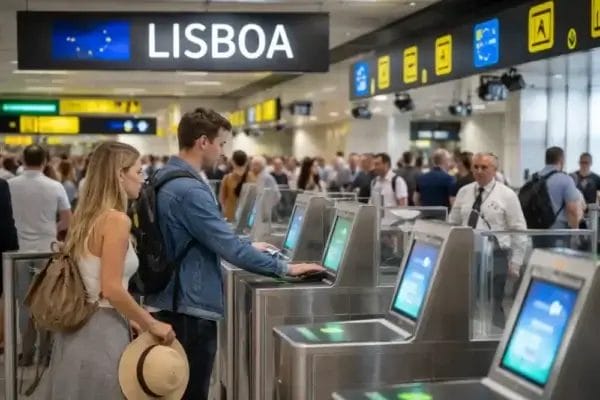
Portugal has introduced a new digital solution to improve border control at Lisbon Airport. Authorities launched the “Travel to Europe” app ahead of the busy travel season. This move comes as European airports face growing pressure from rising passenger numbers.
Lisbon Airport has struggled with long queues at border control in recent months. The rollout of the EU Entry Exit System has added further complexity. As a result, travelers often face extended waiting times after arrival.
Portugal now aims to solve these issues through technology. The new app allows travelers to complete key steps before they reach the airport. This approach reduces congestion and improves overall efficiency.
How the Travel to Europe App Works
The “Travel to Europe” app allows non-EU travelers to pre-register their details before arrival. Users can submit personal and travel information up to 72 hours in advance. They also complete a short entry questionnaire through the app.
This process reduces the need for manual data entry at border checkpoints. As a result, border officers can process passengers faster. Travelers who use the app can expect shorter waiting times.
Although the app remains optional, it offers clear advantages. Many passengers will likely adopt it to avoid long queues. In turn, airports can manage crowds more effectively.
Lisbon Airport Faces Growing Pressure
Lisbon Airport has seen a sharp rise in international arrivals. This increase has created operational challenges at border control points. Long queues have become common, especially during peak travel hours.
European authorities conducted an assessment of the airport’s systems in late 2025. The findings highlighted several weaknesses in border management. Officials identified delays, inefficiencies, and capacity issues.
In response, Portugal acted quickly to improve the situation. Authorities temporarily paused parts of the Entry Exit System rollout. This step allowed time for upgrades and adjustments.
At the same time, security forces increased staffing levels. Additional personnel helped manage passenger flow and reduce waiting times. These combined efforts aimed to stabilize operations before peak season.
Role of the EU Entry Exit System
The EU Entry Exit System plays a key role in modern border management. It tracks the entry and exit of travelers from non-EU countries. The system replaces manual passport stamping with digital records.
However, the transition has not been smooth across all airports. Many locations have faced technical and operational challenges. Data processing delays have slowed down border checks.
These issues have become more visible during busy travel periods. Airports must handle higher passenger volumes while adapting to new systems. As a result, delays have increased in several EU countries.
Portugal’s new app directly addresses these challenges. It reduces the workload at physical checkpoints and speeds up processing times.
Expansion Plans Across Europe
Currently, the “Travel to Europe” app operates at Lisbon Airport only. However, authorities plan to expand its use across other European airports. This phased rollout will help standardize border procedures.
Other major travel hubs in Europe face similar challenges. Therefore, many countries have shown interest in digital solutions. The app could soon become a common tool for international travelers.
This expansion will also support the broader goals of the European Union. Officials aim to improve security while maintaining a smooth travel experience. Technology will play a central role in achieving this balance.
Benefits for Travelers and Authorities
The new app offers clear benefits for both travelers and border authorities. Passengers can complete formalities before arrival, which saves time at the airport. This convenience improves the overall travel experience.
At the same time, border officials can focus on security checks rather than data entry. This shift increases efficiency and reduces pressure on staff. Airports can also manage passenger flow more effectively.
Moreover, the app supports better planning during peak seasons. Authorities can anticipate arrivals and allocate resources accordingly. This proactive approach reduces the risk of overcrowding.
A Step Toward Smarter Travel in Europe
The launch of the “Travel to Europe” app reflects a broader shift toward digital travel solutions. European authorities continue to invest in technology to improve efficiency. These efforts aim to handle growing tourism demand.
As international travel continues to rise, airports must adapt quickly. Digital tools like this app offer practical solutions to modern challenges. They also align with global trends in smart travel management.
Future updates may add new features to enhance usability. Authorities could integrate biometric data or real-time updates. These improvements would further streamline border procedures.
Looking Ahead
Portugal has taken a strong step toward modernizing border control. The “Travel to Europe” app provides a timely solution to current challenges. It reduces delays, improves efficiency, and enhances the traveler experience.
As more airports adopt similar systems, Europe can expect smoother border operations. Travelers will benefit from faster processing and reduced waiting times.
This initiative highlights the importance of innovation in the travel sector. With continued investment in technology, European airports can maintain their global appeal.
For more travel news like this, keep reading Global Travel Wire