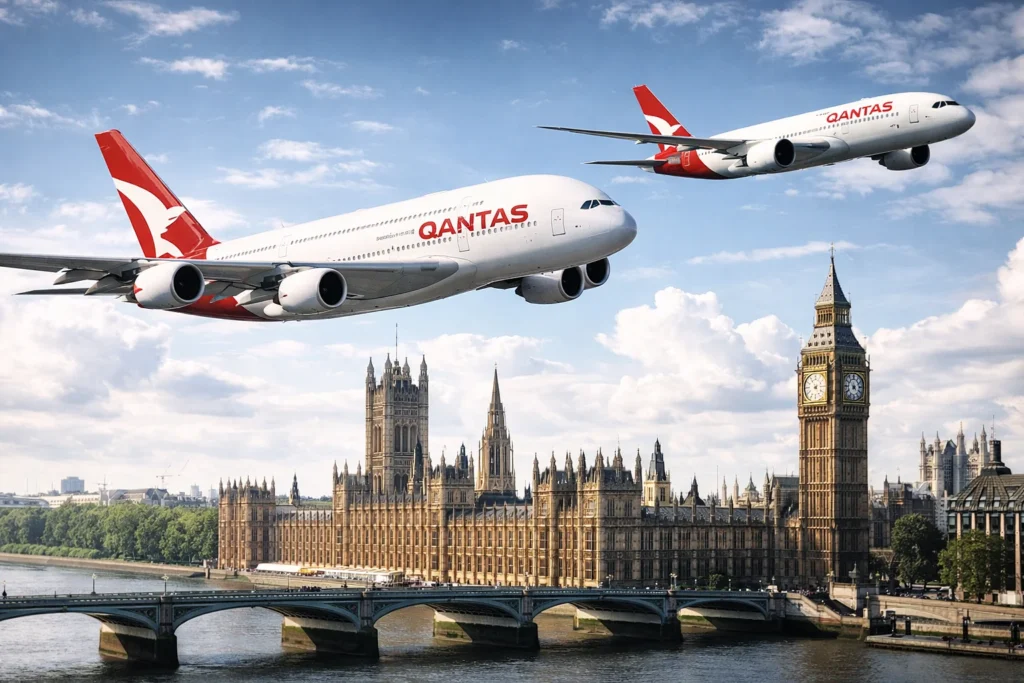
Australia’s flagship carrier Qantas is stepping up its European operations in response to ongoing global aviation disruptions caused by fuel shortages and geopolitical tensions. As airlines worldwide grapple with rising costs and restricted airspace, Qantas is increasing flight capacity to Europe, offering travelers more options during a period of uncertainty.
The expansion comes at a critical time when multiple regions are experiencing operational challenges. Flight cancellations, delays, and rerouted journeys have become more frequent, particularly on routes connecting Europe, Asia, and the Middle East. By strengthening its European network, Qantas aims to stabilize connectivity while addressing growing passenger demand.
Global Disruptions Driving Airline Strategy Changes
The aviation industry is currently facing a combination of challenges that are reshaping flight operations. One of the most significant factors is the disruption of traditional flight paths due to tensions in the Middle East. Airlines are increasingly avoiding certain airspaces, leading to longer flight durations and higher fuel consumption.
At the same time, a global shortage of jet fuel is placing additional pressure on carriers. Reduced supply and increased demand have pushed fuel prices upward, making long-haul travel more expensive to operate. These costs are gradually being passed on to passengers, contributing to rising ticket prices worldwide.
Airports across major hubs are also experiencing congestion as airlines adjust schedules and reroute flights. This has created a ripple effect, impacting both international and domestic travel timelines.
Qantas Strengthens Europe Connections
In response to these challenges, Qantas has introduced a series of strategic adjustments to its European services. The airline is increasing the frequency of flights between Australia and key European cities, ensuring that travelers continue to have access to important international routes.
Additional long-haul services are being deployed on popular routes, including those linking Australia with major European capitals. The airline is also utilizing larger aircraft on high-demand sectors to accommodate more passengers per flight.
Furthermore, Qantas is enhancing operational planning by adjusting crew schedules and optimizing flight paths. Many routes are now being redirected to avoid restricted airspace, often taking alternative paths over regions such as southern Africa. While this ensures safety and continuity, it also results in longer travel times for passengers.
Impact on Airfares and Travel Costs
Despite the increase in capacity, travelers should be prepared for higher ticket prices. Fuel remains one of the largest expenses for airlines, and sustained increases in fuel costs are inevitably reflected in airfare pricing.
Qantas has implemented fuel management strategies to soften the immediate impact, but industry analysts expect prices to rise further as these measures phase out. Premium cabins, in particular, are likely to see sharper increases due to higher operational costs.
For travelers planning trips to Europe in 2026, budgeting for higher travel expenses will be essential. Early bookings may help secure better rates before further price adjustments occur.
What This Means for Business Travelers
For corporate travelers, the expansion of Qantas services provides greater flexibility when planning international trips. Increased flight options can help maintain connectivity between Australia and Europe, which is crucial for global business operations.
However, higher fares and longer travel times may affect scheduling and travel budgets. Companies may need to reassess travel policies, especially for frequent long-haul journeys. Delays caused by rerouting and congestion could also impact time-sensitive engagements.
Challenges for Leisure Travelers and Tourism
Leisure travelers are also feeling the effects of the current aviation landscape. Popular European destinations continue to attract strong demand, but higher costs and potential delays may influence travel decisions.
Holidaymakers are advised to plan well in advance, particularly for peak travel seasons. Flexible travel dates and alternative itineraries can help reduce the impact of disruptions. Traveling during off-peak periods may also offer better value and a smoother experience.
Tourism boards in several regions are closely monitoring the situation, as accessibility plays a key role in maintaining visitor numbers. While demand remains strong, affordability and reliability will be critical factors for travelers in 2026.
The Role of Competing Airlines
Airlines based in the Middle East have been significantly affected by the changing geopolitical environment. Many have had to reroute flights or reduce services, creating gaps in capacity on certain routes.
Qantas and other international carriers are stepping in to fill this gap by increasing services and adjusting operations. This shift highlights the dynamic nature of the aviation industry, where airlines must continuously adapt to external challenges.
The result is a more competitive environment, with carriers striving to maintain market share while managing rising costs and operational complexities.
Practical Travel Advice for 2026
Travelers navigating this evolving situation can take several steps to minimize disruptions:
- Book Early: Secure flights in advance to avoid price surges and limited availability.
- Stay Updated: Monitor airline notifications for schedule changes or delays.
- Be Flexible: Consider alternative routes or travel dates to reduce inconvenience.
- Plan for Extra Time: Longer routes and airport congestion may extend travel duration.
- Get Travel Insurance: Coverage can help manage unexpected cancellations or delays.
Outlook for the Aviation Industry
The current challenges facing global aviation are expected to continue in the near term. Fuel supply stability and geopolitical developments will play a major role in determining how the situation evolves.
Airlines are likely to keep adjusting their strategies, focusing on efficiency, route optimization, and customer experience. Innovations in fuel efficiency and sustainable aviation practices may also gain momentum as the industry seeks long-term solutions.
Conclusion
Qantas’ decision to expand its European network reflects both resilience and adaptability in a challenging aviation environment. While travelers will benefit from increased connectivity, they must also navigate higher costs and potential disruptions.
As the industry continues to adjust to shifting conditions, careful planning and flexibility will be key to ensuring smoother journeys. Whether traveling for business or leisure, staying informed and prepared will make all the difference in 2026.