The Routes Asia 2026 Awards are set to spotlight the remarkable progress of airports and tourism destinations across the Asia Pacific region, with official event organizers confirming a strong lineup of finalists demonstrating excellence in airport connectivity, route development, and tourism partnerships.
According to official Routes event announcements, the awards recognize achievements in aviation marketing and collaboration between airports, airlines, and tourism authorities. This year, 15 airports have reached the finals across three passenger categories, reflecting the region’s continued recovery and expansion in global travel networks.
Tourism boards and civil aviation authorities across Asia Pacific have emphasized the importance of strong airport connectivity in driving visitor growth and supporting economic development. The finalists for 2026 showcase how strategic partnerships and infrastructure investments are reshaping travel across the region.
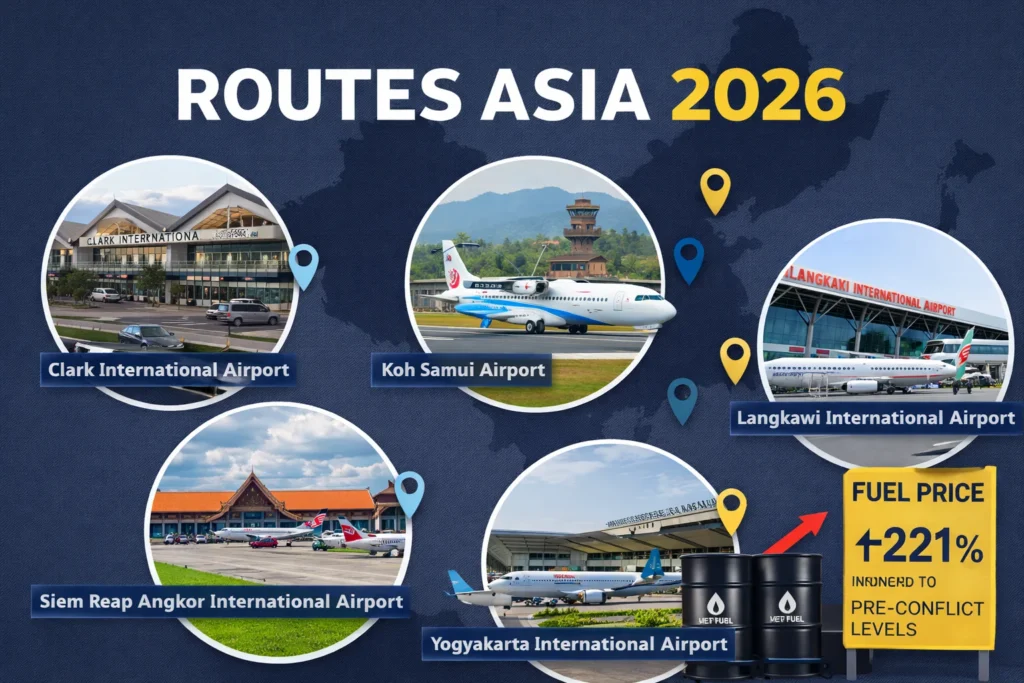
In the under five million passenger category, several emerging airports have demonstrated impressive growth and innovation. Clark International Airport reported steady increases in passenger numbers and flight movements, supported by new domestic and international routes. Government transport officials have highlighted the airport’s role in improving regional accessibility through expanded transport links and airline partnerships.
Koh Samui Airport achieved record passenger traffic in 2025, reflecting strong tourism demand for island destinations. Civil aviation authorities in Thailand have supported capacity expansion and slot allocation to accommodate increasing flight operations, ensuring the airport can handle rising visitor numbers efficiently.
Langkawi International Airport also recorded notable growth, supported by joint marketing initiatives between airport operators and tourism agencies. Malaysian tourism authorities have actively promoted the destination through coordinated campaigns, attracting both scheduled and charter services from international markets.
Meanwhile, Siem Reap Angkor International Airport has continued to expand its international network following its recent opening. Official aviation data confirms new long-haul and regional connections, strengthening access to one of Southeast Asia’s most important cultural tourism hubs.
Yogyakarta International Airport has focused on diversifying its route network, including religious travel services and cargo operations. Indonesian transport authorities have highlighted the airport’s strategic importance in supporting both tourism and economic activities.
In the five to twenty million passenger category, larger regional airports have demonstrated strong recovery and expansion. Adelaide Airport surpassed pre-pandemic passenger levels, supported by new international routes and infrastructure investment programs. Australian tourism agencies have emphasized the importance of direct international connections in attracting visitors from key global markets.
Cam Ranh International Terminal has expanded its airline network significantly, adding new routes and increasing international passenger traffic. Vietnamese tourism authorities have worked closely with airlines to promote the destination across multiple markets, including Northeast Asia and Europe.
Da Nang International Airport has strengthened its position as a regional hub by expanding connections to emerging markets. Government tourism strategies have focused on diversifying visitor sources, with new routes supporting growth from Central Asia and Southeast Asia.
In Japan, Nagoya Chubu Centrair International Airport has reported strong passenger growth driven by both domestic and international travel. Airport authorities have implemented targeted marketing initiatives to encourage business and leisure travelers to use the airport as a gateway to the region.
Penang International Airport has also expanded its network, welcoming new airlines and routes. Malaysian tourism campaigns have played a key role in boosting demand from major markets such as China and India, contributing to steady passenger growth.
In the over twenty million passenger category, major global hubs have demonstrated exceptional performance and connectivity. Singapore Changi Airport continues to lead with extensive global connections and strong passenger growth. Official statistics confirm its role as a major international transit hub, supported by marketing campaigns and airline partnerships that enhance connectivity across continents.
Kuala Lumpur International Airport has exceeded pre-pandemic traffic levels, reflecting robust recovery in international travel. Aviation authorities have supported network expansion through incentive programs and collaborative marketing efforts with airlines and tourism agencies.
In Australia, Melbourne Airport has reached record passenger numbers, driven by increased long-haul capacity and new airline partnerships. Tourism authorities have emphasized the importance of these developments in strengthening Australia’s position as a global travel destination.
Sydney Airport has also reported strong growth, welcoming new international carriers and expanding capacity. Joint marketing campaigns with tourism organizations have helped drive demand and support route performance.
Finally, Tokyo Narita Airport has focused on route development through innovative incentive programs and market research. Japanese aviation authorities have highlighted the importance of data-driven strategies in supporting airline partners and expanding connectivity.
The Routes Asia 2026 Awards will culminate in a networking event in Xi’an, where winners will be announced. Tourism officials and aviation stakeholders view the event as a key platform for fostering collaboration and shaping the future of air travel in the region.
As airports continue to invest in connectivity, infrastructure, and partnerships, the finalists demonstrate how strategic planning and innovation are driving tourism growth across Asia Pacific. These developments underscore the critical role of airports in connecting destinations and supporting the global travel industry.