











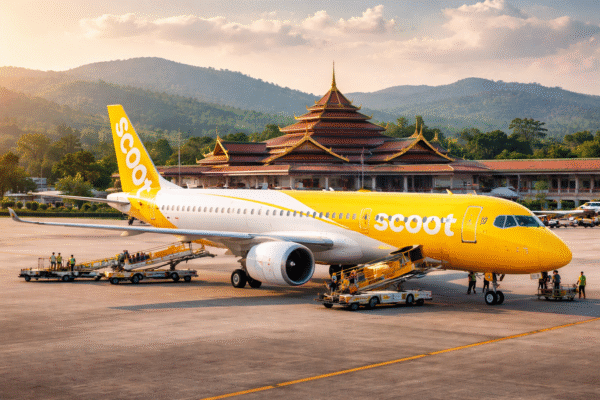
Northern Thailand has entered a new tourism era. Scoot has launched a direct flight between Singapore and Chiang Rai starting January 1, 2026. The inaugural flight landed at Mae Fah Luang International Airport with a ceremonial welcome. Local hosts greeted passengers with traditional gestures and handcrafted gifts.
This new route places Chiang Rai firmly on the international travel map. It offers global travelers faster access to a region known for culture, nature, and calm experiences.
Improved Access Supports Tourism Diversification
The direct Singapore–Chiang Rai service strengthens Thailand’s tourism diversification goals. Authorities want visitors to explore destinations beyond crowded hubs. Chiang Rai offers an ideal alternative with fewer crowds and authentic experiences.
Before this launch, travelers needed multiple connections to reach Chiang Rai. Now, a single direct flight removes that barrier. As a result, weekend breaks and short holidays have become more attractive.
Rising Demand From Singapore Travelers
Singapore remains one of Thailand’s strongest tourism markets. Visitor numbers continue to rise each year. Travel demand now favors meaningful and experience-driven trips. Many Singapore travelers seek wellness retreats, nature escapes, and cultural immersion.
Chiang Rai meets these expectations perfectly. The new route targets repeat visitors who want fresh destinations. It also attracts couples, wellness seekers, and slow travelers.
Scoot Targets High-Value Travel Segments
Scoot designed this route to attract quality tourism, not mass travel. High-spending visitors support sustainable growth. These travelers stay longer and spend more locally.
The route also supports honeymoon travel and boutique experiences. Chiang Rai has grown popular for scenic resorts and private retreats. With direct access, these offerings gain stronger visibility.
Flexible Schedule Encourages Short and Long Stays
Scoot operates five flights each week on this route. The airline uses Embraer E190-E2 aircraft with 112 seats. This aircraft suits medium-distance leisure travel.
The schedule supports flexibility. Afternoon departures from Singapore suit working travelers. Morning return flights from Chiang Rai allow efficient planning. This balance encourages both short getaways and longer holidays.
Stronger Regional Connectivity Across Thailand
The new route does more than connect two cities. It strengthens regional travel across northern Thailand. Travelers can easily combine Chiang Rai with Chiang Mai or Bangkok.
Road links and domestic flights make multi-city itineraries simple. This flexibility increases overall trip value. Travelers can explore mountains, temples, and cities in one journey.
Economic Growth for Chiang Rai Communities
Tourism growth will benefit Chiang Rai’s local economy. Hotels, guesthouses, and restaurants will see higher demand. Tour guides, drivers, and artisans will gain new opportunities.
Local businesses will expand services to meet international standards. Job creation will rise across hospitality and transport sectors. This growth will also encourage infrastructure investment.
Chiang Rai Gains Global Tourism Recognition
Direct international flights elevate destination status. Chiang Rai now stands alongside major Thai gateways. This change boosts confidence among travel agents and tour operators.
As awareness grows, Chiang Rai will appear more often in travel planning. Airlines, hotels, and tourism bodies will increase promotions for the region.
Cultural and Natural Attractions Drive Interest
Chiang Rai offers iconic cultural landmarks and serene landscapes. The White Temple remains one of Thailand’s most photographed sites. Nearby temples showcase northern Thai heritage and design.
Nature lovers enjoy mountains, rivers, and forests across the province. The Golden Triangle region attracts history enthusiasts and scenic explorers. These attractions now sit within easy reach.
Eco-Tourism and Wellness Gain Momentum
Travel trends now favor sustainability and wellness. Chiang Rai fits both categories well. The region offers eco-lodges, meditation centers, and organic farms.
Visitors can enjoy hiking, cycling, and river activities. Quiet surroundings support wellness retreats and digital detox stays. These experiences attract conscious travelers.
Balanced Growth Supports National Tourism Goals
Thailand continues to focus on balanced tourism growth. Overcrowding has strained popular destinations in the past. Expanding access to Chiang Rai helps distribute visitor flows.
This strategy protects resources while supporting new regions. It also improves visitor satisfaction by reducing congestion elsewhere.
Future Expansion Looks Promising
The success of this route may encourage more international flights. Additional connections from Asia-Pacific markets remain possible. Increased demand could also support year-round services.
Tourism authorities expect steady growth rather than sudden spikes. This approach supports sustainability and community involvement.
A Defining Moment for Northern Thailand
The Singapore–Chiang Rai flight marks a turning point for northern Thailand tourism. Faster access, high-value travelers, and global exposure create strong momentum.
Chiang Rai now stands ready to welcome the world. With culture, nature, and calm experiences, the destination offers something truly different. This new connection ensures its place in Thailand’s tourism future.
For more travel news like this, keep reading Global Travel Wire