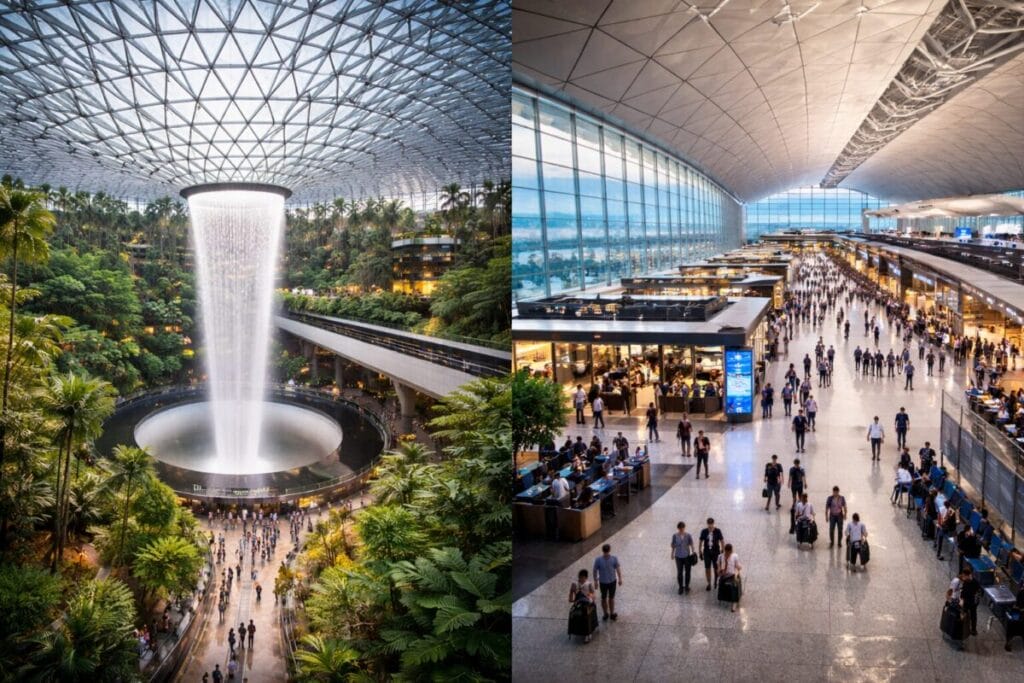
Singapore Changi Airport and Hong Kong International Airport have emerged as global leaders in airport experience as tourism demand continues to rise in Asia. Both airports combine efficient operations with innovative design, creating environments that enhance travel and strengthen each city’s role as a tourism destination. These airports do more than connect flights; they influence traveler impressions and support economic growth through tourism arrivals.
Global travelers value seamless airport transitions when visiting international destinations. Airports that offer strong service, rapid processing and clear wayfinding help reduce stress and increase overall trip satisfaction. Singapore and Hong Kong continue to invest heavily in these areas, setting international benchmarks for quality.
Changi Airport Sets New Standards for Travel Comfort
Singapore Changi Airport continues to rank as one of the most admired airports worldwide due to its unique blend of entertainment, nature and retail. Travelers often describe the airport as a destination. The iconic Jewel complex showcases indoor gardens, interactive exhibits and the world’s tallest indoor waterfall. Visitors enjoy shopping, dining and film screenings without leaving the terminal area.
Comfort features such as rest zones, play areas, cinemas and hotel services help travelers manage long layovers. Efficient transport links connect the airport to major attractions, including Marina Bay and Sentosa Island. This direct connectivity helps visitors begin their Singapore experience within minutes of arrival.
Changi Airport also stands as a key node within Southeast Asia’s aviation system. Singapore benefits from a strong tourism economy and welcomes millions of visitors each year. Airport quality plays a major role in maintaining that success.
Hong Kong International Enhances Traveler Experience
Hong Kong International Airport remains a major hub for flights across Asia, Europe and North America. The airport continues to upgrade facilities to accommodate rising traffic and to enhance traveler convenience. Terminal expansions support new retail options, dining choices and improved gate layouts that reduce congestion.
Clear signage, efficient immigration processing and streamlined baggage handling create a smoother arrival experience. These improvements make it easier for travelers to reach Hong Kong’s iconic attractions such as Victoria Harbour, the Peak and Mong Kok.
Hong Kong continues to position itself as a key gateway for international business travel and global tourism. Airport performance plays a central role in promoting the city’s appeal to regional and international visitors.
Technology Drives Efficiency and Convenience
Both airports integrate technology to improve processing and reduce wait times. Changi features automated check-in kiosks, biometric lanes and advanced baggage systems that help travelers move quickly from curb to gate. Digital payment systems and contactless options enhance convenience and support integrated retail operations throughout the terminals.
Hong Kong International continues to expand digital check-in services, automated immigration gates and AI-supported security checks. These advancements reduce queues and support efficient passenger flow during peak travel periods. Technology investments also improve safety and operational reliability.
Aviation experts note that airports that adopt modern technology gain a competitive advantage due to stronger traveler satisfaction and reduced operational costs. Asia’s leading airports continue to invest in digital infrastructure as travel volumes increase.
Tourism Benefits from Next-Level Airport Experiences
High-quality airport environments benefit tourism industries by improving traveler impressions during arrival and departure. Strong airport performance boosts visitor confidence and encourages repeat travel. Singapore and Hong Kong continue to benefit from this positive cycle, as visitors experience comfort and convenience before entering the city.
Travelers also enjoy improved access to hotel options, transport services and visitor information centers. These features help travelers make informed decisions and extend their stay. Tourism analysts agree that airports that engage visitors through cultural exhibits, retail experiences and technology strengthen the destination brand.
Infrastructure Expansion Supports Future Growth
Both airports continue to plan long-term infrastructure expansion to support future demand. Singapore prepares for Terminal 5, which will serve as a major addition to Changi’s capacity and service offerings. The new terminal will support larger aircraft, higher passenger volumes and expanded retail programs. The project reinforces Singapore’s commitment to tourism and its position as a global aviation hub.
Hong Kong continues to expand Terminal 2 and the Third Runway System. These projects increase capacity and improve flight scheduling flexibility. As more airlines return to Hong Kong, the airport prepares to handle increased passenger loads and new international routes.
Cities Leverage Airports as Tourism Gateways
Singapore and Hong Kong view their airports as essential extensions of their tourism identity. Strong airport experiences reinforce the perception of each city as modern, efficient and welcoming. These qualities matter to visitors planning leisure and business travel.
Airports also influence airline partnerships and route development. Airlines value operational reliability, airport services and competitive cost structures when selecting hubs. Singapore and Hong Kong maintain strong relationships with international carriers, which strengthens regional connectivity.
Conclusion: Airports Reshape the Tourism Experience
Singapore Changi Airport and Hong Kong International Airport continue to lead the global conversation on airport experience and tourism innovation. Their investments in comfort, technology and infrastructure reinforce their status as top travel gateways. Travelers benefit from seamless arrivals, easy access to attractions and enhanced amenities that reduce travel stress.
Tourism growth in Asia continues to accelerate, and airports play a critical role in shaping visitor impressions. Singapore and Hong Kong stand at the forefront of this evolution, demonstrating how airports can become engines of tourism expansion and pillars of national economic strategy.
For more travel news like this, keep reading Global Travel Wire